Corporate Campus Security in New Jersey for Safer Access
An orderly campus depends on more than a guarded entrance. Effective corporate campus security in New Jersey brings together clear visitor access procedures, visible patrols, emergency readiness, and a measured response to tense situations. The goal is to support a safer, welcoming environment without disrupting daily operations.
Security works best when it is attentive and coordinated across employees, visitors, and facilities teams. Access points, pedestrian routes, and shared spaces each need a considered approach, especially during busy periods or unexpected incidents.
This article explains how campus security can support visitor access, emergency response, routine patrols, tailored planning, de-escalation, and crowd management. It also covers what makes a practical security plan and how professional on-site support can fit into campus operations.
Table of Contents
Campus entrance monitoring and visitor access
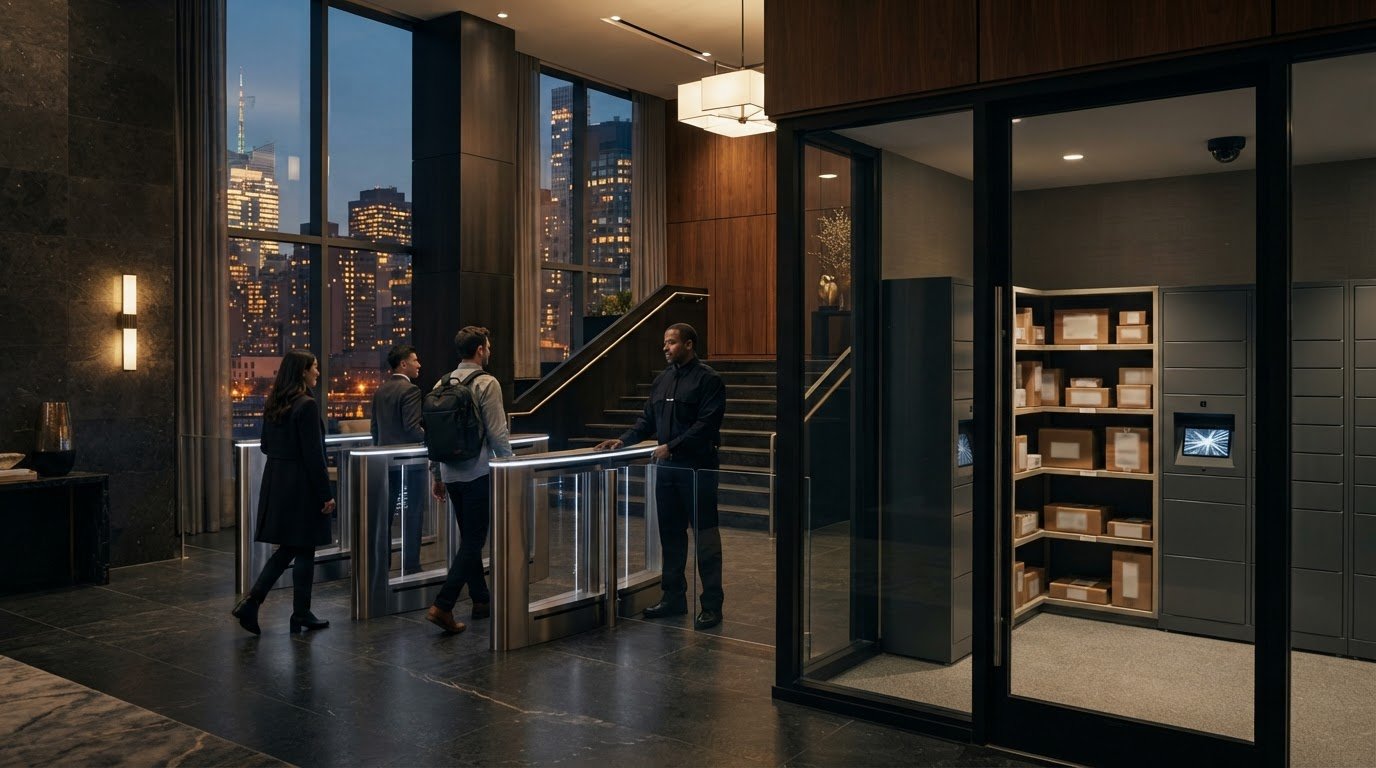
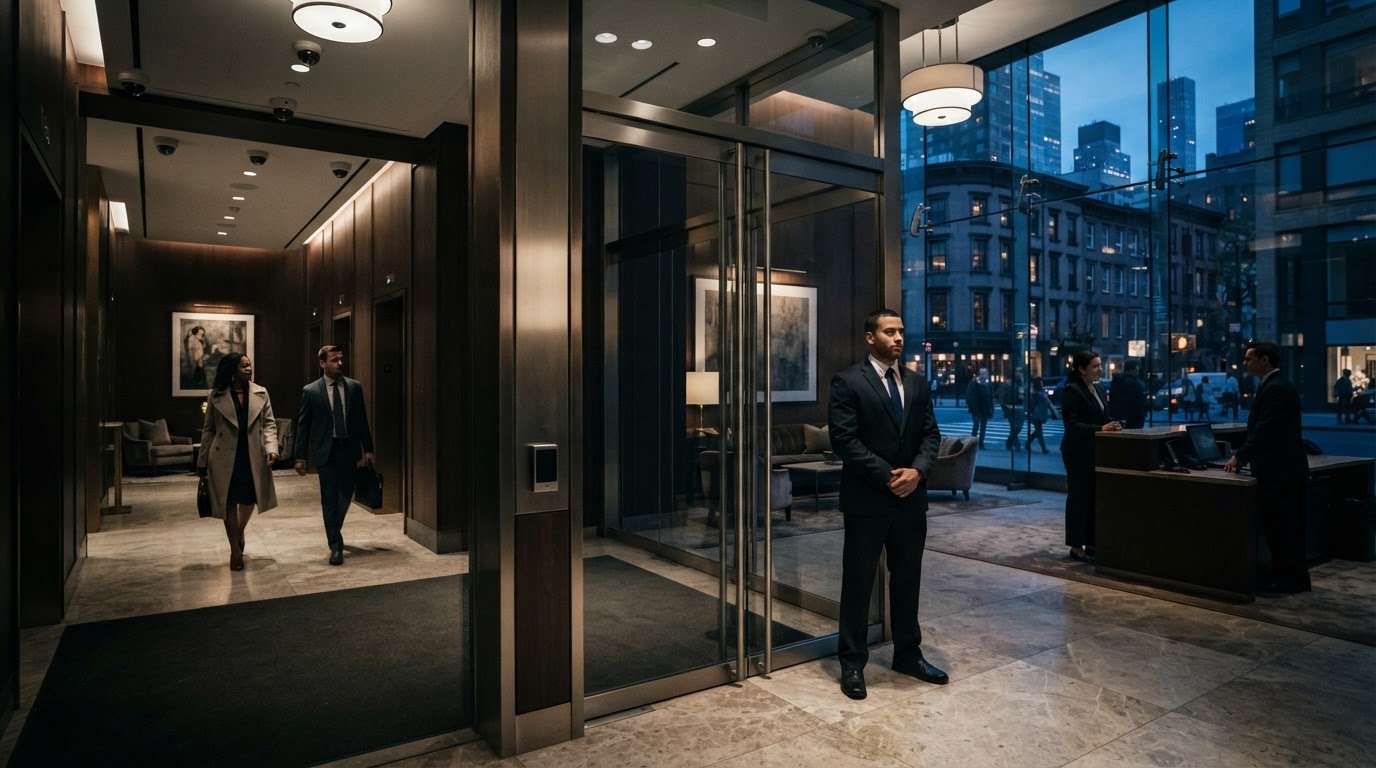
A well-managed entrance gives employees and visitors a clear arrival process. Consistent access steps also help security personnel notice unusual activity without treating routine guests as threats.
Campus Patrol and Access Monitoring
Campus patrols connect entrance oversight with activity around buildings and grounds. Officers can observe approaches to entrances, note unsecured doors, and direct visitors to the proper check-in point. For example, a patrol near a loading area may notice a delivery driver entering through a staff door. When planning coverage, identify entrances, public areas, and places where visitors may need assistance.
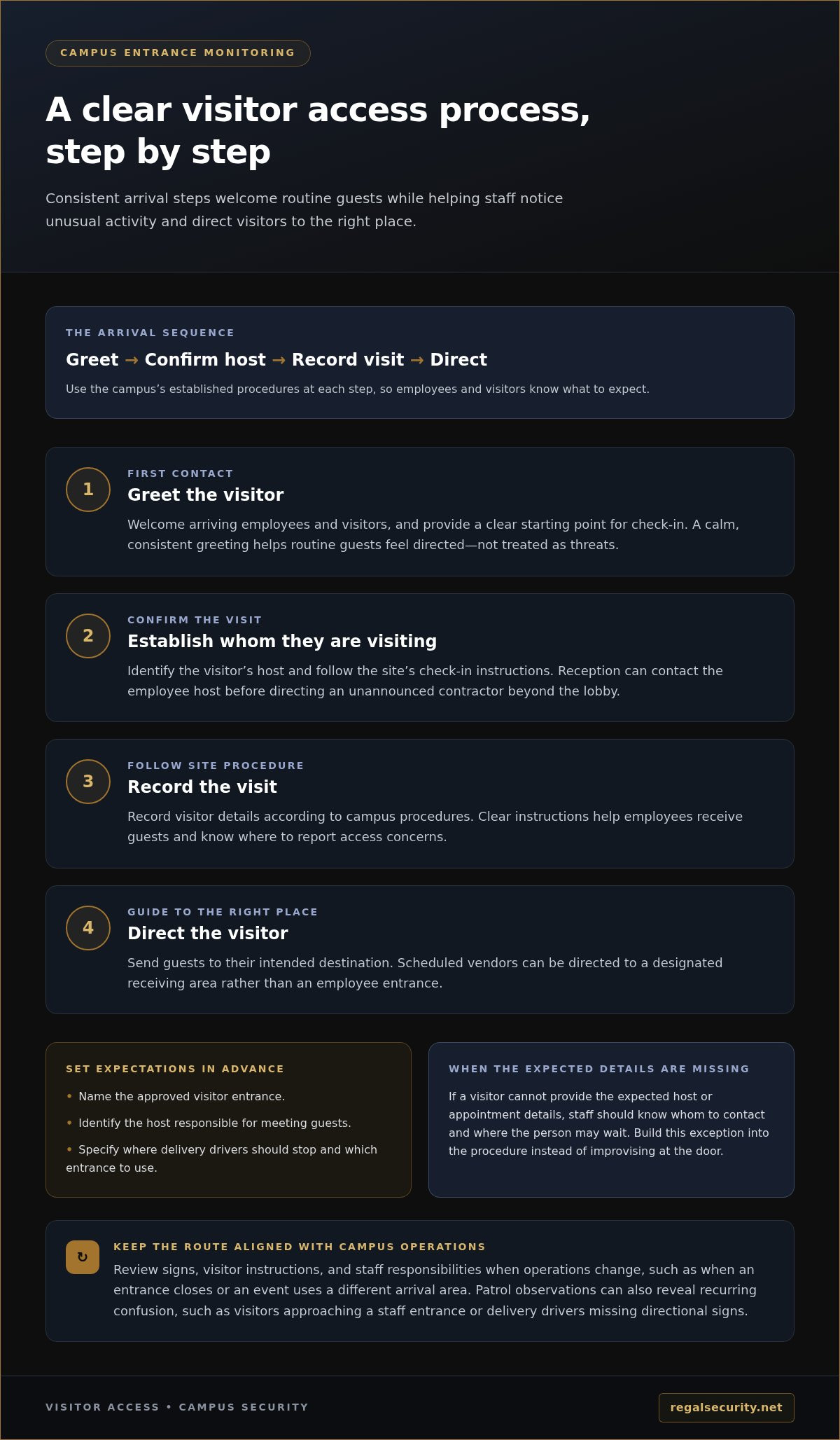
Access monitoring should follow a consistent sequence: greet the visitor, establish whom they are visiting, record the visit according to site procedures, and direct them to the right destination. A scheduled vendor, for example, can be directed to a designated receiving area rather than an employee entrance. Clear instructions help employees receive guests and know where to report access concerns.
On-Site Guards and Remote Video Monitoring
On-site security officers can speak with visitors, provide directions, and respond in person to access concerns. Remote video monitoring observes camera views from another location and can help staff notice activity at monitored entrances. These approaches serve different functions: an on-site presence supports direct interaction, while video observation depends on camera coverage and a response process.
When planning campus access, consider whether visitors need immediate guidance, whether entrances have clear sightlines, and how concerns reach the people responsible for responding. A camera may show someone waiting at a locked door, while an on-site officer can explain the check-in procedure. A campus may use one approach or combine both according to its layout and operating needs.
Before opening an entrance to visitors, set expectations for employees and reception staff. A practical procedure names the approved entrance, identifies the host responsible for meeting guests, and explains what to do when someone arrives unexpectedly. For example, reception can contact the employee host before directing an unannounced contractor beyond the lobby.
Deliveries and service visits benefit from their own access instructions. Specify where drivers should stop, which entrance to use, and how staff can distinguish scheduled deliveries from unfamiliar arrivals. Clear directions reduce confusion around loading areas and help separate visitor traffic from routine staff movement.
Build exceptions into the procedure instead of improvising at the door. If a visitor cannot provide the expected host or appointment details, staff should know whom to contact and where the person may wait. If an employee reports a misplaced access credential, the response should identify a designated contact and a clear next step.
Patrol observations can help improve access procedures. Record recurring issues, such as visitors approaching a staff entrance or delivery drivers missing directional signs, and share them with the responsible campus team. Updating signs, arrival instructions, or patrol focus can address the specific point of confusion.
Review the process when campus operations change, such as when an entrance closes or an event uses a different arrival area. A brief walkthrough can confirm that signs, visitor instructions, and staff responsibilities match the route people actually use.
Emergency response and incident prevention
A useful response plan assigns clear roles before an incident occurs. It should connect the first observer, the campus point of contact, and emergency responders through defined steps.
Emergency Response
Start with a simple sequence: identify the incident, communicate its location, and follow campus procedures. For example, a staff member who notices smoke near an entrance should report the exact location and alert the designated contact. Personnel can then direct people away from the area while the appropriate responders are notified.
Plans should distinguish situations requiring immediate emergency assistance from concerns managed through campus procedures. A medical emergency, a fire alarm, and a disruptive visitor call for different actions. Assigning a responsible contact for each situation helps staff avoid confusion and share relevant information promptly.
Walk through response routes with the people expected to use them. Identify building exits, assembly locations, and who is responsible for communicating updates. If an entrance is blocked, staff should know which alternate route to use and how to share that change.
Incident Reporting
An incident report should record what happened, where and when it occurred, and what actions followed. A report about a damaged door, for instance, should identify the entrance and describe its condition without speculating about who caused it. Factual details help campus teams decide on the next practical step.
Use a consistent reporting path so employees know whom to notify. Staff can record witness names, relevant observations, and whether responders were contacted. Distinguish direct observations from information provided by others, and avoid assumptions about motive or cause.
After the immediate response, review the report for operational lessons. If visitors repeatedly enter a restricted corridor, clearer directions or a revised staff procedure may help. Share relevant findings with the people responsible for that location, while handling personal information discreetly.
Prevention also depends on everyday observations. If a staff member notices a propped-open door, an unfamiliar package in a walkway, or a blocked exit, they should use the established reporting channel rather than investigate alone. A prompt, precise description helps the responsible team assess the situation and choose an appropriate response.
For recurring concerns, track patterns by location and circumstance. Repeated reports of door damage near a loading area, for example, can prompt a review of delivery procedures and staff responsibilities. This makes incident records useful for planning without treating every irregularity as an emergency.
Reception and visitor-facing staff can support orderly communication during an incident by directing people to the designated contact and keeping access routes clear. Concierge services for campus support can provide a staffed point of contact for routine questions and on-site coordination.
Building and grounds patrols
A patrol plan should reflect the campus layout, operating hours, and movement between buildings. Mapping the route helps personnel cover entrances, parking areas, service corridors, and outdoor gathering spaces without overlooking less visible locations.
Start by dividing the site into practical zones, such as office buildings, loading areas, parking lots, and pedestrian paths. Mark doors, gates, stairwells, and secluded corners on a campus map. For example, a route can connect a loading dock with the nearest staff entrance and adjacent parking area. A mapped route is easier to explain, follow, and revise.
Set patrol timing around campus activity, not just the route. A building with frequent deliveries may need attention during receiving periods, while a quiet walkway may warrant observation during employee arrivals or departures. Varying the route sequence can help personnel stay alert to changing conditions. The schedule should identify priority areas and explain why they need attention.
Vehicle patrols can cover roads, parking areas, and the campus perimeter. On foot, personnel can check door conditions, notice hazards along walkways, and speak directly with employees. For instance, a vehicle patrol may spot an unfamiliar car near a service entrance, while a closer walk-through can confirm whether the entrance is secure. Choose the patrol method to suit the area and task.
Building checks should follow a consistent sequence. Look for propped-open doors, damaged locks, obstructed exits, and unusual activity near restricted rooms. In an office building, a patrol can note an unsecured side door and report its exact location to the responsible contact. Personnel should observe and report concerns rather than assume their cause.
Grounds patrols should include pedestrian routes, exterior lighting locations, parking rows, and spaces near landscaping or construction. A delivery vehicle blocking a marked walkway, for example, can create an access concern to report. Seasonal changes can affect visibility: a growing hedge may obscure a sign or sightline, so include vegetation and temporary site work in routine observations.
Useful patrol records connect each observation to a location and follow-up action. Name the building or area, describe the condition, and record whom staff notified. A report stating “west parking entrance, gate left open, facilities contact notified” gives the next shift a clear reference. Consistent records also help campus teams identify recurring locations or procedures that need attention.
Review patrol routes when a building opens, a walkway closes, or campus activity shifts. Walk the revised route with personnel, confirm that key areas remain accessible, and update the map. This keeps patrol coverage aligned with how people use the campus each day.
Customized security planning for campuses
A campus plan should reflect its buildings, daily operations, and specific security priorities. Start by mapping locations, responsibilities, and procedures that staff can apply consistently.
Campus Security Planning
Build the plan around a campus map showing entrances, parking areas, shared spaces, and restricted rooms. Match each location with a practical procedure and a responsible contact. For example, a corporate office with public reception may need a different visitor process from a research building with controlled access. Review the plan whenever a building’s use or operating routine changes.
Involve employees and facilities staff in planning. They can identify recurring concerns, such as a delivery route crossing a busy walkway or an entrance shared by visitors and staff. Turn those observations into clear responsibilities, reporting steps, and patrol priorities.
Provider Evaluation and Selection
Evaluate a security plan by how clearly it addresses your campus layout, visitor needs, response procedures, and communication with staff. Review the duties, site instructions, reporting process, and supervision described. A sound plan explains how personnel will support the assignment rather than relying on broad claims about security.
Use a campus scenario to assess practical fit. For instance, consider how procedures would handle an unannounced vendor, a blocked entrance, or a concern reported by reception. The response should identify roles and next steps without disrupting routine campus activity.
Company and Guard Licensing Requirements
New Jersey requirements depend on the security role, including whether duties are armed or unarmed, and company and guard obligations should be assessed separately. Sussex County Community College requires Campus Security Officer applicants to hold valid New Jersey SORA certification and pass a background check. That example describes its applicants, not a universal rule for every campus assignment.
For armed and unarmed work, distinguish the applicable state requirements rather than assuming one set covers both roles. Align assignment duties with personnel authorization and qualifications, and include that distinction in the written plan.
A useful planning document also explains how changes reach the people responsible. If construction closes a walkway, identify who updates the route, informs employees, and revises patrol instructions. This keeps separate teams from relying on outdated site information.
Review procedures against realistic campus situations, such as a visitor arriving during a reception changeover or staff reporting an unsecured interior door. A brief tabletop exercise can reveal unclear handoffs before an incident occurs. Record decisions, assigned contacts, and any resulting procedure revisions.
Finally, establish a review cycle tied to operational changes rather than leaving the plan untouched. A new building, altered delivery route, or expanded public-facing area can change access needs. Updating the campus map and written procedures together keeps responsibilities clear.
De-escalation and crowd management
Clear roles and calm communication help staff manage tension while keeping campus activity orderly. A practical plan should distinguish an individual conflict from a crowd-flow concern.
De-escalation starts with an observable concern, not an assumption about someone’s intent. For example, if a visitor raises their voice at reception, staff can keep a respectful distance, speak calmly, and ask what assistance is needed. One person should lead the conversation while another contacts the designated supervisor if the interaction continues.
Give personnel clear options for responding to rising tension. They can listen without interruption, state a relevant boundary plainly, and offer a practical next step, such as moving a discussion away from a busy lobby. Avoid crowding the person or using language that could escalate the exchange. If an immediate threat arises, follow the campus emergency procedure.
Plan crowd movement before a lecture, company gathering, or public event. Identify the arrival point, the route to the venue, and the exits people should use when leaving. For example, keep the check-in queue separate from the main corridor so arriving guests do not block employees moving between buildings.
Walk the event route in advance and note pinch points, such as a narrow doorway, stair landing, or lobby beside reception. Position staff visibly so they can provide directions and notice blocked pathways. Keep accessible routes and designated exits clear, and identify who will communicate a route change if an area becomes congested.
Use short, consistent messages to direct crowds. One staff member can guide guests toward a designated exit while another keeps the route clear. Avoid conflicting instructions from different locations. If a room reaches its intended capacity, clearly explain the next step and guide arrivals to the appropriate waiting area or alternate destination.
Before an event: Mark arrival routes, exits, and staff positions on a site map.
During a disruption: Designate one spokesperson and notify the responsible contact.
Afterward: Record congestion points and revise the event procedure.
After a tense interaction or crowded event, review specific observations with the responsible campus team. Note where a queue formed, which message helped redirect people, and whether staff roles were clear. Use these details to adjust the next event’s layout and briefing.
For support planning a composed on-site presence around campus activity, discuss your campus security needs.
Regal Security: Unarmed Security Officers
Regal Security provides Unarmed Security Officers for campuses seeking a professional on-site presence and support with daily security needs. Officers can complement established access procedures and help maintain an orderly, attentive environment for employees and visitors.
Where reception and visitor assistance are central, Concierge Services can support a welcoming, organized point of contact. Vehicle Patrol offers an option for sites that need patrol presence across buildings and grounds. The right combination depends on campus layout, operating routines, and the responsibilities assigned to security personnel.
Consider Regal Security when your campus is planning on-site coverage or refining visitor-facing security. Contact Regal Security to discuss your campus security needs.
Make Your Campus Plan Work Day to Day
The next step is to turn security priorities into clear responsibilities. Identify who reviews site procedures, who communicates changes to staff, and how operational concerns reach decision-makers. A corporate campus security plan in New Jersey should stay aligned with how people use the campus as buildings, teams, and daily routines change.
Regal Security offers Unarmed Security Officers for an on-site presence, Concierge Services for visitor-facing support, and Vehicle Patrol for campus grounds. These services can support a practical approach tailored to your site’s needs and operating environment.
Consider which campus responsibility needs attention first, then discuss how appropriate security support could fit into your existing procedures. Contact Regal Security about campus security to explore a considered next step for your campus.
With clear responsibilities and a thoughtful plan, your team can keep strengthening a secure, welcoming environment.
Frequently Asked Questions
What corporate campus security services are available in New Jersey?
Common options include unarmed security officers, concierge services, vehicle patrol, and executive protection. The right combination depends on campus operations: a corporate office may need a staffed reception point, while a spread-out site may benefit from vehicle patrol. Regal Security provides these services for corporate clients. Consider which daily responsibilities require an on-site presence and which areas need mobile coverage when shaping your service plan.
Which security companies serve corporate campuses in New Jersey?
Regal Security serves corporate clients in New Jersey, with a geographic focus that also includes New York. Its local focus includes New York City, Manhattan, Brooklyn, Queens, the Bronx, Staten Island, Long Island, Nassau County, Suffolk County, Westchester County, Rockland County, and Orange County. For a New Jersey campus, assess whether the service fits your site’s routines, visitor needs, and coverage priorities.
How should a company assess security risks at a New Jersey corporate campus?
Assess risk by identifying valuable assets, likely points of disruption, and the consequences of an incident. For example, consider how a blocked loading entrance could affect deliveries or how an inaccessible meeting area could disrupt business operations. Gather input from facilities, reception, and department leads, then rank concerns by operational impact. Revisit the assessment after renovations, changes in public access, or shifts in campus use.
What access control and visitor management systems work best for corporate campuses?
The most suitable approach connects visitor registration, employee access procedures, and clear staff responsibilities. A campus might use employee badges, a visitor log at reception, and host notification before guests proceed beyond the lobby. Establish how staff handle forgotten credentials, unexpected vendors, and appointments at closed entrances. Technology can support these steps, but consistent procedures and a clear point of responsibility remain essential.
What emergency response and evacuation plans should New Jersey corporate campuses have?
Plans should define how employees report an incident, who communicates instructions, and where people go during an evacuation. Create separate procedures for situations such as a fire alarm, medical emergency, or building access concern. Identify alternate exits and an assembly location for each building, then explain how staff receive updates if a route is unavailable. Review instructions with employees when building layouts or work areas change.
What security challenges are common at corporate campuses in Newark, Jersey City, and other New Jersey areas?
Challenges vary by site. A Newark or Jersey City campus may need to coordinate pedestrian arrivals, deliveries, and vehicle access near busy streets, while a suburban property may have wider grounds and more dispersed buildings. Construction, shared entrances, and changes in visitor flow can affect either setting. Map how people and vehicles use the property, then tailor procedures to those patterns rather than relying on a generic plan.