When Your Security Contractor Fails: Restoring Safety
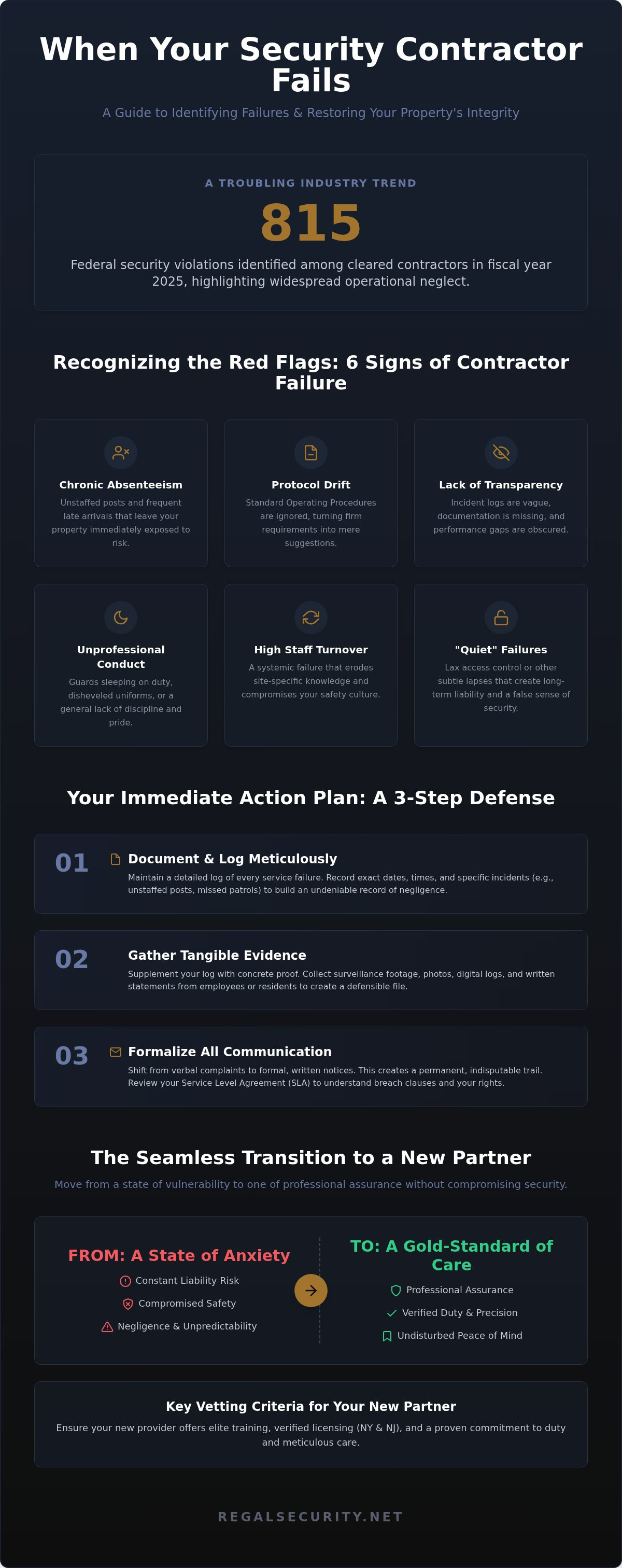
During the 2025 fiscal year, federal inspectors identified 815 security violations among cleared contractors, illustrating a troubling trend of operational neglect across the industry. When you discover your own provider has faltered, whether through a missed shift or a lapse in vigilance, the sense of professional betrayal is profound. Knowing what to do when your security contractor fails is no longer a matter of administrative cleanup; it's a critical step in restoring your property's integrity. You likely expected a partnership built on duty, only to be met with negligence that increases your liability and leaves your assets exposed.
It's unsettling to feel that the force meant to stabilize your environment has become a source of anxiety. This guide provides a methodical path to address these performance gaps and secure your premises once more. We'll explore how to document service failures with precision, navigate the complexities of contract termination, and transition to a high-tier partner without leaving a single hour of your property unprotected. You'll learn to move from a state of vulnerability to a gold-standard level of care that ensures your peace of mind remains undisturbed.
Table of Contents
Identifying the Indicators of Security Contractor Failure
The breakdown of a protective partnership rarely occurs overnight. Instead, it manifests through a series of subtle erosions in service that eventually compromise the entire physical security of your premises. Identifying these early indicators is the first step in determining what to do when your security contractor fails to meet the high-tier standards your property requires. When the stabilizing force you've hired begins to falter, the risks to your assets and personnel grow exponentially.
Chronic absenteeism represents the most severe indicator of failure. When posts remain unstaffed, your property faces immediate exposure to risk. This often stems from poor management oversight rather than individual officer error. Similarly, protocol drift occurs when standard operating procedures are treated as mere suggestions. If officers stop verifying identification or fail to conduct scheduled patrols, the meticulous nature of the work has vanished. These lapses aren't just inconveniences; they're invitations for liability.
Unprofessional conduct further signals a decline in agency culture. Security guards sleeping on the job or arriving in disheveled uniforms suggests a lack of pride and discipline within the organization. These visible lapses are usually accompanied by a lack of transparency in reporting. If incident logs are vague or documentation is missing, the agency is likely obscuring its own performance gaps. A professional partner should provide a clear, auditable trail of their activities, not a series of excuses for missing information.
Personnel Issues vs. Systemic Failures
Distinguishing between one underperforming officer and a failing agency management is vital for your next steps. A single bad hire is a training issue; a pattern of high turnover and unresponsiveness is a systemic failure. High turnover erodes your property’s safety culture, as new personnel lack the site-specific knowledge required for precision. When the agency fails to address these concerns despite your feedback, the problem is no longer the individual at the front desk, but the leadership behind them.
Security contractor failure is a persistent breach of trust and safety standards that compromises the protection of people and assets.
The Hidden Risks of 'Quiet' Failures
Some failures are "quiet," such as lax access control that doesn't result in an immediate incident but creates long-term liability. These lapses slowly destroy the confidence of residents or employees in their own safety. When security becomes "good enough" rather than exceptional, it creates a false sense of safety that is often the precursor to a major security breach. You don't want to discover the depth of these failures only after a significant incident has occurred; you need a partner that maintains a gold-standard of care every hour of every day.
Immediate Actions: Documenting Performance Gaps and Mitigating Risk
Once you've identified the signs of decline, the focus shifts to creating a structured record of these failures. Knowing what to do when your security contractor fails requires a departure from casual conversations and a move toward formal, defensible data collection. This process ensures that when you choose to act, your decision is backed by an undeniable pattern of negligence. A professional approach here protects your property's interests while setting the stage for a more reliable future.
Begin by maintaining a meticulous log of every service failure. Record the exact dates and times of unstaffed posts, late arrivals, or missed patrol rounds. Supplement this log with tangible evidence, such as surveillance footage showing unattended desks or witness statements from employees who observed unprofessional conduct. Reviewing your Service Level Agreement (SLA) is equally vital, as it outlines the specific breach clauses that define non-compliance and your rights as a client.
Building a Defensive Documentation File
Formalize all communication regarding performance issues. Verbal complaints are often ignored or forgotten; written notices create a permanent trail that is difficult to dispute. Use digital logs to prove patterns of absenteeism or protocol drift over time. This thoroughness protects your organization from potential wrongful termination claims and provides a clear justification for seeking a stabilizing security partner who prioritizes accountability and the gold-standard of care.
Short-Term Risk Mitigation Strategies
While preparing for a transition, you must bridge the safety gap to maintain stability. Increase internal oversight by having facility managers perform spot checks on the current team. If specific access points have been left vulnerable due to contractor neglect, consider temporary physical measures or reassigned staff to shore up these areas. Communicating with your residents or staff with professional assurance ensures they feel protected while you determine what to do when your security contractor fails to meet expectations.
Before finalizing a termination, most contracts require a formal "Notice to Cure." This document serves as a final, dignified warning, giving the incumbent agency a set period to rectify the documented gaps. It communicates your commitment to high standards and moral uprightness. If the agency fails to demonstrate an immediate and sustained return to professional precision, you have established the legal and moral grounds to move forward with a more capable provider.
The Seamless Transition: How to Switch Security Providers
Transitioning security providers is a delicate operation that requires the same precision as the protective services themselves. Understanding what to do when your security contractor fails involves more than just ending a contract; it requires securing a new line of defense before the old one is removed. By planning the switch behind the scenes, you maintain the stability of your environment and prevent the vulnerability that often follows a business dispute. This proactive stance ensures that your property remains a sanctuary of order, even during a change in personnel.
The "Dark Transition" approach allows you to finalize your new partnership before the incumbent is aware of the change. This method ensures that there is no gap in coverage, as the replacement team is prepared to step in the moment the previous contract concludes. Coordinating the transfer of sensitive items, such as master keys and digital access codes, requires a steady hand and a logical sequence of actions. You're not simply replacing a vendor; you're restoring a standard of excellence that had previously slipped.
Selecting the Successor Agency
When evaluating a new partner, you should prioritize unarmed security officers who demonstrate high retention rates and a commitment to moral uprightness. A localized presence in NYC and NJ is essential for rapid response and consistent supervisor oversight. During the selection process, request a detailed transition plan as part of the RFP. This document should outline how the agency intends to absorb site knowledge and maintain the gold-standard of care without disrupting your daily operations.
Executing the Handover Safely
The physical handover of keys, access codes, and site manuals must be managed with meticulous care. It's often best to time the transition during low-traffic periods to minimize disruption to residents or employees. Ensure that the new security staffing services have completed site-specific training before their first shift begins. Managing the outgoing contractor's exit with dignity is vital to prevent any potential retaliation, ensuring a clean break and a fresh start for your property's safety culture.
On the first day of the new contract, conduct a comprehensive orientation with the incoming team. This session should reinforce site-specific protocols and establish clear lines of communication between your management and the security personnel. By setting these high expectations from the outset, you replace the previous culture of neglect with one of professional assurance and quiet strength. This methodical approach transforms a period of potential risk into a seamless restoration of safety.
Establishing New Standards: Vetting for Integrity and Professionalism
Establishing high-tier standards is the final stage of restoration. Once you've navigated the immediate crisis of what to do when your security contractor fails, you must ensure the successor possesses the integrity to prevent a recurrence. This vetting process moves beyond a cursory review of credentials and into a deep assessment of an agency's moral uprightness and operational precision. In regions as demanding as New York and New Jersey, a "good enough" approach is simply insufficient for protecting high-value assets and personnel.
Verifying current licensing and insurance is the baseline of professional vetting. Beyond these legal requirements, you must assess the caliber of training provided to officers. A truly professional firm doesn't just hire; it cultivates personnel who are experts in both deterrence and professional conduct. This meticulous preparation is how an agency delivers peace of mind security services that go beyond mere presence. Management support is equally critical, as an on-site officer is only as effective as the supervisor who monitors their performance and provides the resources necessary for success.
Vetting Beyond the Sales Pitch
A polished sales presentation can sometimes mask underlying systemic weaknesses. To uncover the truth, ask for case studies of properties similar to yours in Manhattan or Brooklyn. These real-world examples demonstrate an agency's ability to handle the complexities of high-density urban environments. It's also wise to interview the actual account manager who will oversee your site, rather than just the representative who handles the contract. This ensures their philosophy aligns with your needs, particularly regarding the nuanced hospitality required of a concierge security officer in a luxury high-rise.
The Importance of Local Accountability
National firms often struggle to maintain the meticulous detail that a regional partner provides. A firm deeply rooted in NJ and NYC property management circles understands the specific risks and expectations of these neighborhoods. This local expertise ensures that their vehicle patrol security services are not only visible but also responsive to the specific needs of local precincts. When your security partner is a member of the community they serve, they operate with a sense of duty that a distant corporation cannot replicate. This accountability is the bedrock of a stable, long-term partnership.
Restoring safety is a commitment to excellence that requires a partner dedicated to your property's success. If you are ready to replace negligence with professional assurance, secure a gold-standard security partner to protect your assets today.
Regal Security: Restoring Precision and Peace of Mind
When your current provider fails to uphold their duty, the path forward requires more than just a replacement; it demands a complete restoration of standards. Regal Security serves as the stabilizing force for properties throughout New York and New Jersey, providing a gold-standard of care that replaces operational anxiety with professional assurance. Knowing what to do when your security contractor fails often leads clients to seek a partner that values precision and moral uprightness above all else. We provide the quiet strength and meticulous site management necessary to secure your assets without the need for aggressive or alarmist tactics.
Our commitment to excellence is rooted in a sense of duty that permeates every level of our organization. We understand that a security failure is a risk management crisis, and our response is designed to be steady, deliberate, and logical. By implementing tailored transition plans, we eliminate the service gaps that often occur during a change in providers, ensuring your property's safety is never compromised for even a single hour. This seamless approach allows you to focus on your core business while we handle the complexities of your protection with elite capability.
The Regal Approach to Professionalism
Our vetting process is among the most rigorous in the industry, ensuring that we deploy only a higher caliber of personnel to your site. We don't simply fill posts; we select individuals who embody our values of integrity and meticulousness. In our concierge services, we achieve a sophisticated balance by integrating high-tier hospitality with professional security protocols. This ensures your residents or employees feel both respected and protected. Every officer is trained to maintain a dignified presence, reflecting the prestigious nature of the properties we serve in Manhattan, Brooklyn, and beyond.
Securing Your Property’s Future
To ensure long-term stability and prevent the "protocol drift" that plagues many agencies, we maintain constant management oversight. Our supervisors conduct regular, unannounced site visits to verify that every detail of your security plan is being executed with precision. Whether we're providing unarmed security officers for a corporate headquarters or reliable vehicle patrols for a multi-acre facility, our solutions are customized to meet your specific operational needs. We believe that professional protection should be a stabilizing force, not a source of constant concern.
Our team is dedicated to the success and safety of those we serve, bridging the gap between a security force and a high-tier service provider. If you're ready to move away from a culture of neglect and toward a partnership defined by professional assurance, we're prepared to assist you. Contact Regal Security for a confidential site assessment and transition plan to restore the safety and order your property deserves.
Reclaiming the Safety Your Property Deserves
Restoring order after a security failure requires a transition from reactive management to proactive guardianship. By identifying the subtle signs of protocol drift and maintaining meticulous documentation, you establish the necessary grounds for a clean and professional break. A seamless transition isn't merely about changing personnel; it's about elevating your property's culture to a higher tier of service that prioritizes duty and precision above all else. This process ensures your assets remain protected while you replace negligence with excellence.
Knowing what to do when your security contractor fails allows you to move forward with quiet confidence rather than anxiety. At Regal Security, we specialize in high-rise and corporate environments across NYC and NJ, redefining asset protection through a gold-standard of care and localized accountability. We act as a trusted partner for seamless agency transitions, ensuring your property remains a sanctuary of stability throughout the process. Restore integrity to your property's protection with Regal Security and experience the peace of mind that comes from a truly professional partnership. Your commitment to safety is a noble pursuit, and with the right guardian by your side, it's one you can achieve with absolute certainty.
Frequently Asked Questions
Can I terminate my security contract immediately for a no-show?
Immediate termination usually depends on the gross negligence or material breach clauses within your Service Level Agreement. While a single no-show is a serious lapse, most contracts in the New York and New Jersey markets require a formal written notice and a period to cure the deficiency. You should consult with your legal counsel to determine if the failure constitutes an immediate exit or if a structured termination process is required to avoid liability.
What are the most common signs that a security contractor is failing?
Common indicators include chronic absenteeism, disheveled uniforms, and a lack of transparency in daily activity reports. You might also notice protocol drift, where officers begin to ignore standard operating procedures like ID verification or perimeter checks. These subtle erosions in service are often the first signs of a larger systemic failure within the agency's management. Recognizing these patterns early helps you decide what to do when your security contractor fails to maintain your site's integrity.
How do I document security officer negligence safely?
Effective documentation involves gathering objective evidence without creating a confrontational environment on-site. You should maintain a private digital log that records the specific dates, times, and nature of each service failure. Supplement these entries with saved surveillance footage and written witness statements from trusted staff members. This methodical approach creates a defensible record of negligence that supports your decision to transition to a more reliable partner while protecting you from potential contract disputes.
Is there a risk of retaliation when firing a security company?
While the risk of retaliation is rare among professional firms, it's a valid concern during a contentious transition. You can mitigate this risk by employing a Dark Transition strategy, where you secure a new provider before notifying the failing incumbent. Coordinating a swift handover of keys and access codes during low-traffic periods in Manhattan or Brooklyn further ensures stability. Professional exit management keeps the focus on duty and morality, preventing lapses in your property's safety.
What should be included in a professional security transition plan?
A comprehensive plan must include a logical sequence for the handover of master keys, digital access codes, and site-specific manuals. It should also outline a day-one orientation for the new team to ensure they understand your property's unique requirements. Meticulous planning prevents coverage gaps during the switch. When considering what to do when your security contractor fails, prioritize a partner that provides a written transition timeline as part of their initial proposal for your NJ or NYC facility.
How do I know if a new security agency is actually reliable?
Reliability is best verified through localized case studies and direct interviews with the account manager who will oversee your property. A reputable agency in the NYC area should demonstrate a high retention rate for their unarmed security officers and a transparent reporting system. Ask for references from property managers in similar sectors, such as luxury high-rises or corporate offices. This vetting process ensures the firm possesses the elite capability and quiet strength necessary for a long-term partnership.
What are the legal requirements for security agencies in New York and New Jersey?
Security agencies in New York and New Jersey must maintain valid state-issued licenses and carry comprehensive liability insurance that meets regional requirements. In New York, the Department of State oversees licensing, while the New Jersey State Police handle the SORA certification process for officers. Beyond these legal baselines, a high-tier provider will often exceed minimum training standards, focusing on de-escalation and hospitality to provide a gold-standard of care for their clients in the metropolitan area.
Can I sue my security contractor for a breach of protocol?
You can certainly pursue legal action if a breach of protocol results in documented financial loss or physical damage. Most lawsuits hinge on the specific language of your Service Level Agreement and the evidence of negligence you've collected. If the contractor failed to meet the standard of care established in the industry, they may be liable for the resulting consequences. Legal counsel can help you navigate the complexities of a suit while you focus on restoring your property's security.


