2026 Security Guide for Chelsea, NYC Art Galleries
What if the strongest gallery security is the kind visitors barely notice? In Chelsea, a calm, attentive presence can help protect people and artwork while preserving the openness that makes a gallery inviting. This guide to security for art galleries Chelsea explains how to balance those priorities with a plan shaped around the space, its schedule, and the way visitors move through it.
Gallery teams know that a welcoming entrance and thoughtful visitor experience matter as much as careful access management. An unarmed officer can support daily operations when duties are clear, coordinated with staff, and matched to the gallery’s needs. Coverage should account for the difference between public hours, openings, deliveries, and quieter periods.
Here, you’ll find a practical framework for assigning officer duties, choosing a discreet on-site presence, and adding concierge or patrol support where it fits the property. Regal Security provides tailored unarmed security and concierge services for clients across New York City and New Jersey, including Manhattan. The aim is to support the gallery’s work without making visitors feel they’ve crossed a threshold into somewhere unwelcoming.
Table of Contents
Security for Art Galleries in Chelsea, NYC: What Should Coverage Protect?
A Chelsea gallery has two responsibilities that should work together: welcoming visitors to experience the artwork and safeguarding people, the collection, and the premises. Effective coverage supports both. Start with how the gallery operates, rather than relying on a generic post or schedule.
Gallery security is the coordinated practice of managing people, access, and response to protect the collection while supporting the visitor experience. For security for art galleries Chelsea, that means looking closely at the space and its routines: where visitors enter, how they move between exhibition rooms, which areas are staff-only, and how access is managed at different times. A useful plan also accounts for changes in the gallery’s schedule and activity.
How does an open gallery environment shape security needs?
Visitors may move from the entrance through reception and exhibition rooms, while staff need practical access to offices, storage, and other back-of-house areas. Identify which spaces are open to the public and how staff-only areas are distinguished and managed. Clear boundaries help staff and visitors understand where they can go without making the gallery feel unnecessarily restrictive.
Events, deliveries, and exhibition changes can alter those routines. An opening may bring a different flow of guests through the entrance; a delivery may require staff to coordinate access to a nonpublic area. Include these activities in the coverage plan, and specify who communicates changes to the officer. For background on art theft and its prevention, see the overview of the subject and its history.
Which gallery-specific priorities belong in a security brief?
A practical security brief should describe operating hours, typical visitor patterns, event schedules, and delivery arrangements. It should also clarify where the officer is expected to be, how their presence supports access management, and which gallery staff member receives updates. These details shape coverage around actual operations instead of assumptions about Chelsea or Manhattan.
For broader context on the responsibilities and professional role, read this guide to professional unarmed security officers. The central question is practical: where will a calm, attentive presence best support the gallery’s people, collection, and daily flow?
Can Unarmed Security Officers Protect a Chelsea Art Gallery Effectively?
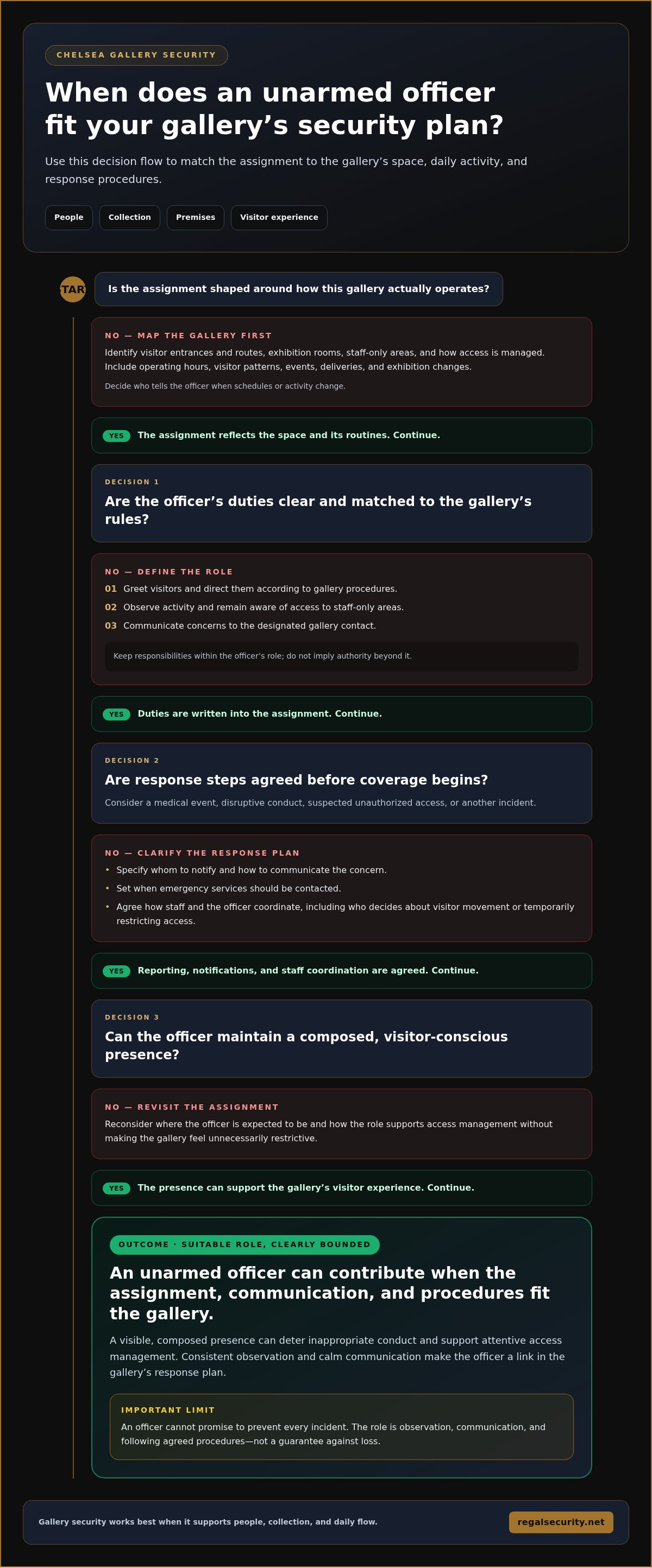
Yes, an unarmed officer can contribute to protection in a Chelsea gallery when the assignment is designed around the space, duties are clear, and procedures explain how to escalate concerns. A visible, composed presence can deter inappropriate conduct and support attentive access management, but no officer can promise to prevent every incident.
A professional unarmed presence is a deterrent and a link in the gallery’s response plan, not a guarantee against loss. Its value lies in consistent observation, calm communication, and following agreed procedures. For security for art galleries Chelsea, define those expectations with gallery leadership before coverage begins.
What can an unarmed gallery officer contribute?
At the entrance, an officer can greet visitors and direct them according to the gallery’s procedures. During the assignment, the officer can observe activity, remain aware of access to staff-only areas, and communicate concerns to the designated gallery contact. Write these responsibilities into the assignment so the officer supports the gallery’s rules without implying authority beyond the role.
Calm communication matters. If a visitor appears distressed or an access concern arises, the officer can report what they observe and follow the agreed response steps. Clear, timely reporting gives gallery leadership useful information and helps staff respond in a coordinated way.
When should a gallery define additional response procedures?
Before coverage starts, discuss how the officer should respond to a medical event, disruptive conduct, suspected unauthorized access, or another incident. Specify whom to notify, how to communicate the concern, and when emergency services should be contacted. These steps reduce uncertainty during a stressful moment while keeping the officer’s role focused on observation, communication, and the agreed response.
Gallery leadership should also clarify how staff and the officer coordinate during an incident, including who makes decisions about visitor movement or temporarily restricting access. For art-crime reporting information and resources, galleries can consult the FBI Art Crime Team. Clear procedures support a measured response without suggesting that an on-site officer provides investigative or technical surveillance services.
Regal Security provides tailored unarmed officers for on-site assignments in New York City and New Jersey. Galleries can explore unarmed security support for gallery operations to align officer duties with visitor service and access procedures.
Compare On-Site, Concierge, and Patrol Security for Chelsea Galleries
Compare coverage options by the work they need to support, not by assuming one model suits every gallery. Consider when visitors are present, how the entrance is managed, whether events change the flow of people, and whether exterior or adjacent areas need attention. A gallery can emphasize one model or combine complementary duties.
How does on-site officer coverage differ from concierge security?
An on-site assignment prioritizes a designated location and its agreed security duties. These may include maintaining an attentive presence and supporting the gallery’s access procedures. Concierge-oriented coverage gives more emphasis to front-of-house service, such as welcoming visitors and directing them appropriately, while remaining aware of access boundaries.
The difference is one of emphasis, not a universal ranking. A gallery with a strong reception function may value a hospitality-led approach, while another may prioritize an assigned officer’s security responsibilities. For security for art galleries Chelsea, match that emphasis to gallery hours, visitor access, event schedules, and how staff use the space.
When might scheduled vehicle patrol support a gallery?
Vehicle patrol may suit a property with exterior or adjacent areas that need periodic attention as part of a broader plan. It can complement an on-site officer, but a mobile unit does not provide a continuous presence inside the gallery or at its entrance. The two approaches serve different purposes.
Define the areas and periods when patrol support would be useful. Regal Security provides vehicle patrol alongside tailored unarmed on-site and concierge services. For more context on mobile property coverage, see this guide to vehicle patrol security services.
How to Plan Gallery Security Coverage in Chelsea, Manhattan
A useful security brief turns a gallery’s daily routines into clear, workable instructions. For security for art galleries Chelsea, make the plan specific to the site and give gallery staff and the officer a shared understanding of duties, communication, and changing needs.
Map operations. Record entrances, public and restricted areas, operating hours, visitor patterns, events, and delivery arrangements. Note when movement through the space changes, such as during an opening or exhibition change.
Define duties. Identify the officer’s post, visitor-facing responsibilities, access-related role, reporting line, and escalation steps. Keep the assignment aligned with gallery procedures and the desired visitor experience.
Agree communications. Establish how staff will share schedule changes, event details, delivery updates, or revised access procedures. Set a handover process for relevant updates and unresolved concerns.
Review coverage. Revisit the brief when operating hours, events, access arrangements, or gallery activities change. Set a review cadence that reflects operational changes rather than relying on performance guarantees.
What should a gallery include in its assignment brief?
Make the brief practical enough to guide a shift. Describe the areas the officer is expected to attend, how visitors should be welcomed or directed, who should receive reports, and what steps apply when a concern arises. Include the staff contact process so updates reach the right people before or during a change in routine.
Also verify any applicable city, building, or insurer requirements for the specific assignment. Requirements can depend on the circumstances, so general guidance is not a substitute for checking those that apply to the gallery and its premises.
How should officers coordinate with gallery staff?
Coordination works best when it is consistent and straightforward. At handover, staff and the officer can exchange relevant updates about events, access, deliveries, or open concerns. During coverage, duties should reflect the gallery’s operating procedures and service standards, so security supports a composed, welcoming environment rather than disrupting it.
Regal Security tailors unarmed on-site and concierge coverage to client operations in New York City and New Jersey. Discuss tailored security coverage for your gallery’s access, schedule, and visitor experience.
Tailored Security for Art Galleries in Chelsea: Working with Regal Security
An effective gallery security plan is built around the way the gallery operates. Officer duties should align with visitor access, operating hours, event schedules, and the experience the gallery wants to provide. A well-defined assignment gives staff and the officer a shared understanding of how a professional presence supports the space without overshadowing its purpose.
Regal Security provides unarmed security officers and concierge services for clients in New York City and New Jersey. For a visitor-facing gallery, an unarmed on-site officer can provide an attentive presence while following agreed access procedures and communicating with gallery staff. When front-of-house service is also a priority, concierge-oriented duties can combine a polished welcome with access awareness. The assignment is tailored to the gallery’s requirements, not imposed as a fixed template.
What can a tailored on-site assignment address?
A tailored assignment begins with practical responsibilities. These may include greeting and directing visitors according to gallery procedures, staying aware of public and staff-only areas, and reporting concerns through an agreed channel. The brief can account for the gallery’s hours, events, and operational priorities, helping staff and the officer understand how their responsibilities fit together.
Coverage should reflect changes in routine. An opening, delivery, or exhibition change may affect how visitors and staff move through the space. Clear communication about those changes helps the officer follow current procedures and maintain a consistent, hospitable presence. The goal is dependable support shaped around the gallery, without assuming a particular staffing number, technology, or guaranteed outcome.
Vehicle patrol may complement on-site coverage when the gallery’s property includes exterior or adjacent areas that need support. It serves a different purpose from an officer assigned inside or at the entrance, so base its role on the property’s actual needs rather than adding it by default.
What is the next step for a Chelsea gallery?
Gallery leaders can begin by outlining the site’s operations, desired coverage, and primary priorities. Note how visitors enter and move through the gallery, when events or deliveries affect access, and which staff members should receive updates. These details provide a practical foundation for an assignment that respects both security responsibilities and the visitor experience.
Regal Security tailors protection solutions to client requirements, with attention to a reliable on-site presence and coordination with gallery staff. For security for art galleries Chelsea, a clear discussion of access, schedule, and front-of-house expectations is a practical next step toward an arrangement suited to your gallery. Discuss security for your gallery.
Build a Gallery Security Plan That Fits
Effective security for art galleries Chelsea begins with a clear understanding of how people, artwork, and staff move through the space. Define the officer’s duties, access responsibilities, and communication procedures, then shape coverage around gallery hours, events, and the visitor experience. On-site, concierge, and patrol coverage each serve a different purpose, so the right plan depends on the gallery’s operations and property.
Regal Security serves clients across New York City and New Jersey with unarmed security officers and concierge services. Its tailored approach emphasizes integrity, precision, and a reliable on-site presence, helping align security responsibilities with the gallery’s daily needs and front-of-house standards.
A thoughtful plan can support a welcoming atmosphere while giving staff greater clarity about coverage and response. Take the next step toward an arrangement suited to your space and schedule: Discuss tailored security for your Chelsea gallery.
Frequently Asked Questions
Can unarmed security officers protect an art gallery effectively?
Yes. An unarmed officer can support gallery security through a composed presence, observation, access awareness, and timely communication with staff. Effectiveness depends on a clearly designed assignment, defined responsibilities, and agreed escalation procedures. For security for art galleries Chelsea, the plan should reflect the gallery’s layout and operations. An officer can contribute to prevention and response coordination, but no security presence can guarantee that every incident or loss will be prevented.
What does an art gallery security officer do during public opening hours?
During public hours, an officer may greet visitors, direct them according to gallery procedures, observe activity, and remain attentive to access boundaries. The assignment should clarify how the officer communicates concerns to gallery staff and what steps to follow if an issue arises. Duties should complement the gallery’s visitor service standards, so the officer’s presence supports a calm, welcoming environment while helping staff manage access appropriately.
How should a Chelsea art gallery plan security for an opening or special event?
Start by outlining the event schedule, expected visitor flow, entrance arrangements, staff responsibilities, and any changes to access procedures. Agree on the officer’s post, communication contact, and steps for disruptive conduct, medical events, or suspected unauthorized access. Share event updates with the officer and gallery team before the gathering begins. A clear plan helps maintain a professional welcome while giving staff a coordinated approach if concerns arise.
Is concierge security suitable for an art gallery in Manhattan?
Concierge security can suit a Manhattan gallery that wants a polished front-of-house presence alongside access awareness. Duties may include welcoming and directing visitors according to gallery procedures, while communicating access concerns to staff. The right balance depends on the gallery’s service expectations, operating hours, and visitor flow. Regal Security serves clients across New York City and New Jersey, including Manhattan, Brooklyn, Queens, the Bronx, Staten Island, Long Island, Nassau County, Suffolk County, Westchester County, Rockland County, and Orange County.
Can vehicle patrol replace an on-site security officer at a gallery?
Vehicle patrol generally should not be treated as a direct replacement for an on-site officer. Patrol is mobile, so it cannot provide a continuous presence inside the gallery or at its entrance. It may complement other coverage when the gallery’s property includes relevant exterior or adjacent areas. The right arrangement depends on the site, operating schedule, and coverage priorities. Define each service’s role clearly to avoid gaps in responsibility.
What should an art gallery include in a security assignment brief?
Include entrances, public and staff-only areas, operating hours, visitor patterns, events, and delivery arrangements. Specify the officer’s post, visitor-facing responsibilities, access-related duties, reporting line, and escalation steps. Explain how staff will communicate schedule or procedure changes, and establish a handover process for relevant updates or unresolved concerns. A practical brief reflects actual gallery operations and gives staff and the officer a shared understanding of their respective responsibilities.
How can gallery security support a welcoming visitor experience?
Security can support hospitality when duties are designed around the gallery’s visitor experience. A calm, attentive officer can welcome guests, provide appropriate directions, and remain aware of access procedures without making the space feel unnecessarily restrictive. Clear coordination with gallery staff helps maintain consistent service during public hours and events. Defining responsibilities in advance allows security and hospitality needs to work together while preserving the gallery’s open atmosphere.