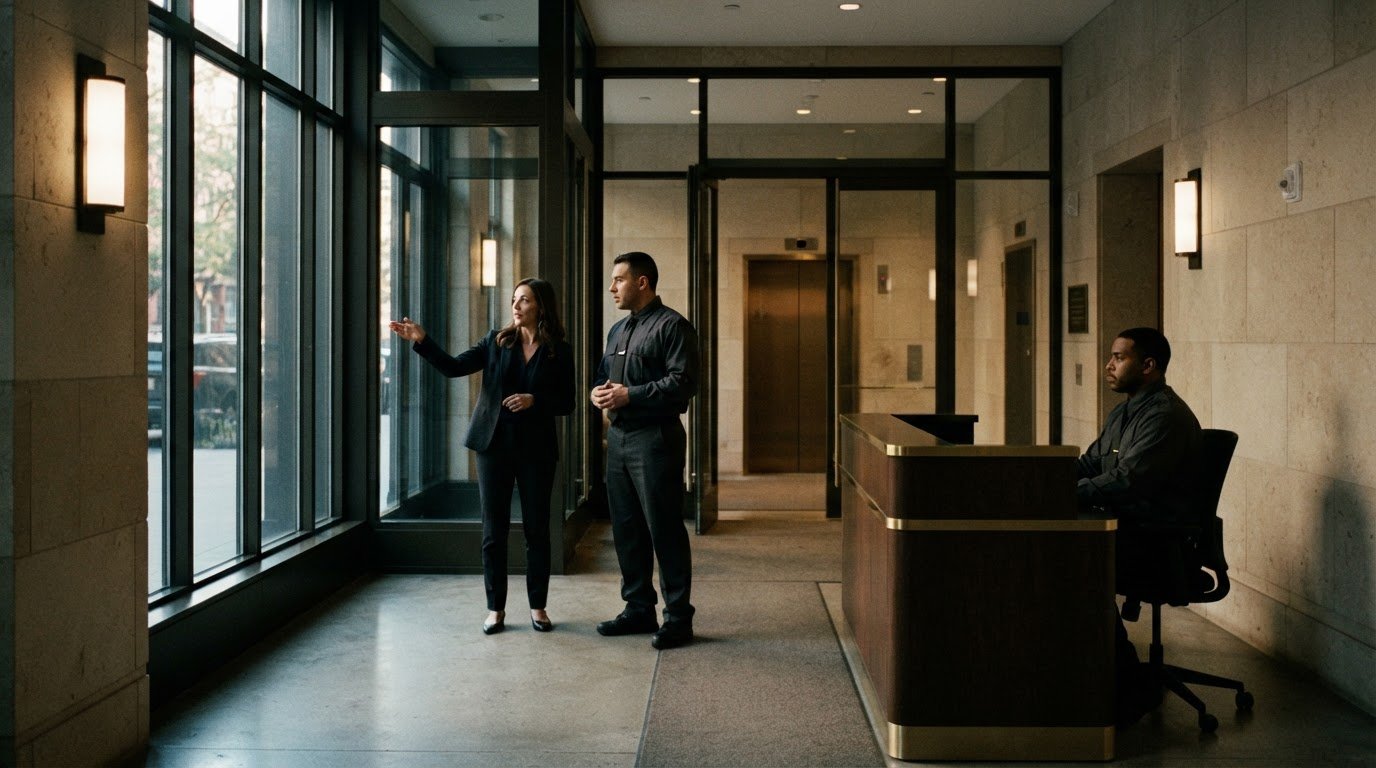
De-escalation security guards in NYC: Skills and services
A forceful response can raise the temperature instead of restoring calm. De-escalation security guards in NYC use measured communication to help manage tense interactions, starting with active listening and moving to acknowledgment, agreement, and clarification when appropriate.
Security personnel should respond differently in a lobby, retail setting, or healthcare environment. The situation, the people involved, and the site’s needs shape how an officer communicates and what support is appropriate.
This article explains how listening gives someone space to express a concern, how acknowledging emotion differs from approving behavior, and how agreement and clarifying questions can identify what needs attention. It also describes security guard services and why preparation for retail, healthcare, residential, and corporate settings matters when choosing support.
Table of Contents
1. Active listening and empathy
During confrontations, professional NYC security guards can listen without interrupting, acknowledge emotion, ask focused questions, and clarify what happened. They can maintain a composed tone, give the person time to speak, and watch for signs that the exchange is becoming safer or more tense. These techniques keep communication clear while the officer assesses the situation.
Listening is active, not passive. An officer can face the speaker, use attentive body language, nod where appropriate, and offer brief acknowledgments such as “I understand.” Eye contact should feel natural, not fixed or confrontational. If a visitor raises their voice about a delayed appointment, for example, the officer can let them explain before responding.
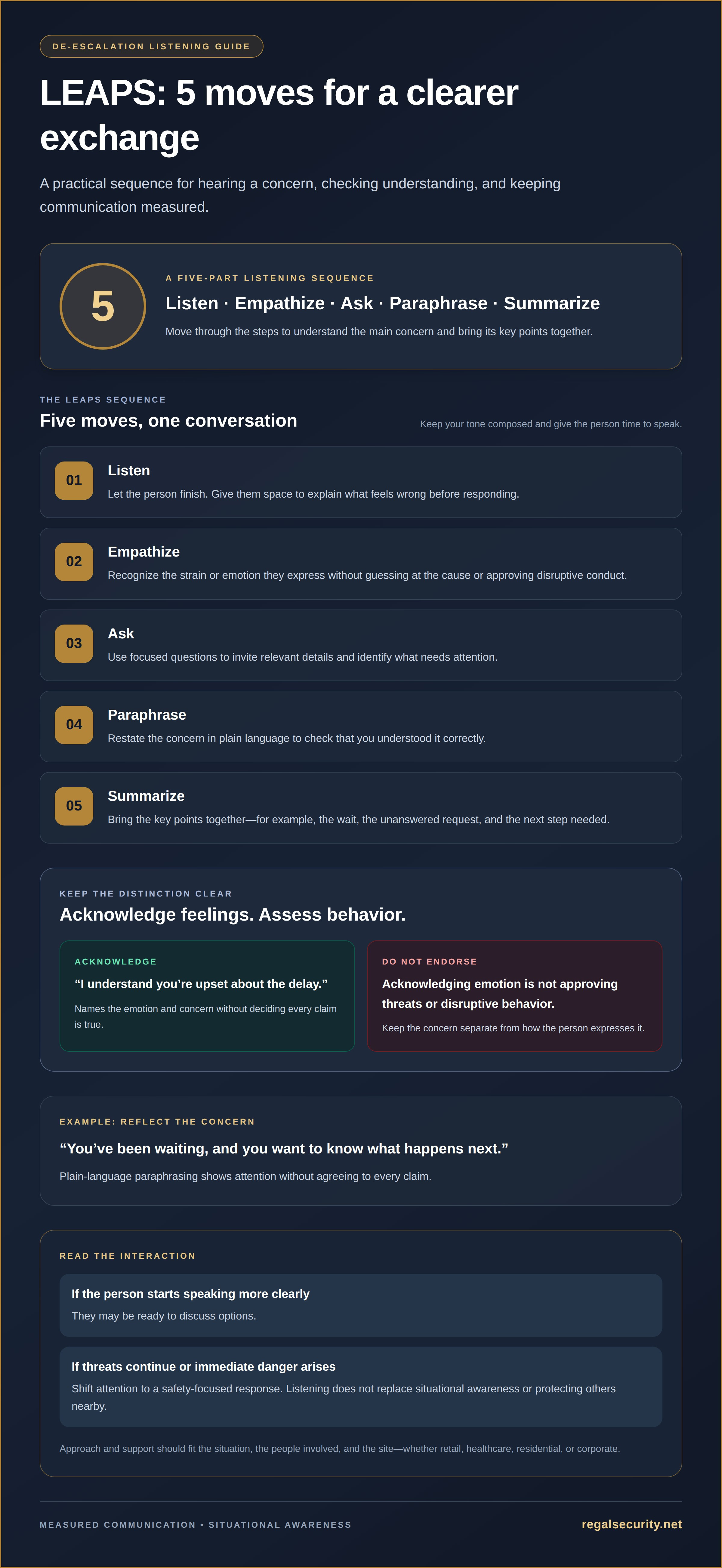
An angry person may need a chance to explain what feels wrong. Interrupting with an immediate correction can leave them feeling unheard and make the issue harder to identify. An officer can allow a pause, listen for the main concern, and reflect it in plain language: “You’ve been waiting, and you want to know what happens next.” This shows attention without agreeing to every claim.
The LEAPS listening skills offer a sequence for difficult exchanges: Listen, Empathize, Ask, Paraphrase, and Summarize. Listening means allowing the person to finish. Empathizing recognizes the strain they express. Asking invites relevant details; paraphrasing checks understanding. Summarizing brings the key points together, such as the wait, the unanswered request, and the next step needed.
Training helps officers practise these skills before a tense interaction. A scenario might involve a resident disputing an access decision in a lobby. The officer listens to the full explanation, acknowledges frustration, asks which part of the decision is unclear, and restates the concern. This can reveal whether the issue is access, communication, or another unresolved problem.
Empathy does not require guessing why someone is upset or accepting disruptive conduct. If the problem is unclear, an officer can recognize the person’s irritation without assigning blame. If the person identifies a genuine service problem, a measured apology can acknowledge the grievance. Either way, respectful listening keeps the focus on the concern instead of turning the conversation into an argument about attitude.
Throughout the exchange, the officer can assess whether listening is helping. If the person starts speaking more clearly, they may be ready to discuss options. Continued threats or immediate danger call for a safety-focused response. Careful listening gives security personnel useful information, but does not replace situational awareness or the need to protect others nearby.
2. Acknowledging emotions
An officer can recognize frustration without endorsing someone’s actions. This distinction matters when a person is angry about denied entry, a long wait, or an unanswered request. A measured response such as “I can see this has been frustrating” acknowledges the emotion while leaving the facts and conduct open to careful attention.
Specific acknowledgment is more useful than vague reassurance. If a visitor says a staff member ignored them, the officer can respond, “You feel your concern wasn’t addressed.” This reflects the person’s experience without claiming the staff member acted improperly, and gives them a clear chance to correct or add to the account.
When a legitimate grievance is apparent, a brief apology can recognize that something went wrong. If a guest was directed to the wrong entrance, for example, an officer might say, “I’m sorry you were sent to the wrong door.” The apology addresses the mistake, not every part of the dispute, and can shift communication toward resolving the immediate problem.
Careful wording keeps acknowledgment from sounding dismissive. “Calm down” can imply that the person’s feelings are the problem, while “I understand you’re upset about the delay” names the concern directly. The officer can then explain what happens next, such as clarifying the wait or directing the person to the appropriate staff member.
Facial expression, posture, and tone also shape how acknowledgment is received. During a tense exchange at a reception desk, an officer can keep a neutral expression, speak evenly, and avoid crowding the person. Sarcasm or an abrupt gesture can undermine respectful words, so consistent communication matters throughout the interaction.
Acknowledging emotion does not mean accepting threats or disruptive behavior. If someone shouts while disputing a building decision, an officer can say, “I hear that you’re angry about being turned away. I can discuss the decision, but I need you to stop threatening staff.” This recognizes the concern and sets a clear boundary.
After acknowledging emotion, the officer can observe whether the situation changes. If the person begins explaining the specific issue, the conversation may be ready to move toward clarification or options. If threats continue or immediate danger arises, attention must shift to safety. Acknowledgment supports communication, but does not replace situational judgment.
Acknowledgment helps keep a person’s concern distinct from how they express it, without replacing the need to assess conduct. An officer can listen for the point they are trying to make, then reflect it in neutral language. This shows the concern has been heard without suggesting that shouting, threats, or other behavior is acceptable. If the grievance is legitimate, an apology can recognize what went wrong and may help de-escalate the exchange. Keeping the apology tied to the specific grievance avoids implying agreement with every claim or action. The aim is to recognize the person’s experience while responding appropriately to their behavior.
Agreeing with the cause of anger
Agreement can reduce friction when an officer recognizes a concern the person has clearly described. It does not mean accepting every accusation or approving threatening behavior. If a visitor says a confusing entrance sign sent them to the wrong door, for example, the officer can agree that the sign was unclear, then help identify the correct entrance.
Focus on the cause, not the volume or force of someone’s reaction. If a resident is angry because an access decision interrupted their plans, an officer might say, “I understand that being turned away is frustrating.” This recognizes the stated impact without suggesting the decision was wrong or promising an exception.
The officer can then connect agreement to a practical alternative. If someone objects to waiting in a crowded lobby, the officer can recognize the discomfort and explain an available way to wait elsewhere. The response should address the concern while maintaining clear expectations for the location and people nearby.
Agreement must be accurate. If someone claims a staff member deliberately ignored them, an officer should not confirm intent without knowing what happened. Instead, the officer can recognize the experience they can reasonably acknowledge: “It’s frustrating to feel that your question wasn’t answered.” This keeps the conversation honest while leaving room to clarify events.
Word choice shapes whether agreement sounds sincere or dismissive. A short, specific statement is stronger than an automatic “You’re right” when the facts are uncertain. An officer handling a complaint about a delayed appointment can recognize the wait, avoid debating the person’s feelings, and explain the next step available to address the delay.
If someone proposes an unsafe or unavailable solution, agreement can still focus on the underlying need. If a person demands access through a restricted door because they are late, the officer can acknowledge the urgency and explain the appropriate route. This separates the reason for frustration from the requested action.
In a tense exchange, an officer can use a deliberate sequence: identify the stated cause, agree only with what is supportable, and offer a relevant alternative. For example: “You came to the wrong entrance, and that cost you time. I can direct you to the correct desk.” The alternative should address the actual concern, not serve as a generic way to end the conversation.
If the person rejects the proposed option, the officer can clarify what remains unresolved instead of repeating the same offer. Recognizing a legitimate grievance and presenting a reasonable alternative can keep communication focused on resolution, while maintaining clear boundaries if conduct threatens others or safety.
4. Clarifying what a person is saying
Questions and paraphrasing help an officer separate the main concern from unclear details. During a disagreement in an event queue, a guest might say, “Nobody is letting us through.” The officer can ask, “Are you concerned about your place in line, or access to the entrance?” This narrows the issue without arguing over the guest’s wording.
Open questions invite explanation, while focused questions keep the conversation manageable. An officer might ask, “What happened just before the disagreement began?” rather than asking several questions at once. If someone describes a dispute near an elevator, the officer can follow up: “Did someone ask you to wait, or did the elevator stop?” Each answer helps distinguish a misunderstanding from a specific request.
Paraphrasing gives the speaker a chance to correct an incomplete account. If a tenant says, “They keep changing the rules,” an officer could respond, “You were told one procedure earlier, and now you’ve heard something different.” The tenant can confirm or clarify. This helps the officer avoid assumptions and identify which instruction needs explanation.
When someone recounts events rapidly, asking them to repeat the sequence can bring order to the exchange. The officer might ask what happened first, what was said next, and what occurred immediately before the conflict. Someone describing a disagreement at a shared workspace may then distinguish an argument over a seat from a separate complaint about noise.
How a question is asked matters. A rapid series can feel like an interrogation, especially when someone is already upset. An officer can ask one concise question, allow time for an answer, and summarize it before moving on. “You’re saying the delivery blocked the doorway. Is that the main concern?” gives the person a clear chance to confirm.
Clarification should not become a debate about exact wording. If someone says, “You’re refusing to help,” the officer can ask what help they expected, then restate the request. In a building access situation, this may reveal that the person needs directions to another entrance, not permission to use a restricted door.
These techniques work best when officers practise realistic scenarios, including unclear complaints, competing accounts, and repeated interruptions. After asking a question or summarizing, the officer can observe whether the person identifies a specific concern or next step. If the exchange reveals an immediate threat, safety takes priority over further questioning.
If the concern remains unclear, questions or paraphrasing can help an angry person explain what they mean. Asking them to repeat the sequence may refocus attention and create an opportunity to resolve the conflict.
5. Security guard services
De-escalation preparation should reflect the post and situations officers may encounter. A retail exercise might involve a disputed store policy; a healthcare scenario might involve a visitor seeking directions. Training for de-escalation security guards NYC businesses employ should also practise communication, clear instructions, and responses to changing safety conditions.
New York State guard licensing and de-escalation preparation are distinct. De-escalation training can help security guards practise communication during tense interactions. Businesses should consider both when planning coverage and ensure practical exercises complement, rather than replace, applicable licensing requirements.
Whether guards need specialized mental health crisis training depends on their duties and setting. Relevant exercises can prepare officers to use plain language, allow time for a response, maintain distance, and assess immediate safety. A scenario at a healthcare entrance, for example, can focus on respectful communication without assuming a diagnosis based on someone’s behavior.
There is no single use-of-force response for every encounter. Security personnel should prioritize verbal communication and safety, while considering any physical intervention within applicable law, policy, and circumstances. Training for de-escalation security guards NYC organizations engage should make clear that restraint can carry risks of injury and escalation.
The cost of de-escalation training in New York City depends on the format, instructor time, and how scenarios are tailored to the site. A healthcare facility may need different exercises from a corporate lobby. The scope and delivery determine the work involved, so a general price would not describe every program.
Businesses evaluating training should look for providers that explain how scenarios match the actual post and how officers practise verbal persuasion. Organizations should distinguish security coverage from standalone training and assess what the engagement includes. At a retail post, for instance, a useful exercise could address a disagreement over store policy without escalating the interaction.
When someone appears distressed, officers should respond to observed behavior, not assumptions about homelessness or mental health. They can communicate calmly, give the person time, preserve space, and assess safety. If someone’s actions create immediate danger, the response must prioritize protecting everyone present.
Failure to manage an incident appropriately can lead to complaints, injuries, or scrutiny of decisions. Clear, professional reports can record what occurred and the steps taken. To evaluate a security company, businesses can review its policies, scenario practice, coaching approach, and incident-reporting process. Discuss security coverage for your site when planning on-site support.
Regal Security
Regal Security helps organizations plan a composed on-site response to tense interactions and changing safety needs. Where clear communication and a professional presence matter, Unarmed Security Officers and Concierge Services can support a welcoming, orderly environment. The right approach considers the setting, common points of friction, and how officers should communicate with visitors and staff. Organizations can discuss their site’s needs and the type of security presence that fits their environment.
Contact Regal Security to discuss security support for your organization.
Plan a calmer on-site response
Strong security planning begins before a difficult interaction occurs. Consider where tensions tend to arise, who may be affected, and what a measured response should look like in your environment. This context helps shape a professional presence around the needs of your property, staff, and visitors.
For organizations considering de-escalation security guards in NYC, Regal Security offers Unarmed Security Officers, Concierge Services, and Vehicle Patrol. The right support depends on the setting and the security needs you want addressed. Discussing your priorities can help identify a suitable approach without treating every site or situation alike.
When you’re ready to discuss security coverage for your organization, contact Regal Security today. A thoughtful plan can help your team approach challenging moments with greater clarity and care.
Frequently Asked Questions
Does the training cover different security environments, like retail or healthcare settings?
Yes, effective practice scenarios reflect the setting and the interactions officers may encounter. Retail exercises might involve a disputed store policy, while healthcare examples could focus on a visitor seeking information at reception. Training can also address access control, residential properties, corporate campuses, and venues across New York City, New Jersey, Manhattan, Brooklyn, Queens, the Bronx, Staten Island, Long Island, Nassau County, Suffolk County, Westchester County, Rockland County, and Orange County.
What can conflict de-escalation look like?
It can mean recognizing a developing disagreement early and choosing communication that avoids adding pressure. If two visitors dispute access to a shared space, for example, an officer can separate the immediate concern from the disagreement, explain the relevant expectation in plain language, and offer a reasonable next step. The officer also watches for changes in behavior and prioritizes safety if the exchange becomes threatening.
What is the persuasion sequence officers learn for gaining voluntary compliance?
One approach is CLARA: stay calm, listen, acknowledge, respond, and assess whether the approach is working. At a building entrance, for example, an officer could explain a restriction, hear the visitor’s concern, offer an available alternative, then assess whether the visitor understands and is willing to follow it. The sequence supports respectful requests rather than relying on authority alone.
What makes de-escalation training different from general security procedures?
General procedures establish how officers handle routine responsibilities, such as access control or reporting. De-escalation practice focuses on communication and judgment during tense interactions, including how an officer phrases an instruction or responds to resistance. A scenario involving a visitor who refuses to leave a restricted area can combine both: the officer follows site procedures while communicating expectations calmly and clearly.
What results do organizations typically see after training?
Organizations can assess training performance by reviewing scenario evaluations, report quality, complaints, incident and injury trends, and resolution time. These measures can identify where officers need more practice, such as communicating instructions or recording decisions clearly. A supervisor might review a difficult incident report alongside a scenario exercise, then use the findings to guide coaching and refine future training.