High-End Concierge Security in Tribeca: A Property Manager’s Buying Guide
What if the most effective lobby security felt less like a checkpoint and more like a natural extension of hospitality? In Tribeca, a composed arrival matters, but residents and guests also need to know that access is handled thoughtfully. Choosing high end concierge security Tribeca property managers can trust means looking beyond a uniformed lobby post to the judgment, courtesy, and consistency behind the on-site presence.
Property managers need clear procedures without creating friction at the front door or disrupting daily building operations. A refined service supports a welcoming atmosphere while giving residents and visitors confidence that the property is being attended to with care.
This guide explains what to look for in concierge security, how to compare service approaches, and how to build a practical plan around your building’s needs. We’ll consider how hospitality and unarmed security can support visitor interactions, routine operations, and a polished arrival experience, so you can make an informed decision for your Tribeca property.
Table of Contents
What High-End Concierge Security in Tribeca Should Deliver
High-end concierge security combines a professional security presence with courteous, resident-focused assistance. It supports a welcoming arrival while keeping attention on access and activity in shared spaces. For a property manager, the distinction matters: the goal isn’t simply to place someone in the lobby, but to establish a presence that suits the building and its community.
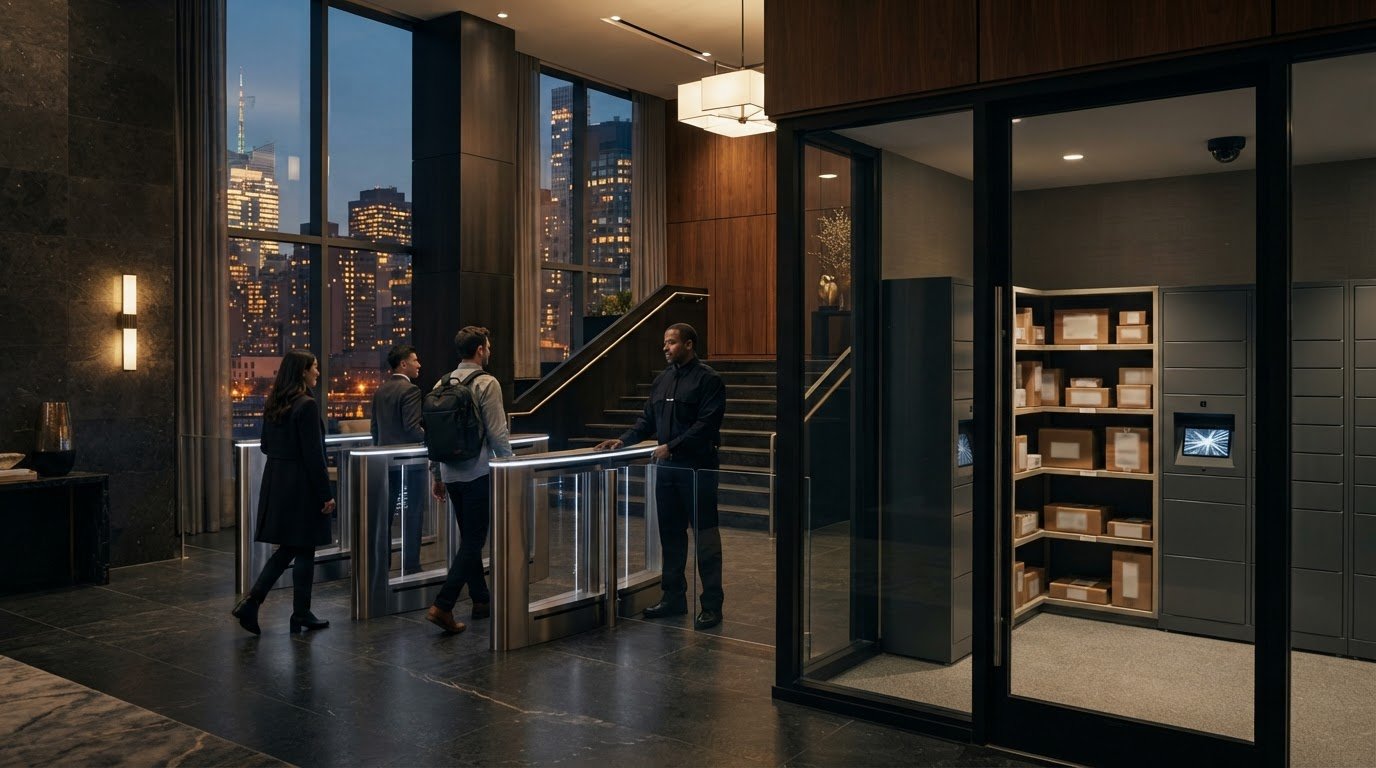
Tribeca properties may include private residences alongside street-level businesses or shared building spaces. Residents, visitors, and delivery personnel can arrive for different reasons and need different kinds of assistance. A resident returning home, a guest looking for the right entrance, and a delivery person making a scheduled stop should each receive a clear, appropriate interaction. Plan for these patterns without treating every arrival as a disruption or assuming every property needs identical procedures.
A concierge security officer’s role brings together attentiveness and service. The role of a concierge traditionally centers on helping people access information and assistance. A security presence adds another purpose, with responsibilities shaped by the property’s needs. Courtesy doesn’t replace awareness, and awareness doesn’t require an intimidating manner.
How concierge security differs from a standard lobby post
A conventional lobby post may focus on maintaining a visible presence. Concierge security also emphasizes how people are received and directed. The officer’s manner can help make arrivals orderly and the first impression composed while remaining attentive to the surroundings. Property managers can assess whether communication is clear, interactions are discreet, and assistance is offered with sound judgment. Define responsibilities according to the building’s expectations rather than relying on a one-size-fits-all checklist.
Why Tribeca properties need a resident-aware approach
Residents, guests, staff, and delivery personnel follow different routines, and their needs at the entrance can vary throughout the day. In planning, identify which arrival points people use, where visitors may need direction, and how front-desk expectations fit into daily operations. These are practical considerations, not assumptions about neighborhood risk. Matching the post to real building activity helps preserve a welcoming environment and gives the on-site presence a clear purpose.
That balance is central to high end concierge security Tribeca property managers are evaluating: the service should feel attentive without becoming intrusive, and purposeful without interrupting ordinary routines. Clearly defined expectations also help residents and staff understand how to approach the officer and what assistance falls within the assignment. For more context on the role’s combined service and security functions, see this concierge security officer guide.
How Premium Concierge Security Balances Protection and Hospitality
Premium concierge security depends on two qualities working together: attentive service and steady security awareness. Residents should be able to enter without feeling scrutinized, while guests and staff should encounter a composed professional who responds appropriately to the situation. This balance matters in a high-end building, where the lobby is both a shared space and the first point of contact with the property.
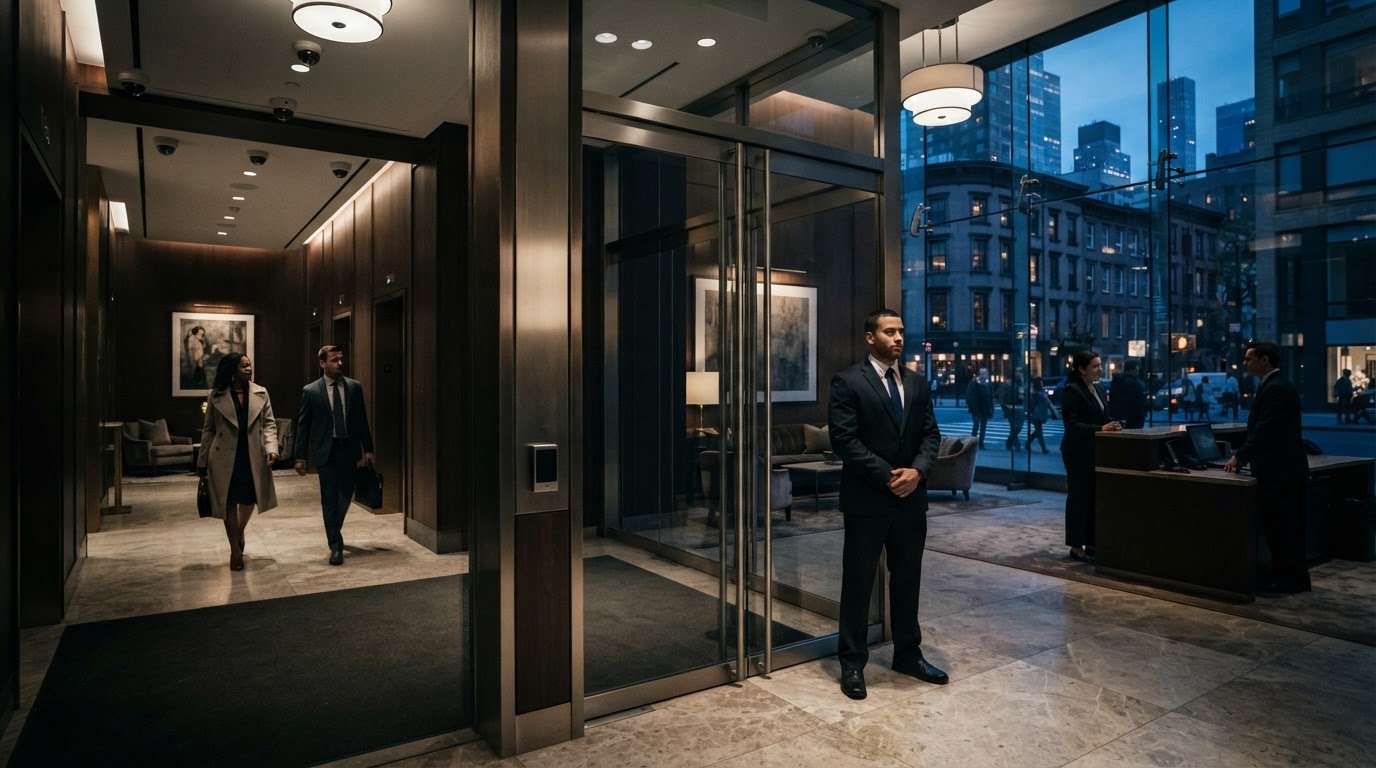
Discreet security is not an absent or inattentive presence. It is a composed, observant presence that supports the building’s standards while respecting the people who use it. A visible officer need not make an entrance feel like a checkpoint. A calm greeting, clear directions, and measured conduct can make arrivals feel natural while the officer remains attentive to lobby activity.
For high end concierge security Tribeca properties, the aim is not to make every interaction feel formal or security-driven. It is to establish a professional rhythm residents can understand and trust. Respectful, consistent interactions help visitors know where to go, staff understand how to coordinate, and residents feel recognized without unnecessary interruption to their routines.
What discretion looks like in daily lobby interactions
Discretion shows in conduct: speaking calmly, treating residents and guests with respect, and communicating clearly with building staff. Consistent procedures give the officer a dependable way to handle routine interactions, so expectations don’t shift unpredictably from one encounter to the next. Define procedures for the assignment, with a welcoming manner and attentive, professional judgment as the standard.
How professional conduct supports a premium resident experience
Property managers can observe whether an officer stays composed during busy arrival periods, offers assistance without intruding, and communicates respectfully with residents and staff. These are practical signs of service quality, not just matters of appearance. The Security Industry Association best practices and professional resources offer broader context for evaluating standards that shape security work.
Coordination matters, too. Management can set expectations for routine questions, identify which building contacts should receive relevant updates, and explain how the officer’s role fits with front-desk operations. Clear communication helps avoid crossed instructions and makes the service easier to integrate into the building’s daily routine. A resident-first perspective keeps the purpose in view: a reliable presence should support the experience of living in the building, not compete with it. This approach aligns with a resident-first view of luxury residential security.
Attentiveness: The officer stays engaged with the environment and interactions.
Composure: Communication remains measured, including during busy moments.
Coordination: The on-site role supports property management’s established expectations.
Property managers shaping this balance can explore Regal Security’s concierge services for a composed, dependable on-site presence.
How to Compare High-End Concierge Security for a Tribeca Property
A useful comparison begins with the building, not a uniform or a broad promise. When evaluating high end concierge security Tribeca property managers should consider whether the assignment reflects the property’s routines, service expectations, and management structure. A clearly described approach makes it easier to distinguish a tailored presence from a generic lobby post.
Use the same criteria to assess the service model: scope, resident experience, communication, and property fit. Look for specific explanations of how the role would support your building, rather than relying on appearance or assurances alone.
Area to compare
What to assess
Service scope
Are the assignment’s purpose, boundaries, and routine expectations clearly described for this property?
Resident experience
Does the approach pair courteous interaction with an attentive, dependable on-site presence?
Communication
Is it clear how the on-site role coordinates with property management and building staff?
Property fit
Does the plan account for the building’s layout, arrival patterns, and front-desk expectations?
Evaluation criteria for a concierge security assignment
Start with scope. A tailored assignment should make clear what the officer is expected to support and how the role fits into the property’s daily environment. Next, consider the service balance: does the approach describe courteous interactions alongside a reliable security presence? Finally, examine coordination. A sound plan should explain how the role aligns with management’s expectations, so responsibilities are understood rather than improvised.
Professionalism is more meaningful than polished presentation alone. In a planning discussion, notice whether the service approach addresses the property’s actual needs or relies on general assurances. Can the duties be explained plainly? Are resident and guest interactions considered alongside building operations? These details help show whether the assignment has been thoughtfully shaped for the property.
Questions that clarify fit without overcomplicating selection
Keep the discussion focused on the building. Ask how the service approach will fit its daily environment, what residents, guests, and staff should expect during interactions, and how communication with property management will work. These questions establish practical expectations without adding unnecessary complexity.
A useful service plan connects its approach to the property’s context instead of repeating a standard description. For a broader perspective on defining professional coverage and staffing needs, this guide to professional security staffing services offers related considerations. With a clear comparison framework, decision-makers can weigh scope, resident experience, communication, and property fit on equal terms.
How to Define a Concierge Security Plan for Your Tribeca Building
A well-shaped concierge security plan starts with the property’s actual use, then translates its priorities into clear expectations for the on-site role. This keeps the service relevant to residents and daily operations instead of relying on a standard post description. For high end concierge security Tribeca properties, the plan should reflect the individual building rather than assumptions based on its address or appearance.
Start with the property’s people, routines, and priorities
Map the building’s arrival points and note who uses them: residents, guests, staff, and delivery personnel. Consider when lobby activity is busiest, what the front desk is expected to handle, and what kind of arrival experience the property wants to provide. These details give management a practical basis for setting priorities while recognizing that neighboring buildings may have different layouts and routines.
Turn building priorities into a clear service scope
Once priorities are clear, describe the on-site role in plain language. Set expectations for professional conduct, communication, and coordination with management. Distinguish agreed responsibilities from tasks handled by other building personnel. Peace-of-mind security planning also works best when the service approach reflects the property’s specific needs.
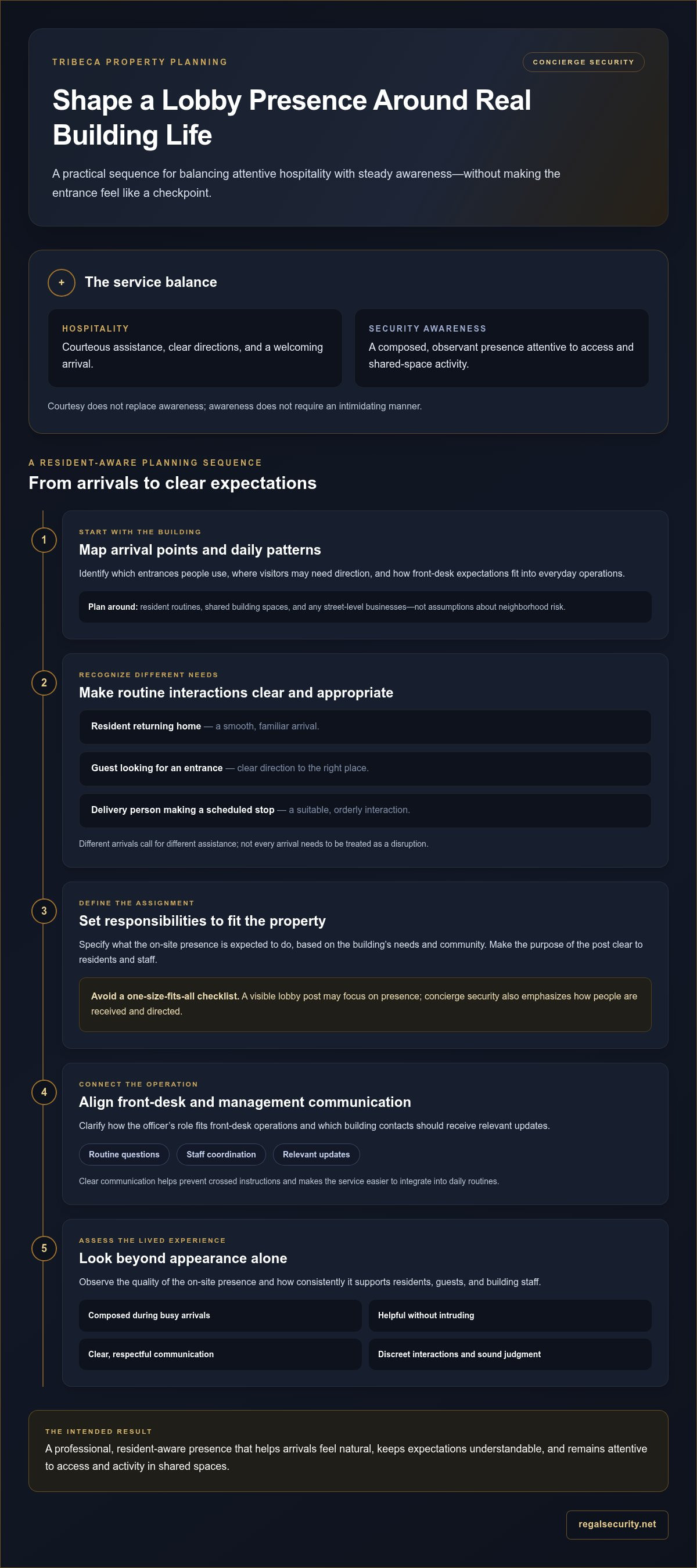
A four-step sequence can help organize these decisions:
Document property context. Sketch the entrances and lobby areas relevant to the assignment. Note how residents, visitors, and staff move through the building, where they may need direction, and how front-desk operations shape the arrival experience.
Set priorities. Identify what the property wants the on-site presence to support. Priorities might include a composed welcome, clear visitor direction, or dependable coordination with staff. Rank what matters most so the plan can support the resident experience and meet the building’s expectations.
Define scope. Translate priorities into specific responsibilities and boundaries. Clarify the expected manner of interaction, the information the role should communicate, and which questions or situations should be directed to management. Don’t assume duties that haven’t been agreed as part of the assignment.
Plan service coordination. Establish how the on-site role fits with property management and front-desk practices. Identify the appropriate management contacts and how relevant updates should be shared. Staffing details and responsibilities should follow the tailored plan, not be chosen independently of the building’s needs.
Review the resulting scope as a working description of the service, not simply a task list. If building routines or expectations change, management can revisit whether the role and its coordination still fit. Clear expectations from the outset help residents and staff encounter a consistent, considered presence.
Regal Security provides tailored concierge services and unarmed officers, with an approach grounded in integrity and precision. Explore Regal Security’s concierge security approach for a service plan shaped around your Tribeca property.
Regal Security’s Tailored Concierge Security for Tribeca Properties
A concierge security presence should reflect the property it serves. Regal Security provides concierge services and unarmed security officers for residential clients in New York City, including Manhattan. For Tribeca property leaders, this brings courteous assistance and a dependable on-site presence together in an approach shaped around the building’s needs and residents’ expectations.
Integrity and precision inform the work. In practice, that means treating the assignment with care, communicating professionally, and aligning the service approach with the property’s priorities. A refined presence is not defined by appearance alone. It depends on how consistently the role supports the resident experience and fits into the building’s day-to-day environment.
A service approach shaped around the property
Each building has its own character. Entry arrangements, resident expectations, front-desk responsibilities, and patterns of daily activity can all influence how concierge security should function. Regal Security’s tailored approach takes the property’s context into account, helping decision-makers set expectations for a professional, reliable presence instead of defaulting to a generic post assignment.
Start with the outcomes the property wants to support. A manager might prioritize a polished welcome for guests, clear coordination with building staff, or a composed presence that respects residents’ routines. The service scope can then describe responsibilities and boundaries in terms that are useful to management and clear to those working in the building. Staffing arrangements, schedules, and duties should follow the agreed plan, not assumptions about what every property requires.
For high end concierge security Tribeca properties, attention to fit connects the service standard with the practical realities of the building. The aim is a considered on-site presence that supports property operations and the experience residents expect, with courtesy and security awareness held in balance.
A considered next step for Tribeca decision-makers
Before defining a service plan, bring together a concise picture of the building: its arrival points, the people who use them, front-desk expectations, and the qualities residents and visitors should experience. Identify where coordination with management matters most. These details provide a sound basis for defining scope and aligning expectations.
A clear plan gives the property and its on-site team a shared understanding of the role. It can clarify expected conduct, communication, and coordination with building operations without presuming duties that haven’t been agreed. The result is a service approach grounded in the property’s priorities and Regal Security’s emphasis on integrity, precision, and reliable presence.
To discuss a concierge security plan tailored to your Tribeca property, connect with Regal Security and outline your building’s context, goals, and desired resident experience.
Set the Standard for Your Building’s Next Chapter
Turn your priorities into a shared standard for the service experience. Consider what residents should feel when they enter, how staff should coordinate with the on-site presence, and which expectations management will use to review whether the arrangement continues to suit the property. A concise written scope helps keep those intentions clear as building needs evolve.
For a Tribeca property, high end concierge security Tribeca works best when the presence reflects the building’s character while remaining attentive and professional. Regal Security’s emphasis on integrity, precision, and customized protection can inform a plan shaped around your property’s context and resident expectations.
Bring your building’s priorities into a focused conversation and take the next step toward clear service expectations. Start a conversation with Regal Security about your property’s concierge security needs. A thoughtful plan can support a composed arrival experience and a dependable presence residents feel comfortable approaching.
Frequently Asked Questions
Is concierge security appropriate for a luxury residential building in Tribeca?
Yes, concierge security can suit a luxury residential building when residents value attentive service alongside a defined on-site security presence. Fit depends on the building’s entry arrangements, resident expectations, and management model, not simply its address or finish level. For managers overseeing properties across New York City, New Jersey, Manhattan, Brooklyn, Queens, the Bronx, Staten Island, Long Island, Nassau County, Suffolk County, Westchester County, Rockland County, and Orange County, each plan should reflect that property’s needs rather than copy arrangements from another building.
Can concierge security support both resident service and building security?
Yes. The role can welcome and direct people while maintaining awareness of activity in shared areas. For example, an officer might help a guest find the correct destination while following the building’s established process for access-related questions. The service scope should clarify where hospitality assistance ends and security responsibilities begin, so residents receive courteous support without uncertainty about who handles a particular request.
What should a Tribeca property manager include in a concierge security scope?
Include the role’s purpose, expected conduct, communication channels, and boundaries. Specify how the officer should handle routine questions, where to direct requests outside the assignment, and which management contact receives relevant updates. If packages, contractor arrivals, or access concerns are part of the building’s process, state whether and how the role supports them. Written expectations help prevent informal assumptions from becoming assigned duties.
How can a property assess whether concierge security is improving the resident experience?
Use observable feedback rather than relying on appearance alone. Property managers can review resident comments, note whether guests receive clear directions, and discuss with staff whether coordination feels consistent. They can also look for recurring confusion at the entrance or repeated questions about the officer’s role. Reviewing these observations together helps identify what is working and where expectations or communication need refinement.
Does concierge security replace building management or emergency services?
No. Concierge security supports the building’s on-site presence but doesn’t replace property management, emergency responders, or other responsible professionals. Management retains its operational responsibilities, while emergency situations should follow the building’s established procedures and involve the appropriate emergency services. A well-defined scope makes these boundaries clear, including who should be notified and how the officer’s role fits into the property’s response plan.
Can concierge security duties be tailored to a building’s daily operations?
Yes. The service approach can be shaped around the building’s resident expectations, front-desk arrangements, and patterns of activity. A property with frequent guest arrivals may prioritize clear visitor direction, while another may need closer coordination with staff during scheduled building activity. The scope should translate those priorities into agreed responsibilities and communication practices, rather than assuming every concierge security assignment follows the same routine.
What is the difference between a concierge security officer and a doorman?
The distinction is generally the role’s emphasis, though responsibilities vary by property. A doorman position may center on welcoming people and assisting at the entrance. A concierge security officer combines service-minded interaction with a professional security presence and awareness of the building environment. For a Tribeca property, the written scope should explain assigned functions, how the role works with staff, and which responsibilities remain with management.