Long Island Mobile Patrol: A Guide for Property Owners
What makes a patrol useful is not simply how often a vehicle passes, but whether its route reflects the property’s priorities. Before planning coverage, consider the site layout, operating hours, entrances, and areas that need visible attention. Regal Security provides mobile patrol services Long Island property owners can tailor to their sites and schedules, with a dependable presence focused on the places that matter most.
This guide explains when scheduled vehicle patrols may fit a property and how to plan coverage around specific concerns. You’ll learn how to identify priority areas, consider timing, and set communication expectations. Whether you manage a corporate site, residential property, or multiple locations in Nassau or Suffolk County, a clear plan can help you decide whether mobile patrol belongs in your security approach.
Table of Contents
Where Mobile Patrol Services Fit for Long Island Properties
To decide whether mobile patrol fits your property, start with its layout and activity patterns. Are there several entrances? Do parking areas, walkways, or shared outdoor spaces need attention at different times? Would scheduled vehicle visits provide useful visibility in areas away from a staffed post? These questions help determine whether mobile patrol services Long Island property owners plan around their sites could suit their coverage needs.
A residential community in Nassau or Suffolk County may have multiple access points, shared outdoor areas, and changing patterns of resident activity. A commercial property may have several buildings, a large parking area, or exterior sections with different operating hours. In either case, begin by identifying the locations that matter and when activity changes. Then consider how scheduled patrol visits could address those priorities.
Which Long Island properties may benefit from scheduled patrols?
Scheduled patrols may suit properties where one fixed post cannot provide a visible presence across several areas. Residential communities and commercial sites are two examples, particularly when entrances, outdoor spaces, and parking areas have different uses or activity patterns. A vehicle-based presence can direct attention to selected locations according to an agreed plan.
Map the property and note its operating hours. An entrance used heavily during the day may have different priorities from a shared area that is quieter at certain times. Consider parking alongside building access, rather than treating the lot as the whole site. This layout-and-schedule review helps owners and managers identify where patrol visits could be useful without assuming every property needs the same coverage.
What a visible patrol presence can and cannot do
Mobile patrol security is a planned vehicle presence that makes scheduled visits to selected parts of a property. Its visibility can contribute one layer to a broader, property-specific security approach. A marked vehicle may be noticeable to people on site, and a route planned around the property can direct attention to designated entrances or outdoor areas. General background on security roles and service types is available from Security Guard Wikipedia.
A scheduled patrol is periodic, not continuous. Unlike a dedicated on-site officer who remains at the property, patrol visits provide a presence at selected times and locations. They should not be treated as uninterrupted observation or as a substitute for every other security measure. Properties seeking visible attention across multiple areas at planned intervals may consider mobile patrol. Sites that need someone continuously present may require a different arrangement. Defining that distinction helps managers set realistic priorities.
What Mobile Patrol Services on Long Island Can Involve
Mobile patrols are vehicle-based security visits scheduled around an agreed property plan. Planning can account for the site’s layout, operating patterns, and areas that need attention. A commercial site might prioritize building entrances and parking areas, while a residential property might focus on shared outdoor spaces or access points. The service plan should reflect the property’s needs.
For property owners considering mobile patrol services Long Island, the aim is to establish a visible, professional presence at selected times and locations. Patrol visits can direct attention to designated areas, but they do not provide constant observation or guarantee that an incident will be prevented. A clear plan sets realistic expectations about what the visits are intended to address.
How scheduled patrol visits support property oversight
Planned visits bring a visible security presence to selected parts of a property at agreed times. Depending on the plan, attention may include entrances, parking areas, or shared outdoor spaces. Priorities should reflect how the site is used, rather than treating every area as equally important. The route and duration are set through the service arrangement and should reflect the property, not a standard assumption.
Turn broad concerns into specific priorities. “More attention to the grounds” is less useful than identifying which entrances, parking sections, or shared spaces need attention. Describe how site use changes throughout the day, too. This gives the plan practical context without assuming one schedule fits every property.
Scheduled mobile patrols provide periodic vehicle-based visits; continuous on-site security provides an officer’s ongoing presence at the property. This distinction helps owners decide whether planned visits meet their priorities or whether they need a more continuous presence. A patrol is one part of a security approach, not a replacement for every other measure a property may require.
How patrol priorities and communication are established
Prepare a concise property brief that identifies access points, priority areas, operating concerns, and relevant patterns of site use. Establish communication expectations for the service arrangement, including how to share property-specific concerns and who the appropriate contact is. These practical details give patrol planning a clear foundation.
Site details: Outline entrances, parking, shared spaces, and other relevant areas.
Priorities: Explain which locations or operating concerns should guide patrol attention.
Communication: Set expectations for routine updates and how concerns are raised.
Regal Security provides tailored vehicle patrols for corporate and residential clients, with planning centered on each property’s priorities. Property owners can review vehicle patrol services as part of their coverage planning.
Mobile Patrols vs. On-Site Security: Choosing the Right Fit
The right coverage depends on what needs attention and how consistently someone must be present. A property with several areas to visit at planned times has different needs from a lobby where ongoing access oversight and face-to-face interaction are priorities. Compare the coverage pattern, not just the service name, to see which approach aligns with the site’s operations.
When scheduled vehicle patrols may be the better fit
Scheduled patrols may suit a property that needs a visible presence across designated areas or during selected periods, rather than continuous staffing at one post. A tailored schedule can reflect site priorities, such as giving attention to particular exterior areas or access points at relevant times. For a broader look at how vehicle patrols can support property protection, see vehicle patrol security services.
Consider whether the priority is coverage across parts of the site, a person consistently stationed at one location, or a blend of both. Mobile patrol services Long Island property owners arrange should reflect those distinctions. A schedule is most useful when it follows the property’s operating needs, rather than applying the same assumed frequency to every site.
When a dedicated officer or concierge presence may be more suitable
A dedicated on-site officer may be more appropriate when a property requires continuous staffing or sustained oversight at a specific location. This differs from periodic patrol visits, which bring a security presence to selected areas according to a planned schedule. For more context on the on-site role, explore professional unarmed security officers.
Concierge security may be a closer fit when regular face-to-face interaction is needed alongside a professional security presence. Its emphasis is an on-site service role, not movement between property areas. This distinction matters in settings where people routinely arrive, seek assistance, or interact with staff. A patrol is not a substitute when continuous on-site staffing is required.
Describe the coverage need in practical terms: which areas require attention, whether someone must remain at a specific post, and how much direct interaction the setting calls for. This keeps planning focused on the property’s operations. Some sites may suit one coverage approach; others may need a tailored combination. Regal Security provides vehicle patrol, unarmed security officers, and concierge services shaped around client needs.
How to Plan Mobile Patrol Coverage for a Long Island Property
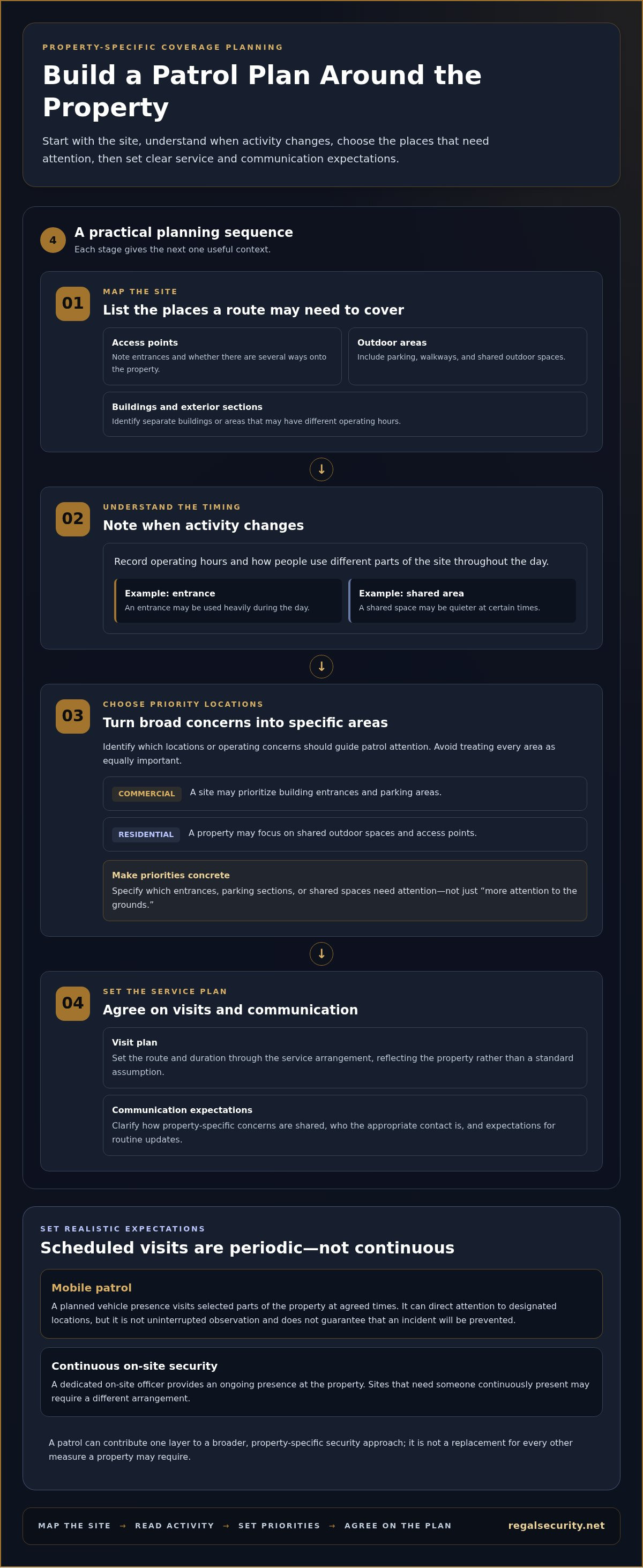
A useful patrol plan starts with the site, not a preset schedule. Describe how the grounds are arranged, where activity changes, and which concerns deserve attention. For a property in Nassau or Suffolk County, include practical access details such as entrances, gates, and routes a patrol vehicle can use. These details help shape coverage around the actual site.
Define the site. Outline buildings, entrances, parking, shared areas, gates, and other relevant features. Include operating hours and note how activity or access changes throughout the day.
Identify priorities. Distinguish routine oversight needs, such as attention to designated areas, from circumstances that may require a different security response. Describe concerns clearly and identify which areas matter most.
Set coverage expectations. Discuss how timing should relate to site activity and priorities. Identify the points of contact and agree how routine communication or concerns should be handled.
Review the plan. Revisit priorities when property use, access, or operations change. Regular review helps keep expectations aligned with the site.
Build a practical property and priority brief
Make the overview specific enough to guide planning: note each access point, shared space, operating pattern, and area of concern. A commercial site might distinguish building access from a parking area; a residential property might identify shared grounds and gates. Clear details help separate routine patrol priorities from situations that call for another response.
A useful patrol brief describes the property, its access, its activity patterns, its priority areas, and how the parties will communicate. Keep it easy to update if entrances, operating hours, or site use change. For properties in Nassau or Suffolk County, include location and access instructions that explain how the site is approached and where a vehicle can enter. If the property has multiple entrances or distinct sections, a street address alone may not describe its layout.
Set expectations for scheduling and communication
Coverage timing should reflect when the property is active, which areas need attention, and the priorities in the brief. Discuss these considerations during planning instead of assuming one frequency suits every site. Identify a primary contact and, where appropriate, an alternate. Agree how updates and concerns should be communicated so expectations are clear.
Review the plan when property operations change. A change in access, occupancy, or use of shared areas may affect priorities. Property owners seeking a tailored patrol plan can discuss how vehicle patrol coverage can reflect their site and its needs.
Regal Security Mobile Patrol Services Across Long Island
Regal Security provides tailored vehicle patrol services for corporate and residential clients across Long Island. Coverage is planned around the property, its priorities, and how the site operates. For decision-makers in Nassau and Suffolk counties, that means considering the property’s specific layout and needs rather than assuming one approach suits every location.
Integrity, precision, and a dependable presence guide patrol planning. A corporate property may have distinct access areas and operating needs, while a residential community may have shared spaces and changing patterns of activity. A thoughtful plan accounts for these differences and clarifies where patrol attention is directed.
A tailored patrol approach for corporate and residential properties
Planning starts with the practical needs of the site. Property decision-makers can outline its layout, operating context, and priority areas. Those details help shape vehicle patrol coverage around the property rather than relying on a generic service description. Regal Security brings this property-specific approach to corporate sites and residential communities throughout Nassau and Suffolk counties.
The planning conversation should clarify what a visible patrol presence is intended to support. Priorities differ between properties, so the plan should reflect the client’s stated needs rather than assume a particular schedule, route, or outcome.
Taking the next step toward a considered security plan
Start with a clear account of the property: its location, access points, operating patterns, and priority areas. Describe the coverage you are seeking and the communication expectations that would support the arrangement. These practical details provide a useful basis for discussing how tailored vehicle patrol services may fit.
For a wider perspective on planning for property protection, explore peace of mind security services. A clear plan gives property owners a useful basis for discussing coverage and keeping priorities current as site needs evolve.
For a corporate property or residential community in Nassau or Suffolk County, discuss mobile patrol services for your Long Island property with Regal Security. Share your site’s practical requirements and priorities to begin shaping a tailored approach.
Make Your Next Security Decision With Confidence
A sound security decision begins by turning concerns into clear priorities. Consider what has changed at the property, which areas need attention, and what kind of presence would support daily operations. This gives you a practical starting point for discussing mobile patrol services Long Island property owners can tailor to their sites.
Regal Security provides vehicle patrol services for corporate and residential clients, guided by integrity, precision, and a dependable presence. Share the property’s layout, operating context, and coverage needs to shape a plan around what matters to you.
Discuss a tailored mobile patrol plan for your Long Island property with Regal Security.
Frequently Asked Questions
What are mobile patrol services?
Mobile patrol services are security visits made by personnel using a vehicle to provide a visible presence at selected properties or areas. Unlike an officer stationed at one post, a patrol can move between designated parts of a site according to an agreed plan. Define what visits should focus on, such as access areas or shared grounds, rather than assuming a patrol covers every concern.
Are mobile patrol services suitable for residential communities on Long Island?
Yes. Mobile patrol services Long Island communities may find useful can complement a property’s existing security approach, particularly when managers want vehicle-based attention across shared grounds or multiple access areas. A community with separate parking and common spaces, for example, can identify which locations matter most. Suitability depends on the layout, operating needs, and whether periodic visits provide the presence management requires.
How often should a mobile patrol visit a property?
There is no visit frequency that fits every property. The schedule should reflect site activity, priority areas, and the coverage arrangement. Consider when access or occupancy changes and whether particular periods call for more attention. Avoid choosing a frequency simply because it works for another property with different operating needs.
Can mobile patrols replace an on-site security officer?
Not when the property requires an officer to remain present continuously. A mobile patrol provides visits at planned periods, while an on-site officer maintains a dedicated presence. A site that needs ongoing access oversight at one entrance, for instance, may need continuous staffing rather than periodic vehicle visits. First determine whether the need is scheduled attention across the site or uninterrupted coverage at a specific location.
How much do mobile patrol services cost on Long Island?
Cost depends on the service arrangement and factors such as the property’s needs and desired patrol frequency. A clear description of the site, priority areas, and coverage expectations provides a useful basis for discussing a tailored plan. Regal Security provides vehicle patrol services for corporate and residential clients, with planning shaped around each property rather than a single assumed package.
What types of properties can use mobile security patrols?
Corporate and residential properties may use vehicle patrols, depending on their coverage needs. Examples include office sites, residential communities, and properties with outdoor or parking areas. Regal Security serves clients across Long Island, Nassau and Suffolk counties, New York City, Manhattan, Brooklyn, Queens, the Bronx, Staten Island, New Jersey, Westchester County, Rockland County, and Orange County. A property’s layout and use help determine whether patrol visits fit.
Do mobile patrol services provide continuous security coverage?
No. Mobile patrols provide a presence during scheduled visits, not continuous observation between visits. This distinction matters for properties that need uninterrupted staffing or ongoing oversight at a fixed post. Use the property’s coverage priorities to decide whether periodic vehicle visits are appropriate or continuous on-site security better matches the need. A patrol plan should make clear which periods and areas it is intended to cover.