Security for NYC Building Owners: Asset Protection 2026
An imposing, rigid guard presence often drives discerning tenants away faster than the physical vulnerabilities it intends to deter. For commercial and residential properties across Manhattan and the outer boroughs, selecting the right security services for building owners NYC requires striking a deliberate balance: mitigating complex premises liability and compliance risks while cultivating an atmosphere of quiet confidence. Your lobby is the architectural handshake of your property; friction at the front desk or unvetted personnel can swiftly erode that hard-earned prestige.
You already understand that safeguarding physical assets cannot come at the expense of tenant hospitality. Discover how specialized security services safeguard New York properties, reduce premises liability, and elevate tenant satisfaction. In this guide, we examine how vetted unarmed officers, refined concierge operations, and disciplined access oversight protect physical infrastructure while reinforcing tenant trust and long-term asset value.
Table of Contents
The Realities of Property Protection for NYC Building Owners
Operating commercial or residential properties across New York City presents operational challenges rarely seen in suburban environments. Metropolitan buildings sit directly adjacent to crowded sidewalks, subways, and continuous street traffic, creating persistent access control demands. Under New York law, property owners maintain a clear legal duty of care to protect tenants, visitors, and vendors from foreseeable hazards. Fulfilling this obligation requires reliable multi-layered physical security measures that prevent unauthorized access without restricting tenant convenience. Selecting tailored security services for building owners NYC enables property executives to meet these legal duties while reinforcing the integrity of their physical assets.
Urban Density and Access Control Dynamics in New York
New York ground floors experience intense physical compression during morning rushes, midday meal deliveries, and continuous package distribution. Managing this foot traffic requires structured procedures that distinguish authorized occupants from unvetted visitors in seconds. Well-trained unarmed security officers oversee these transit points with precision, establishing order through disciplined actions:
Pedestrian Validation: Confirming visitor credentials swiftly to eliminate lobby bottlenecks while maintaining access records.
Perimeter Defense: Preventing tailgating and opportunistic entry along open streetfronts and adjacent alleyways.
Logistics Coordination: Directing couriers, trade contractors, and freight deliveries away from main public areas to designated service bays.
This organized oversight prevents vertical transport delays, isolates potential disruptions at the threshold, and keeps public spaces calm.
Balancing Asset Defense with Premium Tenant Hospitality
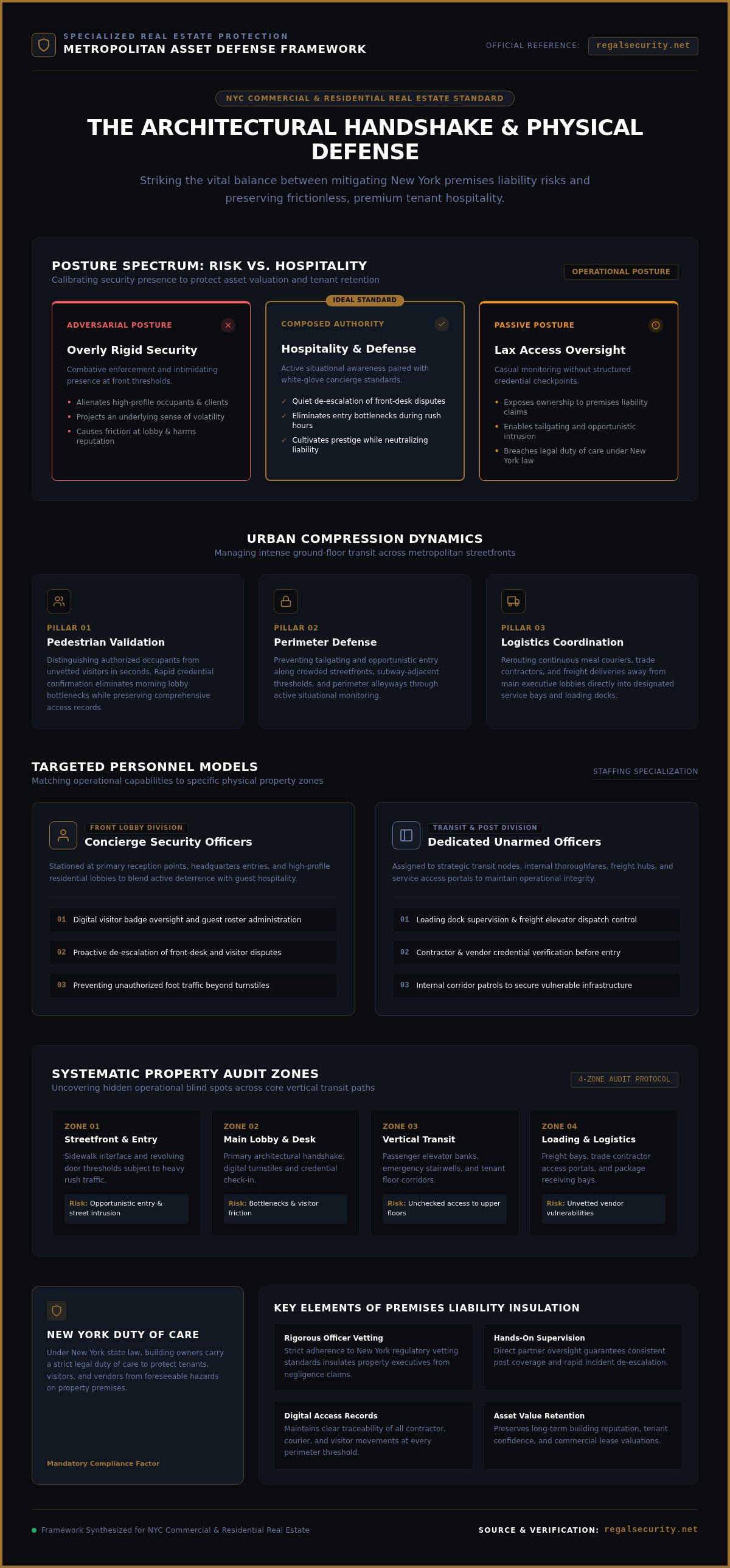
Lobby personnel represent the initial human touchpoint for prospective commercial tenants, high-value clients, and residents. An aggressive, rigid security posture alienates occupants and projects an underlying sense of volatility that harms leasing reputation. Conversely, security that is too lax exposes ownership to preventable risks and premises liability claims.
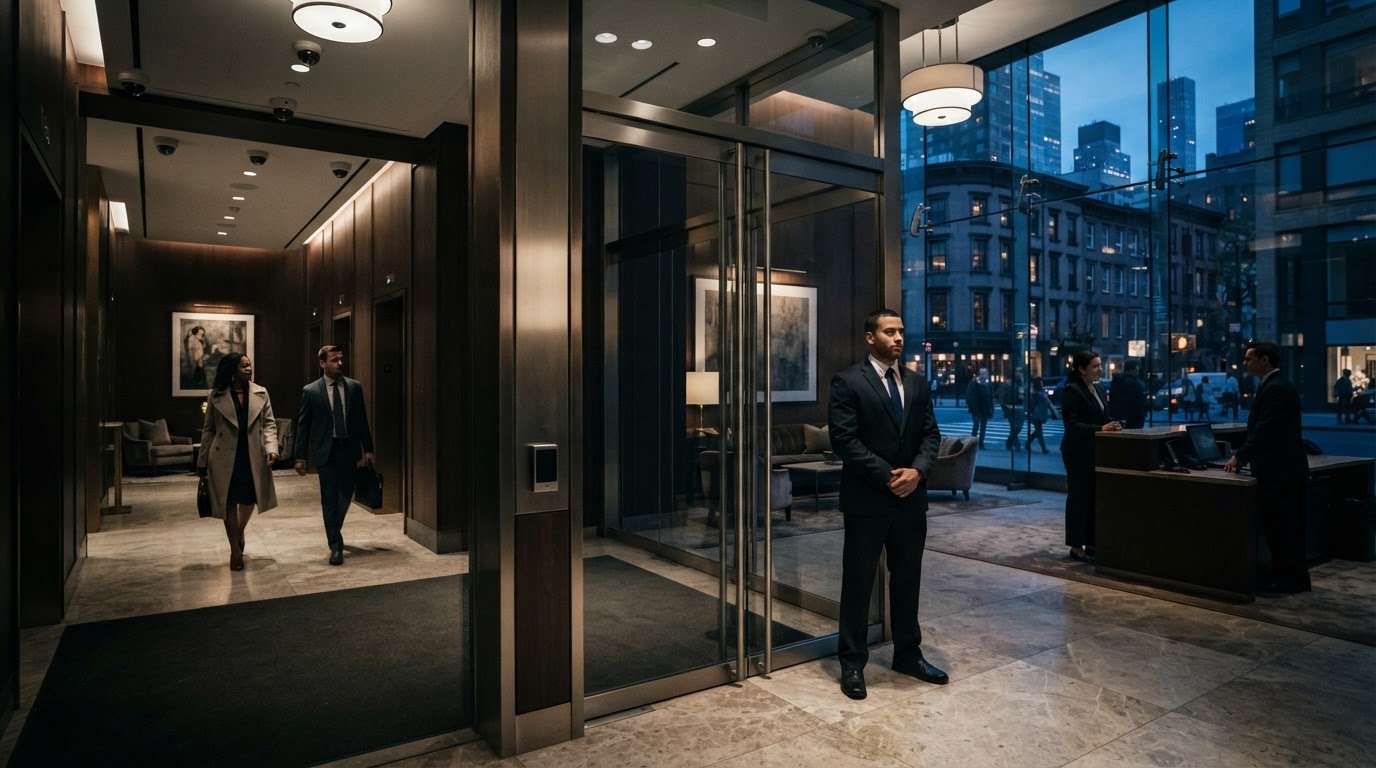
Modern risk management demands composed authority and active de-escalation rather than combative enforcement. Hospitality-trained concierge security officers provide this exact balance. By pairing situational awareness with exceptional customer service, modern security services for building owners NYC establish an approachable yet secure lobby atmosphere. This dignified presence deters unauthorized entry, diffuses disputes quietly, and fosters the sense of stability essential for retaining top-tier tenants.
Core Security Models Tailored for NYC Real Estate
Every commercial tower, residential complex, and mixed-use development presents an individual architectural layout and operational cadence. Applying an identical staffing template across differing properties creates gaps in coverage and risks alienating tenants. Aligning tailored personnel models with established benchmarks, such as CISA physical security guidelines, ensures commercial assets remain resilient against unauthorized access. Forward-thinking property managers recognize that deploying specialized security services for building owners NYC requires matching distinct operational capabilities to specific physical zones.
Concierge Security Officers for Front Lobby Operations
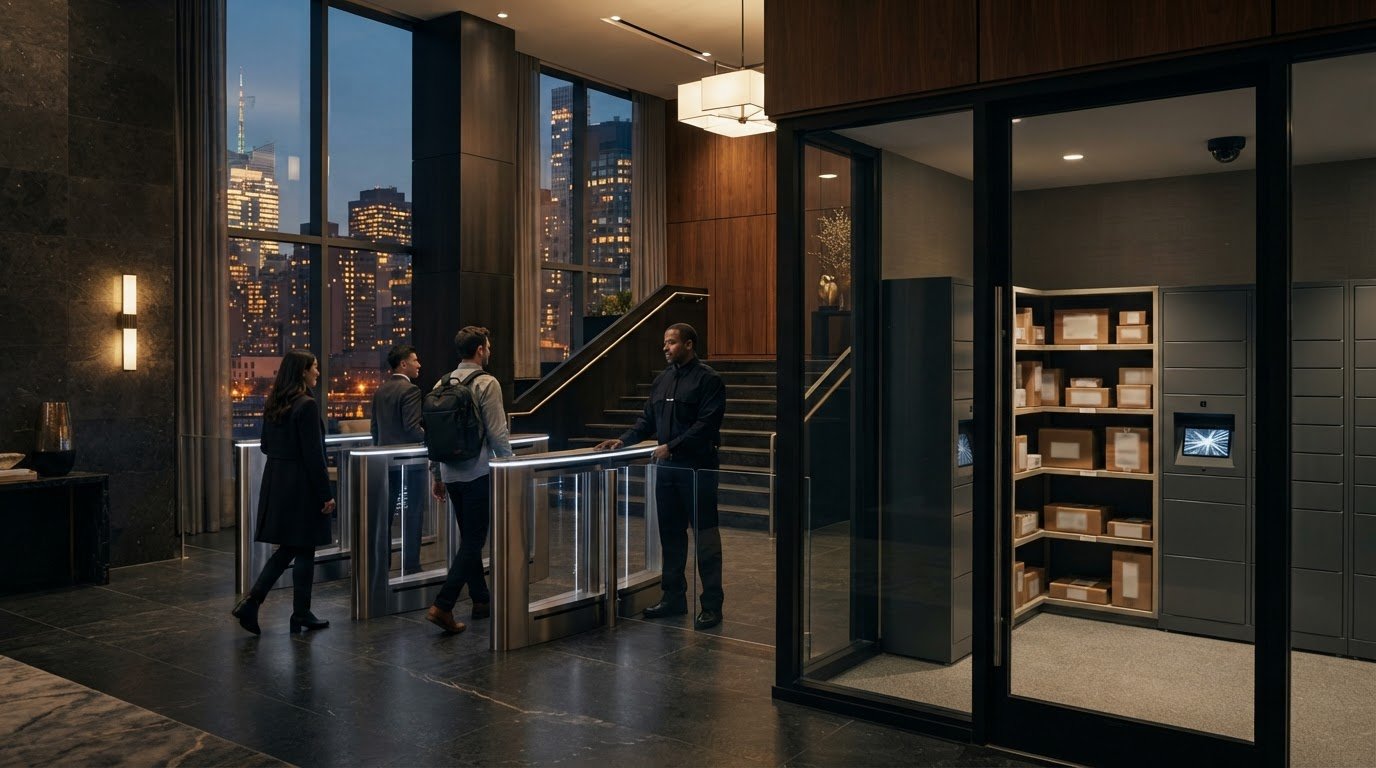
Lobbies in high-profile residential properties and corporate headquarters demand a protective presence that reinforces building prestige. Deploying trained concierge security officers bridges the divide between strict access enforcement and white-glove hospitality. These professionals manage guest rosters, oversee digital visitor badges, and resolve front-desk disputes with quiet composure. Because they focus on proactive de-escalation, they preserve building decorum while preventing unauthorized foot traffic from passing beyond the turnstiles.
Dedicated Unarmed Security Officers for Fixed Posts
Beyond the front entryway, physical security relies on active vigilance across vulnerable transit points. Assigning professional unarmed security officers to dedicated posts provides decisive risk mitigation without creating an adversarial environment. Officers assigned to loading docks, freight elevators, and internal corridors perform essential protective duties:
Credential Verification: Validating work orders and trade credentials for all external maintenance contractors.
Egress Inspection: Conducting routine foot patrols of stairwells, service passages, and fire corridors to ensure emergency egress compliance.
Incident Documentation: Logging shift activities, environmental anomalies, and access exceptions through detailed digital reports.
This composed, unarmed presence deters property damage, supports premises liability defense, and maintains orderly facility operations.
Scheduled Vehicle Patrols for Outer-Borough and Multi-Site Properties
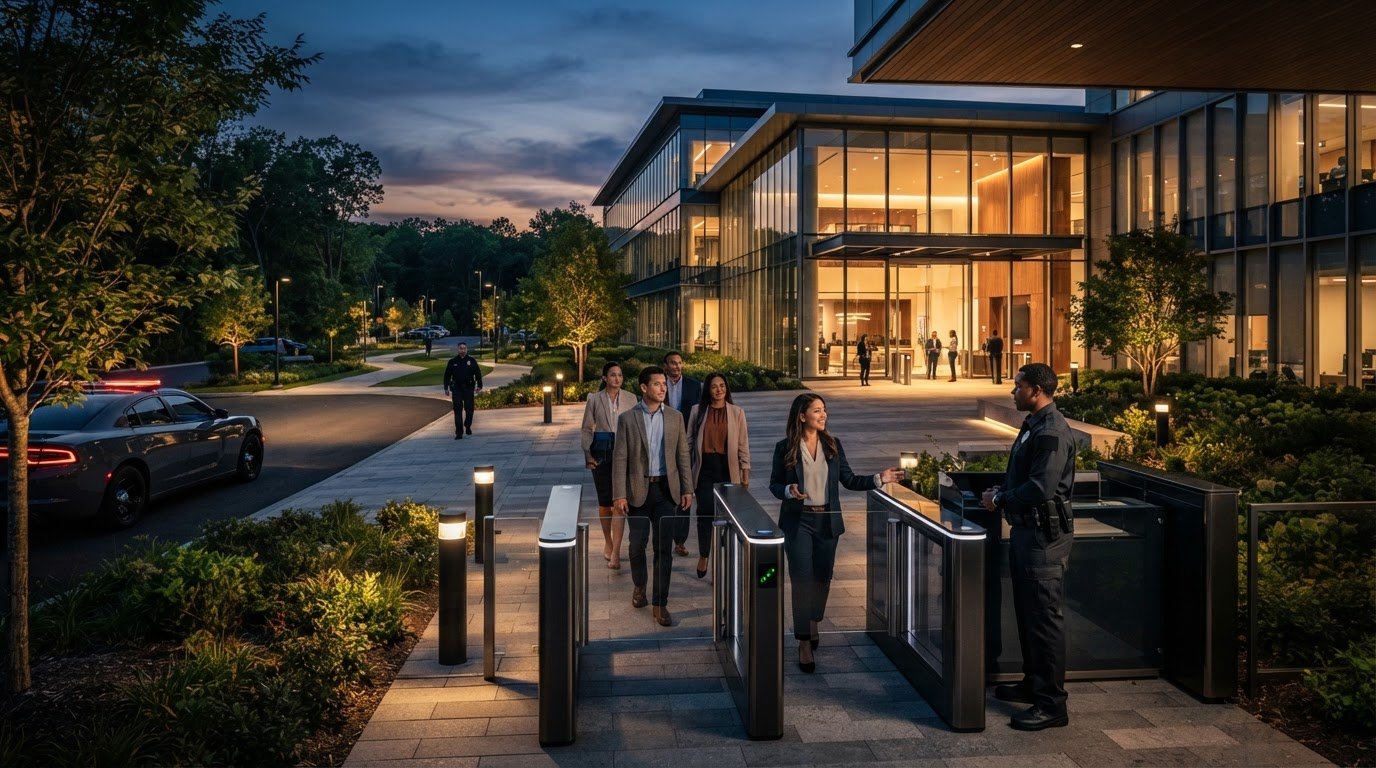
Properties spanning multiple acres across Queens, Brooklyn, or Long Island require broader geographical protection than static lobby desks provide. Contracting targeted vehicle patrol security services provides visible deterrence across sprawling industrial parks, parking structures, and corporate campuses. Randomized inspection rounds eliminate predictable operational patterns, deterring loitering and vandalism along outer boundaries.
Building owners seeking a balanced, dignified defense structure can review options from Regal Security to configure dedicated coverage tailored precisely to their property footprint.
Navigating Regulatory Compliance and Liability Mitigation in New York
Securing a high-value property requires strict adherence to statutory oversight. In New York, the legal landscape surrounding commercial and multi-family real estate places a substantial burden on property owners to maintain a verifiably secure environment. Deploying inadequately trained or unvetted contractors does more than compromise daily operations; it exposes building ownership to catastrophic premises liability lawsuits if an incident occurs. Selecting accredited security services for building owners NYC ensures that every stationed officer operates in full compliance with state mandates, shielding property assets from preventable legal exposure.
New York State Licensing and Officer Standards
Compliance begins with rigorous regulatory certification. Under New York State security guard regulations, personnel must be registered through the Department of State Division of Licensing Services. This statutory framework mandates an eight-hour pre-assignment course, complete biometric fingerprinting, and a sixteen-hour on-the-job training curriculum within ninety days of employment. Building owners should demand documented proof of these credentials alongside annual eight-hour in-service certifications. Verifying these milestones guarantees that on-site personnel possess the legal authority and tactical preparation needed to uphold facility safety.
Premises Liability and Defensible Documentation
When civil litigation arises following an on-site accident, trespass, or property dispute, legal outcomes hinge on defensible evidence. Security personnel must follow precise post orders that eliminate ambiguity during critical incidents. Structured, real-time documentation provides the defense foundation property owners need:
Digital Activity Logs: Recording routine patrols, access approvals, and exterior door checks creates a verifiable record of due diligence.
Standardized Incident Reports: Documenting environmental hazards, slip-and-fall conditions, and unauthorized entries immediately minimizes contested liability claims.
Emergency Coordination: Facilitating rapid, orderly handoffs to the NYPD and FDNY during active emergencies limits property disruption and physical harm.
By prioritizing calm de-escalation over physical confrontation, disciplined security services for building owners NYC resolve disputes quietly, protecting both physical occupants and corporate balance sheets.
How NYC Property Owners Can Audit and Structure a Security Plan
Deploying guards without a clear property assessment creates expensive coverage gaps. A structured physical security plan begins with an unsparing evaluation of real-world site vulnerabilities, occupant traffic habits, and physical perimeter limitations. Property owners who align staffing levels directly with structural demands secure their assets while containing operational waste. Partnering with seasoned security services for building owners NYC allows ownership to identify risk profiles early and translate site vulnerabilities into actionable post directives.
Assessing Vulnerabilities and Traffic Patterns
Auditing a metropolitan facility requires tracing every pathway an unauthorized individual might use. Ground-floor glass lines, subterranean storage basements, and alley service gates often present the greatest exposure. Property managers should analyze how people move through these areas across the entire business day:
Transit Peaks: Record entry and exit volume during morning corporate rushes and evening return hours to avoid lobby bottlenecks.
Logistical Exposure: Track freight elevator use, package intake hours, and contractor check-ins to secure secondary portals.
Sensitive Infrastructure: Identify unmonitored routes leading to central mechanical vaults, electrical substations, and executive suites.
Pinpointing these high-exposure corridors ensures guard posts protect operational choke points rather than standing idle in low-risk zones.
Defining Post Orders and Operational Metrics
A security program is only as effective as the post orders governing on-site staff. Vague instructions invite indecision during critical moments, which increases premises liability exposure. Property owners should establish precise, written directives that leave no room for guesswork regarding vendor validation, lost access cards, or emergency escalations.
Working with reliable security staffing services ensures that stationed personnel arrive fully trained on these exact post specifications. Routine quarterly reviews keep these protocols aligned with shifting tenant rosters and evolving physical plant needs. When property teams audit post performance regularly, they eliminate guard complacency and protect facility prestige.
To establish a clear physical evaluation for your commercial or residential property, contact Regal Security to build a customized on-site protection strategy.
Selecting the Ideal Security Partner for Your New York Property
The on-site security presence at your property serves as an immediate reflection of your management standards. When evaluating specialized security services for building owners NYC, asset managers must look beyond baseline licenses and assess the operational culture behind the personnel. High officer turnover, absent field supervision, and indifferent post execution erode tenant confidence and diminish property brand equity. True protection demands a security partner whose professional discipline mirrors the prestige of the asset itself.
Evaluating Agency Culture, Supervisory Oversight, and Reliability
A dependable security provider maintains active oversight across every post rather than leaving officers unsupervised. Building executives should examine how prospective partners manage daily accountability:
Proactive Field Supervision: Mobile supervisors conducting unscheduled inspections ensure on-site officers remain vigilant, immaculate in presentation, and strictly aligned with post directives.
Personnel Retention: Rapid staff turnover introduces a revolving door of unfamiliar faces to your lobby. Providers that prioritize rigorous vetting, fair treatment, and professional support ensure consistent personnel who learn your building's operational nuances.
Dignified Deportment: Officers must project quiet strength and moral integrity, handling delicate tenant interactions with composure rather than an adversarial posture.
Consistent communication between property management and dedicated security leadership guarantees that emerging concerns are addressed before they disrupt daily operations.
Achieving Comprehensive Peace of Mind with Regal Security
Safeguarding premier real estate requires a bespoke protective model built around your physical property footprint. Regal Security delivers tailored unarmed defense strategies designed to preserve building decorum while preventing unauthorized access across commercial, residential, and corporate facilities throughout New York and New Jersey.
Deploying dedicated peace of mind security services allows ownership to mitigate legal exposure, reduce lobby friction, and protect long-term property valuation. Secure your physical assets and reinforce tenant trust by partnering with Regal Security today.
Protecting Your Property Value Through Dignified Security
Safeguarding premier real estate across New York requires a deliberate approach that honors both physical risk defense and occupant experience. By replacing combative enforcement postures with vetted, hospitality-trained unarmed professionals, property executives eliminate daily lobby friction while satisfying strict duty-of-care obligations. Structuring precise post directives and auditing site vulnerabilities ensures your access control functions seamlessly, protecting both your physical plant and corporate balance sheet from premises liability exposure.
Investing in dependable security services for building owners NYC transforms routine lobby staffing into an enduring asset amenity that supports tenant retention. With extensive coverage spanning all five boroughs, Long Island, and Westchester, Regal Security provides fully licensed New York State security personnel dedicated to quiet confidence and operational precision. Take decisive control of your facility's safety and reputation today. Secure your property with dedicated protection from Regal Security to experience the peace of mind that comes from true professional assurance.
Frequently Asked Questions
What are the primary security responsibilities for commercial building owners in NYC?
Owners must uphold a common-law duty of care to protect tenants, staff, and visitors from foreseeable harm. This responsibility includes establishing reliable physical access control, vetting on-site service vendors, keeping egress corridors clear, and maintaining defensible incident records. Engaging reputable security services for building owners NYC ensures these compliance standards are met systematically, mitigating premises liability while preserving a dignified, orderly environment across high-traffic Manhattan and outer-borough office properties.
Why is unarmed security often preferred over armed personnel for NYC office buildings and residential properties?
Unarmed officers minimize premises liability exposure while creating a welcoming, professional atmosphere suitable for commercial lobbies and residential communities. In dense urban properties, armed personnel introduce unnecessary operational risk, elevated insurance requirements, and tenant apprehension. Professional unarmed officers rely on advanced de-escalation, conflict resolution, and vigilant observation. This composed approach protects physical assets effectively without projecting an aggressive posture that detracts from property prestige.
What specific certifications must private security officers hold in New York State?
Private security personnel in New York must be formally registered with the New York State Department of State Division of Licensing Services. Compliance requires completing an eight-hour pre-assignment course, submitting biometric fingerprints for state background clearance, and completing a sixteen-hour on-the-job training course within ninety days of hiring. Officers must also complete an annual eight-hour in-service training course each calendar year to maintain active licensure and legal standing.
How does concierge security differ from standard lobby doorman services?
Standard doormen focus primarily on general hospitality tasks, such as hailing transit and greeting residents. In contrast, concierge security officers blend white-glove tenant care with licensed protective capabilities. They enforce visitor access protocols, monitor ground-floor activity, manage emergency egress compliance, and handle front-desk de-escalation with composure. This hybrid capability provides building owners with a distinguished front-of-house presence that strengthens asset safety while delivering an elevated building amenity.
How do security officers handle package deliveries and freight traffic in busy NYC buildings?
On-site officers manage freight operations by logging couriers, verifying vendor work permits, and redirecting loading bay congestion away from primary guest entrances. Dedicated personnel inspect service docks, maintain accurate electronic manifests for inbound parcels, and ensure that freight elevators operate efficiently during restricted delivery windows. This structured logistics control prevents unauthorized access through service bays while preserving smooth pedestrian transit through the main lobby.
What key factors determine the appropriate security staffing levels for a multi-tenant property?
Staffing configurations depend on square footage, daily foot-traffic volume, the number of ground-floor entry points, and specific architectural vulnerabilities. Properties with subterranean delivery bays, public retail concourses, or multiple elevator banks often require separate static lobby desks alongside dedicated roving officers. Evaluating these variables through specialized security services for building owners NYC allows ownership to tailor coverage efficiently, preventing post redundancy while ensuring total perimeter oversight across every operational shift.
How quickly can professional security officer coverage be deployed to an NYC facility?
Deployment timelines typically depend on the scope of the property, site-specific post requirements, and the depth of customized training required. Reputable security agencies generally conduct a thorough site audit and post-order orientation before stationing licensed personnel. For standard coverage transitions or scheduled service implementations across New York City and New Jersey properties, onboarding is coordinated systematically over several days to ensure seamless integration with existing building operations.