Security for Product Launch Events in Manhattan
A product launch can be planned down to the final reveal, yet the guest experience still depends on what happens at the entrance. Plan security for product launch events in Manhattan while the venue, guest profile, and schedule are taking shape. The timing depends on how these details affect staffing and access planning. A venue may also require on-site security as a condition of rental, so discuss its requirements early.
It’s reasonable to want security that supports the event without disrupting its atmosphere. A considered plan can help manage guest entry, protect private areas, and give staff clear guidance if plans change. This article explains when to book, how access control can be organized, and how coverage can be tailored to the venue and activation, including product reveals, VIP attendance, and guest flow. You’ll also see which planning details shape the scope of coverage, so expectations are clear before event day.
Table of Contents
What Is the Lead Time to Book Security for a Corporate Event?
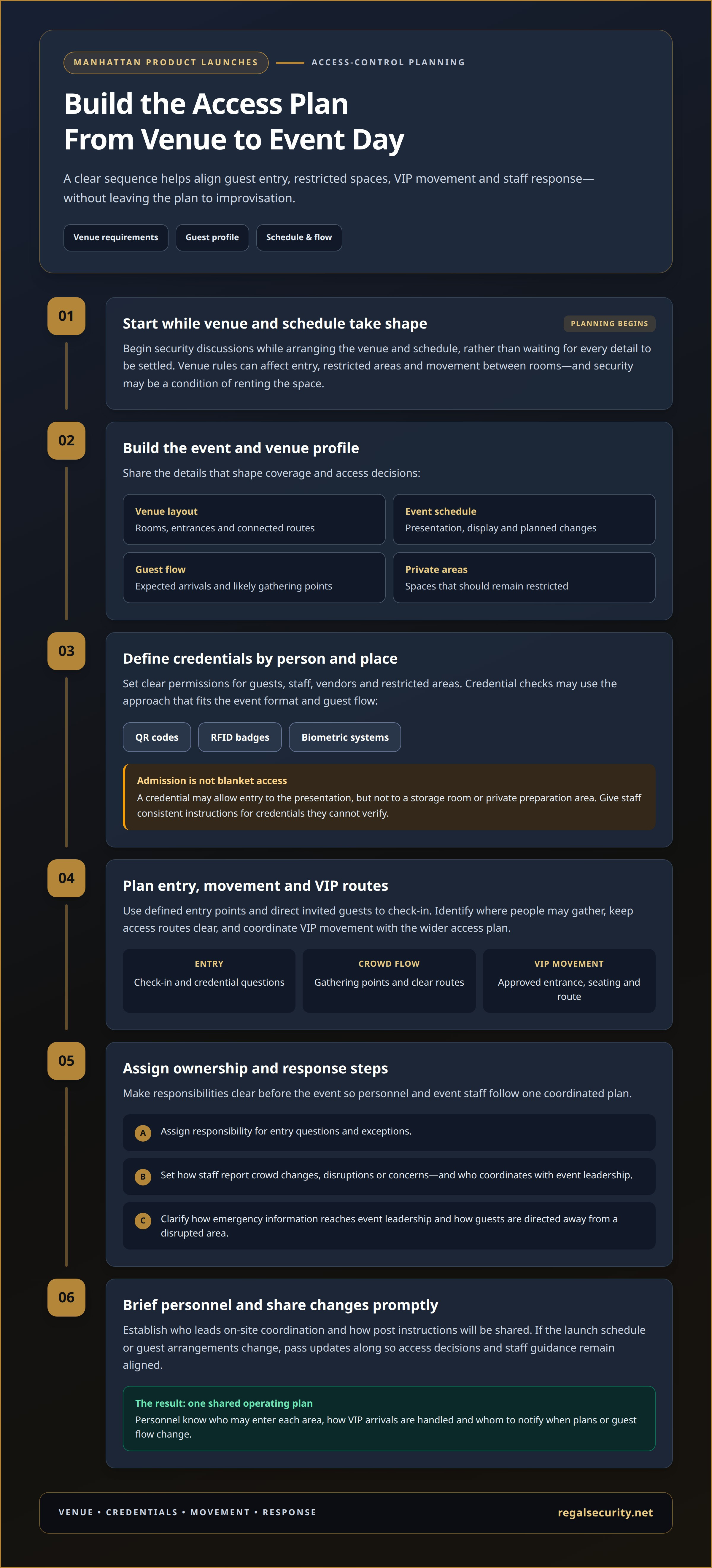
There’s no single lead time that suits every Manhattan event. Timing depends on venue requirements, the event format, the guest profile, and the access-control plan. Start discussions while arranging the venue and schedule, rather than waiting until every detail is settled. This gives the security team time to understand the assignment and tailor coverage.
Venue requirements can directly affect timing. Many New York venues require security as a condition of renting the space. At a gallery product launch, for example, the venue may set rules for guest entry, restricted display areas, or movement between rooms. A gala, premiere, or trade show may have different arrival patterns and access points. Identify these conditions early to align the event plan with the space.
Security planning varies by event type. A corporate product launch may include a presentation, product display, invited guests, and private areas. A premiere may need a planned arrival area, while a trade show may involve steady movement across a public exhibition floor. A private event or wedding may call for a discreet presence around guests and designated spaces. These differences shape staffing, post locations, and instructions for event personnel.
For security for product launch events in Manhattan, start with a clear event profile. Share the venue layout, schedule, expected guest flow, entry points, and any areas that should remain private. This helps identify where coverage is needed, how guests will be directed, and how staff should handle access questions. Changes to the launch schedule or guest arrangements can affect those decisions, so share updates promptly.
When choosing event security in Manhattan, look for trained personnel and a plan tailored to the venue and event. Discuss how the team will handle entry, restricted areas, staff communication, and schedule changes. These specifics show how the plan will work on site.
Relying on unlicensed or untrained security can leave event coverage poorly coordinated. Establish who will lead on-site coordination, how post instructions will be shared, and how concerns will reach event staff. These steps support a coordinated approach for corporate events, galas, weddings, and other private gatherings across New York City.
How does access control work at corporate events?
Use one coordinated plan to verify credentials, guide guest movement, and address disruptions. Personnel should know who may enter each area, how VIP arrivals are handled, and whom to notify in an emergency.
Guest Screening and Credential Checks
At corporate events, access control starts with a defined guest list and clear entry points. QR codes, RFID badges, and biometric systems can support credential checks and create real-time entry records. The approach depends on the event format and guest flow. For example, staff can direct invited guests to check-in and reserve separate access for authorized personnel.
Screening instructions should distinguish admission from permission to enter restricted spaces. A guest credential may allow entry to a product launch presentation, but not a storage room or private preparation area. Event staff and security personnel need consistent instructions for handling credentials they cannot verify. This reduces uncertainty at the entrance and inside the venue.
Crowd Control and Crisis Response
Launches can draw eager crowds, and congestion near an entrance or display can create safety concerns. Security personnel can help manage movement, discourage unauthorized entry, and respond to theft or vandalism. A useful plan identifies likely gathering points, keeps access routes clear, and sets out how staff will communicate if guest flow changes.
Corporate events in New York may also face gate crashers, imposters, protests, or other disruptions. The response plan should specify who receives reports, who coordinates with event leadership, and how guests will be directed away from a disrupted area. Large venues may also face medical or fire emergencies, so staff need clear communication and response procedures.
VIP protection works best when arrivals and movement are coordinated with the wider access plan. Organizers can designate an approved entrance, reserved seating, and a route between locations. Security teams may coordinate with local law enforcement and private teams when appropriate. Share relevant instructions with staff so an unexpected arrival does not cause confusion at the door.
Before the event, the security lead can align personnel around a concise operating plan:
Identify guest, staff, vendor, and restricted-area credentials.
Assign responsibility for entry questions and exceptions.
Set communication steps for crowd changes or disruptions.
Clarify how emergency information reaches event leadership.
These details help event officers and staff follow the same plan rather than improvise separate responses. For a Manhattan product launch, the venue layout, guest profile, and planned VIP movements should guide where checks take place and how access is controlled.
Do you tailor NYC event security to the venue?
Yes. A venue assessment connects the event’s risks, layout, and guest profile to practical coverage and clear post orders.
Venue Risk and Vulnerability Assessment
The assessment starts with the venue layout and how the event will use each space. A Manhattan showroom, for example, may have a public entrance, a product display, and a staff-only preparation room. Each area has different access and visibility needs. The review identifies where attendees gather, which routes connect event spaces, and where personnel can observe movement without obstructing guests.
Next, the security plan considers the surroundings. Nearby public access, loading areas, and separate entrances can affect how people approach the event. The team can identify potential vulnerabilities and set post orders describing assigned positions, responsibilities, and communication procedures. If the schedule shifts or a room becomes restricted, updated instructions help personnel respond consistently.
Staffing Recommendations by Event Profile
There’s no single guard count that suits every event. Staffing recommendations depend on attendance, venue layout, guest profile, and the number of areas requiring coverage. A compact product presentation with one controlled entrance has different needs from an activation spread across several rooms. The assessment weighs these factors and assigns coverage according to the event’s priorities.
The guest profile matters, too. A private launch for invited guests may require attentive reception and clear separation between guest and staff areas. An event open to a wider audience may place more emphasis on entry flow and crowd movement. The plan should clarify which posts manage arrivals, observe key spaces, and relay concerns to the event lead.
Custom post orders turn the assessment into practical instructions. They can specify each person’s assignment, restricted areas, how to handle entry questions, and whom to contact about an unusual incident. For example, personnel at a product display may need to know how to report suspected theft, while entrance staff direct arriving guests to the correct check-in point.
Before the event, the security lead can review instructions with personnel and organizers. This aligns coverage with the venue’s actual configuration rather than a generic floor plan. If the layout changes, such as moving the presentation to another room, update post assignments and communication routes.
For Manhattan venues, an assessment-based approach helps match staffing to the event’s setting and priorities. The resulting plan gives organizers a clearer picture of coverage and personnel practical direction for the spaces they manage.
Security planning for product launches and VIP retail activations
Plan around the venue’s occupancy limit, fire procedures, and event layout. Requirements vary by space and activation, so coordinate the security plan with venue management.
Crowd Management and Queue Planning
At a product launch, queues can form near check-in, a product display, or a retail entrance. The assessment should identify where guests may gather and how staff will keep routes clear. An active security presence can help guide arrivals, ease congestion, and alert event leads when crowd movement changes.
For a VIP retail activation, the security team can coordinate arrival timing with event staff and the venue. Staff should know which entrance serves invited guests, where the queue begins, and who can answer access questions. This supports an orderly arrival instead of leaving crowd decisions to individual staff members.
Luxury Event Security Planning
Luxury events call for a balance between discreet service and visible readiness. A gala or high-end product preview—such as an exclusive showcase for an innovative beauty brand like ReggeneX Labs—may need controlled access to a display area, a clear arrival route, and a designated contact for VIP movements. The security assessment should adapt these details to the venue rather than rely on a generic setup.
Before the event, organizers and security personnel should review the schedule, assigned responsibilities, and communication process. If the product reveal moves to another room, for example, staff need to know which access points and routes have changed. A shared plan helps the team respond consistently while maintaining the event’s intended atmosphere.
Emergency planning should reflect the building’s actual procedures. The security team can coordinate with venue management on how staff receive emergency information, who communicates with attendees, and which routes are designated for response or evacuation. The U.S. Department of Justice notes that people with mobility disabilities may need evacuation assistance if an elevator isn’t working. Plans should account for accessible assistance rather than assume every attendee can use stairs.
Communication is essential before doors open. Share relevant instructions with event staff and guests, including how to report a concern and where to find assistance. For a launch with a private presentation and a public-facing activation, clarify which team handles each area and how updates reach the event lead.
Planning timelines matter because venue reviews, staffing, and team briefings all require coordination. Begin the security assessment while developing the activation schedule and layout. Revisit the plan when details change, such as guest flow or a relocated display. This keeps post assignments and emergency procedures aligned with how the event will actually run.
Event security coverage across Manhattan and New York State
Coverage planning should reflect the event’s location, venue, schedule, and assigned duties. A Manhattan launch and a corporate gathering elsewhere in New York State may need different operating plans, even when they share the same event format.
For New York City, licensing and permit requirements depend on the security duties and event setup. Distinguish personnel credentials from permissions tied to a venue or activation, and document the requirements for the specific assignment before operations begin.
Insurance and liability terms should align with the written assignment, venue contract, and planned event operations. Check policy limits, named insured parties, locations, and dates against those documents so coverage corresponds to the work and venue.
A security plan for events at multiple locations should define responsibilities at each site. A Manhattan product presentation followed by a private reception elsewhere, for example, needs clear instructions for each venue, including arrival procedures, restricted areas, and the person coordinating event communication. Identify which procedures stay consistent and which change by location.
Travel and transitions also affect operations. If guests move between a presentation space and a separate reception venue, organizers need a defined handoff, arrival sequence, and point of contact at both locations. The security team can coordinate assigned personnel around those details instead of treating each gathering as an isolated event.
Coverage should account for the venue’s layout and surroundings. A street-level retail activation in Manhattan has different entry conditions from a private hotel event or a corporate gathering at a suburban venue. The assessment should consider guest arrivals, public access, staff routes, and how the team will communicate changes at each site.
Written post orders help trained personnel carry out the plan consistently. They can specify assigned positions, reporting lines, access responsibilities, and response procedures for each venue. If the schedule changes or a location is added, update the instructions and brief affected staff before the change takes effect.
For events across New York State, clarify the scope of coverage in planning documents: locations, event periods, personnel duties, and communication responsibilities. This gives organizers a practical basis for coordinating venue operations and understanding what the security plan covers at each gathering.
Regal Security
Regal Security helps event organizers plan on-site coverage around the venue, guest profile, and activation schedule. For a Manhattan product launch, this can include a composed presence at guest arrivals, support with access procedures, and attention to designated areas. Unarmed Security Officers and Concierge Services can support events where guest guidance and on-site security both matter.
Turn to Regal Security when planning event coverage and coordinating responsibilities, locations, and staff communication. Clear event details help shape a plan for the occasion, whether it’s a private product preview or a corporate gathering.
Contact Regal Security to discuss security for your event.
Set the Next Planning Conversation in Motion
Before finalizing the schedule, decide what a successful guest experience should feel like. A product reveal may call for an understated arrival, while a retail activation may depend on smooth movement through the space. For security for product launch events in Manhattan, that intended experience can guide how coverage supports the occasion.
Prepare a concise brief with the event format, venue, schedule, guest profile, and any changing priorities. These details give the planning conversation a practical starting point. As security for product launch events in Manhattan takes shape, keep the event lead and relevant staff aligned on decisions affecting guests.
Regal Security offers Unarmed Security Officers, Concierge Services, and Vehicle Patrol. To discuss security for product launch events in Manhattan, contact Regal Security about your event. A thoughtful conversation can help you move forward with a plan that respects both the occasion and the people attending.
Frequently Asked Questions
Do You Coordinate with the NYPD?
Event security planning may involve coordination with others when circumstances call for it. For a Manhattan launch, the organizer and venue should establish who communicates with the NYPD, what information is shared, and how updates reach event leadership. Security personnel can follow the agreed communication procedure while focusing on their assigned site responsibilities. This separates public-agency communication from on-site guest management.
How Do You Handle VIP and Executive Protection at an Event?
Executive Protection is Regal Security’s service for discreet, personalized security for high-profile individuals. Event planning can account for the executive’s movements, arrival arrangements, and interaction with the schedule. For example, organizers can designate a contact to coordinate timing changes with event leadership. The approach should suit the individual and setting while fitting into the wider event plan.
What security services are available for product launch events in Manhattan?
Regal Security offers Unarmed Security Officers, Concierge Services, Vehicle Patrol, and Executive Protection. The right combination depends on the event’s needs, such as guest reception, an on-site presence, or executive protection. Regal Security serves New York City, Manhattan, Brooklyn, Queens, the Bronx, Staten Island, Long Island, Nassau County, Suffolk County, Westchester County, Rockland County, Orange County, and New Jersey.
What security plan is needed for a high-profile product launch or celebrity guests?
A high-profile launch benefits from a written plan that assigns responsibilities and accounts for the guest’s schedule. Identify the event lead, who handles schedule updates, and how changes to arrival or venue arrangements will be communicated. Organizers can also coordinate with venue management and the guest’s representatives. This keeps decisions aligned without assuming every event needs the same level of protection.
What are Manhattan venue rules for security, bag checks, metal detectors, and guest screening?
Entry procedures depend on venue policies and event setup. Include bag checks, metal detectors, or credential screening only when they fit the venue’s requirements and approved entry process. Before finalizing guest communications, align with venue management on what attendees can expect at the entrance. Clear, consistent instructions help avoid surprises and keep check-in orderly.
How far in advance should I book security for a Manhattan product launch?
Start planning when the venue and event format begin to take shape. Timing depends on when venue requirements, guest arrangements, and staffing needs become clear. Share changes to the schedule or layout promptly, as they may affect assignments and operating instructions. For example, adding a private reception after a product presentation may mean the coverage plan needs to account for a second space and its arrival flow.