Security Guard for Retail Store NYC: A Practical Guide
What if the most effective retail security is noticed for its calm, not its authority? If you're considering a security guard for retail store NYC coverage, you may be balancing concerns about theft and disruptive incidents with the need to keep the shopping experience welcoming. Your staff also need to know that a composed professional is present and ready to support them.
A well-planned unarmed security presence can help create that balance. The officer’s responsibilities, position, schedule, and communication with store staff should reflect how your business operates, rather than follow a one-size-fits-all approach. This guide explains what to consider when planning retail security and how to define coverage that supports people and the customer experience.
You’ll learn how to plan a post and schedule, clarify responsibilities between the officer and your team, and discuss practical coverage needs for a store in Manhattan, Brooklyn, Queens, the Bronx, or Staten Island. The aim is a steady, professional presence that helps your staff feel supported while customers feel welcome.
Table of Contents
Why NYC Retail Stores Use Professional Security Guards
A retail security guard provides an on-site professional presence that supports safety and orderly store operations. The role is not simply to stand near an entrance. Depending on the assignment, an officer can stay attentive to activity, engage courteously with customers, and communicate relevant observations to designated store contacts. A steady presence can help employees feel supported and give shoppers a clear point of contact when they need assistance.
Retail theft is one concern stores may consider when planning coverage. The general overview of Shoplifting describes a form of theft that occurs in retail settings, but a guard’s responsibilities should follow the store’s procedures. An officer can help reinforce agreed access and incident-reporting practices, while store staff retain responsibility for business operations. Security officers complement those procedures; they are not law enforcement and do not replace public authorities.
What does a retail security guard do in a store?
Responsibilities depend on the post. An assignment might include observing activity in a designated area, offering courteous assistance, and promptly sharing relevant observations with a store contact. The officer can also follow the store’s instructions for access procedures and reporting concerns. Define the duties in advance instead of assuming they will be the same at every retail location.
Why does the NYC retail setting matter?
Store layout, customer flow, and operating hours shape where an officer is positioned and what the assignment prioritizes. A Manhattan storefront with a steady stream of passersby may need attention near the entrance and customer-facing areas. A Brooklyn shopping corridor location or neighborhood store may have different sightlines, routines, and points of interaction. Plan around the actual site rather than making assumptions about risk.
Across Manhattan, Brooklyn, Queens, the Bronx, and Staten Island, retail environments range from compact storefronts to larger shops with several customer areas. A security guard for retail store NYC coverage plan should account for practical details such as entrances, sales-floor arrangement, staff workflow, and the times when support is most useful. Those details help define an appropriate on-site presence without making the store feel unwelcoming.
For store managers, coordination is key. Decide whom employees should contact and what information to share. That gives the officer a clearer role in established store procedures and helps keep the assignment focused on the site’s needs.
How Unarmed Retail Security Supports Staff and Shoppers
Effective unarmed coverage is built on attentive presence, clear communication, and consistent adherence to store procedures. An officer may notice a developing concern, offer a calm point of contact, and share relevant observations with designated staff. The purpose is not to make every interaction feel like a security check. It is to support an orderly environment while treating customers with consideration.
Unarmed retail security supports a welcoming store by pairing attentive observation with courteous service and clear, agreed procedures.
Can a security guard help keep a store welcoming?
Yes, when professional conduct is part of the assignment. A composed officer can greet customers, respond respectfully to questions, and remain discreet while carrying out agreed responsibilities. Courtesy and clear boundaries help distinguish attentive service from unnecessary confrontation. For example, if a customer needs assistance, the officer can direct them to the appropriate store employee instead of interrupting the shopping experience or making assumptions about the customer’s behavior.
An unarmed presence does not guarantee that every incident will be prevented or that every shopper will feel comfortable. Its value lies in consistent, measured conduct and communication that follows store procedures. The New York State Security Guard Regulations page is an official reference for state security guard requirements. Operational expectations should also be set clearly for the specific retail assignment.
How can an officer support retail employees?
Employees benefit from knowing whom to contact when they observe a concern or need assistance. Before coverage begins, store managers can identify designated contacts and explain how staff should communicate routine observations, urgent concerns, and incident details. Agreed steps make it easier for employees to act consistently instead of deciding in the moment whom to approach.
Post instructions can clarify the officer’s role, the store procedures they are expected to follow, and how information should be shared. This structure maintains appropriate boundaries: the officer supports the assignment, while store leaders retain responsibility for store decisions. Staff can learn more about the customer-facing role and professional standards in this guide to professional unarmed security officers.
For a security guard for retail store NYC assignment, useful planning connects the store’s service expectations with practical security responsibilities. Regal Security provides tailored unarmed officer coverage based on the site and its operational needs. For more on planning an on-site presence, explore retail security planning.
Choosing Retail Security Coverage for a NYC Store
Retail coverage works best when it reflects the store’s layout and daily operations, rather than relying on a standard post for every location. A visible officer need not create an alarmist atmosphere. Plan the position, responsibilities, and customer-facing conduct around the store’s routines and the shopping experience you want to provide.
Suitable coverage depends on site conditions and clearly defined responsibilities. Use the comparison below to identify details that should shape an assignment, then refine the scope around the actual location and its operating needs.
What should retailers consider when planning on-site coverage?
Walk through the site with the assignment in mind. Note entrances, sightlines, checkout areas, and how employees move through the space. Consider operating hours and when customer flow changes. Identify recurring operational concerns based on the store’s experience rather than assumptions about its neighborhood.
Set the communication chain before coverage begins. Specify who gives instructions, whom the officer should contact about a concern, and how updates should reach store management. These details make the scope practical and reduce uncertainty during a busy shift.
When does a steady on-site presence make sense?
A dedicated on-site assignment may suit a retailer seeking consistent visible support during store operations, particularly when staff value a dependable point of contact. Other needs may be intermittent or extend across multiple locations, calling for a different coverage arrangement. The right fit depends on the site, desired continuity, and agreed duties. For broader planning considerations, see this guide to professional security staffing services.
For a security guard for retail store NYC plan, translate the store’s layout, operating pattern, and communication needs into clear post instructions. This gives the officer and store team shared expectations without letting a uniform or position dictate the customer experience.
How to Plan Retail Security Guard Duties and Communication
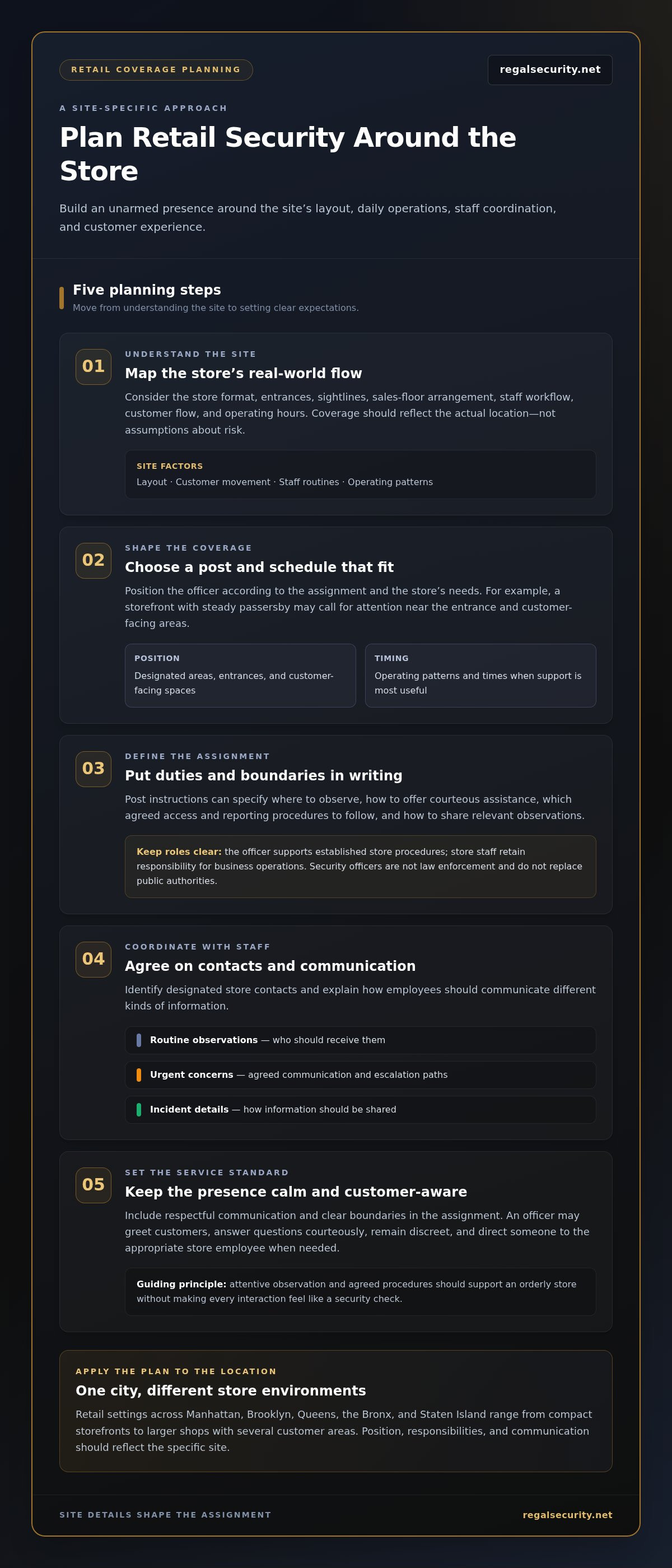
A clear assignment begins before an officer takes a post. For a security guard for retail store NYC assignment, use a four-step sequence: define the store’s needs, identify responsibilities, establish communication, and review whether the arrangement still fits. This makes expectations easier to discuss and distinguishes the officer’s duties from the work of retail employees.
What belongs in a retail security assignment brief?
Keep the brief practical and specific. Record the location, operating pattern, key areas, designated staff contacts, and the outcomes the store wants the assignment to support. Describe authorized duties and boundaries, including how concerns should be escalated and how incident communication or documentation will be handled under the agreed procedures.
Separate the officer’s responsibilities from employee duties. For example, staff may continue to manage sales and customer transactions, while the officer follows defined post instructions and communicates relevant observations to the appropriate store contact. State customer-service expectations clearly, including the tone and approach expected in shopper interactions.
How should store teams coordinate with an officer?
Choose a manager or designated contact for day-to-day communication. Set a consistent way to raise concerns, share relevant updates, and pass along changes to store procedures. During onboarding, walk through the post instructions and explain the store’s reporting process. If the layout, operating pattern, or staff contacts change, update the instructions and review the assignment.
Before discussing an assignment with Regal Security, prepare this checklist:
Store location, entrances, key areas, and relevant layout details.
Operating pattern and the times when on-site support is most useful.
Specific responsibilities, authorized duties, and clear boundaries.
Names or roles of store contacts, along with escalation and update methods.
Agreed expectations for incident communication and documentation.
Operational changes that could affect the assignment’s fit.
Use the checklist to keep planning focused on the store’s actual needs. Regal Security tailors unarmed officer coverage to the site and its operational requirements. Learn more about the service through Regal Security’s retail security information.
Regal Security Guards for Retail Stores Across NYC
Retail security should reflect the store it serves. Regal Security provides unarmed security officers and tailored professional security services across New York City, with planning centered on the location’s operations and desired on-site responsibilities. For retailers considering a security guard for retail store NYC coverage, define the purpose of the presence before setting expectations for the assignment.
Integrity, precision, and reliability matter in a customer-facing setting. An officer’s presence should fit the store’s procedures and the experience it wants to provide, while giving employees a clear point of contact for agreed concerns. The objective is professional support suited to the environment, not an unnecessarily imposing atmosphere.
What can retailers expect from a tailored security discussion?
The discussion can begin with how the store operates: its location, layout, customer flow, operating pattern, and priorities for on-site support. A compact storefront, a multi-area shop, and a location with changing customer traffic may each call for different considerations. Sharing these details helps shape a service plan around the actual site rather than assumptions about retail stores generally.
Retailers can describe the responsibilities they want the officer to carry out, the store contacts involved, and how communication should work. Clear expectations help align the assignment with established procedures and distinguish the officer’s role from employees’ duties. The resulting plan is tailored to the store’s needs without relying on blanket promises about outcomes or staffing.
How can a NYC retailer take the next step?
Before discussing coverage, gather practical details: the store address, operating pattern, areas that matter most, and primary security objectives. Identify who will coordinate with the officer and share relevant updates. A concise outline gives the conversation a useful starting point and helps clarify what a professional on-site presence should accomplish.
Defining expectations first supports a considered discussion of coverage. Regal Security serves retailers across New York City with an approach grounded in dependable presence and tailored planning. Sharing the store’s location, operations, and coverage objectives provides a useful basis for discussing an arrangement.
Plan Retail Coverage With Confidence
A thoughtful retail security plan begins with the store’s actual needs: its layout and operating pattern, the officer’s defined responsibilities, and clear communication with staff. A composed, unarmed presence can support employees and shoppers without making security feel separate from the customer experience.
For a security guard for retail store NYC assignment, the right scope is specific to the location. Clear post instructions and an agreed point of contact help the officer and store team work from shared expectations. Reviewing those arrangements as store operations change can help keep coverage aligned with the business.
Regal Security provides unarmed security officers across New York City and the surrounding region, with an approach grounded in integrity, precision, and a reliable on-site presence. Share your store’s location, operating needs, and coverage objectives to begin a focused discussion. Regal Security serves New York City, New Jersey, Manhattan, Brooklyn, Queens, the Bronx, Staten Island, Long Island, Nassau County, Suffolk County, Westchester County, Rockland County, and Orange County.
Discuss retail security for your NYC store and take a considered next step toward a professional presence tailored to your retail environment.
Frequently Asked Questions
What does a security guard for a retail store do?
A retail security guard provides an on-site professional presence to support store safety and orderly operations. Depending on the agreed assignment, duties may include observing activity, communicating relevant information to designated staff, and following store procedures. For example, instructions can identify who receives incident updates and how concerns are reported. The officer supports the retailer’s operations but does not replace law enforcement or take over employees’ responsibilities.
Can an unarmed security guard help deter retail theft?
An unarmed officer can provide a visible, attentive presence and follow agreed procedures for communicating observations to store staff. This may support a retailer’s approach to theft concerns, but no security presence can guarantee that theft or other incidents will not occur. Define the officer’s responsibilities, store contacts, and incident communication steps for the specific location. Clear expectations help staff understand how the assignment fits into daily operations.
How do I choose retail security coverage for a NYC store?
Start with the store’s layout, operating pattern, customer flow, and the responsibilities you want the officer to perform. Identify a staff contact and note which store procedures the officer should follow. A security guard for retail store NYC assignment should reflect the actual location, whether it is a Manhattan storefront or a neighborhood shop in another borough. Sharing practical details helps shape coverage around your store’s needs.
Will a security guard make customers uncomfortable?
A professional, composed presence can support store operations without an aggressive approach. Courtesy, discretion, and clear boundaries are useful in customer-facing settings, especially when the officer’s responsibilities and service expectations are understood in advance. Retailers can explain the store environment and preferred customer interactions as part of the assignment. This helps align the officer’s conduct with the intended shopping experience, without promising how every shopper will feel.
What should be included in a retail security assignment brief?
Include the store location, operating pattern, key areas, designated staff contacts, and the officer’s agreed responsibilities. Explain how employees should raise concerns and how incidents should be communicated or documented under the assignment’s procedures. Distinguish security duties from employee tasks and customer-service expectations. Review the brief when the store’s layout, operations, or staff contacts change so instructions remain relevant to the site and team.
Does Regal Security provide retail security guards in NYC?
Yes. Regal Security provides unarmed security officers and serves New York City and the surrounding region. Retailers can discuss their location, operating pattern, priorities, and desired on-site responsibilities to shape an approach for their store. Coverage includes Manhattan, Brooklyn, Queens, the Bronx, Staten Island, New Jersey, Long Island, Nassau County, Suffolk County, Westchester County, Rockland County, and Orange County.