Security Guard Uniform Importance: Purpose and Key Benefits
A security guard’s uniform is more than workwear: it makes the guard’s role visible, helps people know whom to approach, and can support a calm, orderly environment. The importance of a security guard uniform is also reflected in the confidence it can inspire when it is clean, professional, and suited to the setting. A visible security presence may discourage misconduct by showing that an area is monitored.
Appearance is only part of the picture. A uniform can help security teams recognize one another, while practical details support comfort and movement during a shift. Its design and use should reflect the location and the duties being performed.
This article explains why guards wear uniforms and how visibility, identification, practical features, and compliance contribute to security. You’ll also learn how uniforms can shape public trust, where their limits lie, and why a professional presence depends on more than what a guard wears.
Table of Contents
Why do security guards wear uniforms?
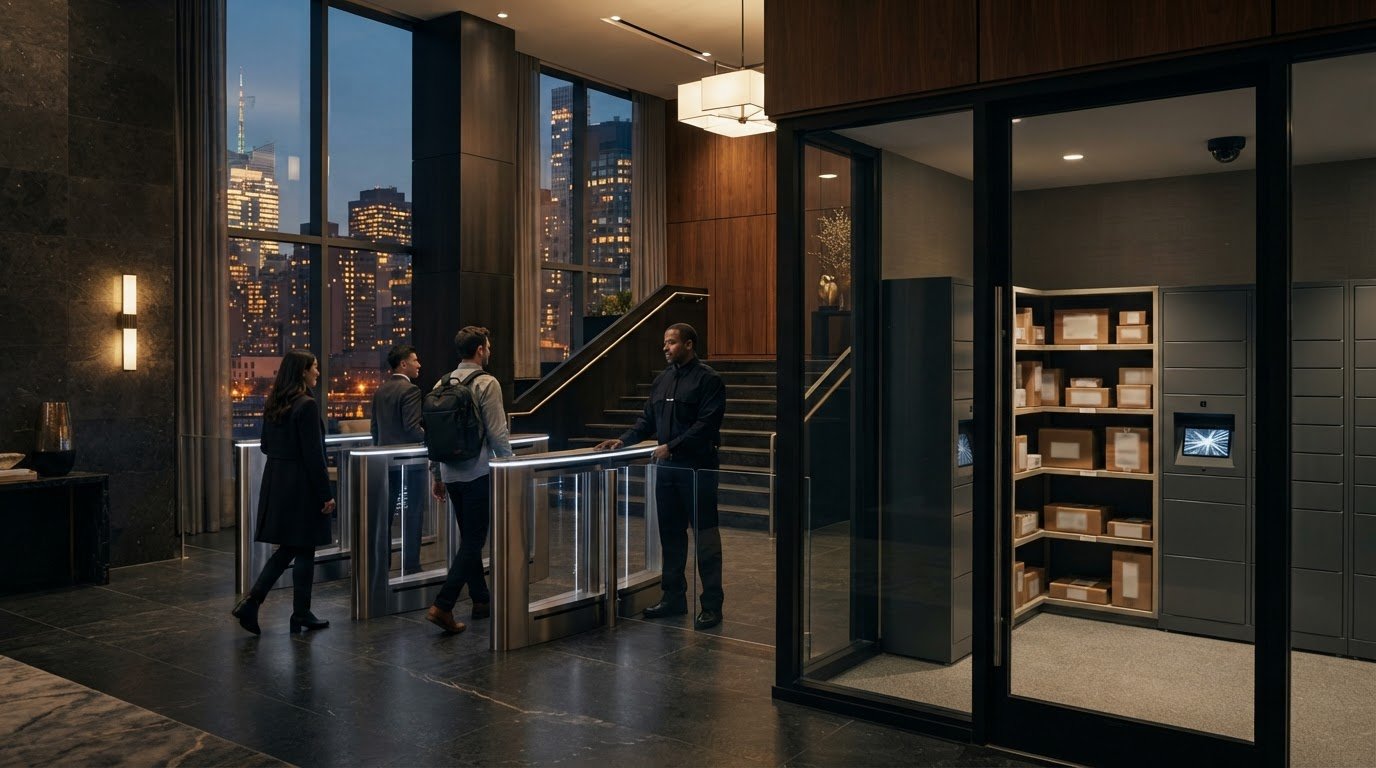
In a New York City office lobby, employees need to recognize security staff quickly. A clear, professional uniform makes the guard’s role visible and sets expectations for respectful interactions.
Professional Attire and Perceived Competence
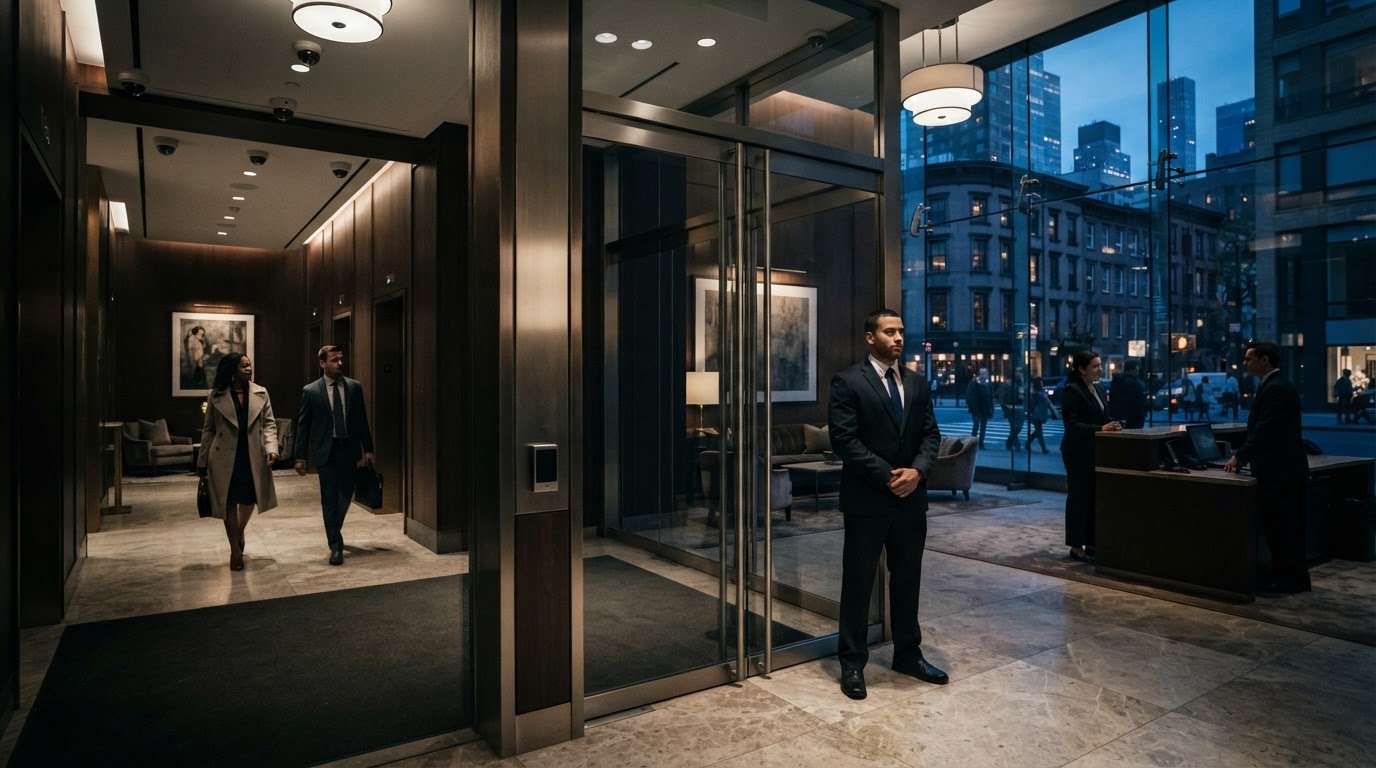
Professional attire looks orderly and suits the guard’s assigned setting. A neat suit may fit a corporate lobby, while a practical uniform may be better for a loading area. These choices shape first impressions before a guard speaks. For property managers, consistent, appropriate attire helps visitors distinguish security staff from employees and know whom to approach.
Credibility and Authority
A uniform supports professional credibility by making a guard’s role recognizable, but clothing alone doesn’t create authority. A clean shirt, visible identification, and composed conduct can signal that the guard is prepared to assist. For example, a visitor unsure which building entrance to use can identify the uniformed person to approach. Clear identification supports cooperation, while calm communication and consistent conduct help earn respect.
Professional Image and Public Trust
Professional image is shaped by a guard’s appearance and conduct together. A tidy uniform and courteous greeting at a residential entrance can help residents and guests know whom to approach. A wrinkled or poorly maintained appearance may undermine that impression. For property teams, clear attire expectations help create a consistent standard across shifts and support trust in the security presence.
Uniform styles can reflect different duties while serving the same basic purpose: identification. Formal attire may suit a corporate reception, while a more practical look may suit a warehouse entrance. In either case, the guard should be distinguishable from the public. A uniform does not grant special legal authority; it identifies a role, not powers beyond that role.
What are the differences between armed and unarmed security guard uniforms? Uniforms can differ by employer, site, and assigned duties, including the equipment worn. There is no single uniform style that applies to every armed or unarmed guard.
How much do security guard uniforms cost, and who pays for them? Costs depend on garments, identification, and site-specific requirements. Payment arrangements depend on the employer’s policy and should be clear in the applicable employment terms.
What are the risks of wearing a security guard uniform off duty? Wearing a uniform off duty can blur whether a guard is acting in an official role and expose identifying details. For example, members of the public may approach someone in a company-marked uniform for help when that person is not working.
Crime deterrence and visible security presence
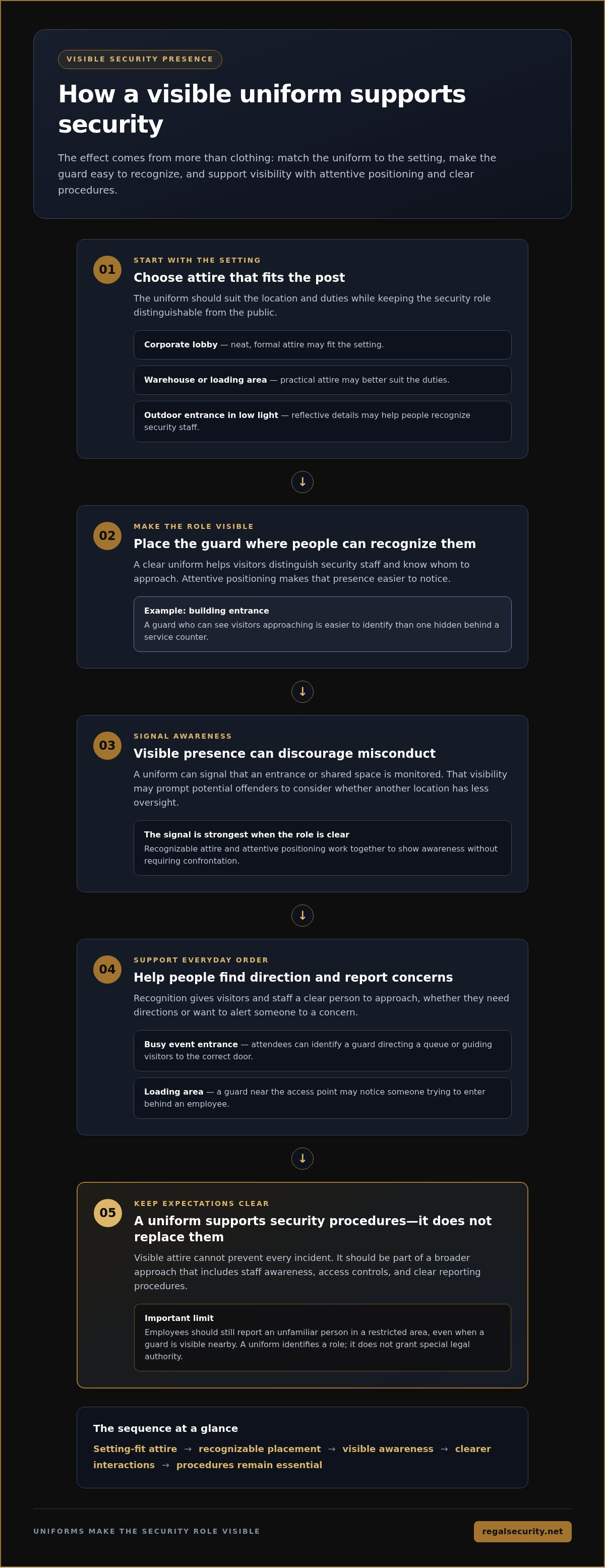
A visible uniform can signal that an entrance or shared space is monitored. In a residential lobby, for example, a guard stationed near the visitor desk makes the security presence apparent to arriving guests. That visibility may discourage misconduct by prompting potential offenders to consider whether another location has less oversight.
Deterrence depends on more than clothing. A uniform helps people recognize the guard, while attentive positioning makes that presence meaningful. At a building entrance, a guard who can see visitors approaching is easier to identify than one hidden behind a service counter. Together, visibility and positioning signal awareness without requiring confrontation.
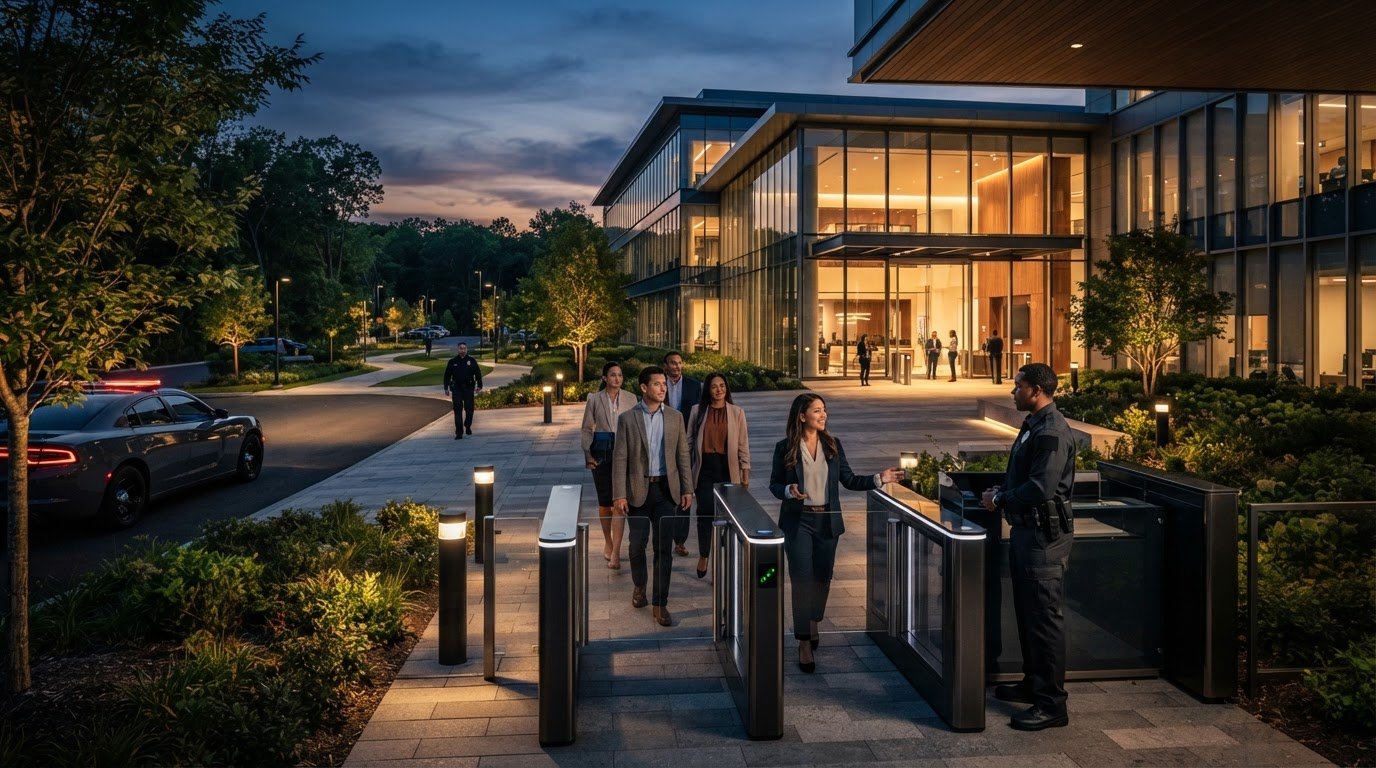
Different environments call for different forms of visibility. At a commercial property, a clearly marked uniform can distinguish a guard from tenants moving through the lobby. At an outdoor entrance, reflective details may help people recognize security staff in low light. Clothing should suit the setting while keeping the security role identifiable.
At a loading area, visible coverage can help discourage unauthorized entry. A guard near the access point may notice someone trying to enter behind an employee. Their presence also gives staff a clear person to alert. It does not replace sound access procedures, but it can make oversight more visible.
Uniformed security can also support order during busy public activity. At an event entrance, attendees can identify a guard directing a queue or guiding visitors to the correct door. Clear recognition can reduce confusion and help people follow site instructions. A composed presence is especially useful when several groups arrive at once.
Visibility must be consistent to be useful. When guards move between a lobby, a vehicle entrance, and a shared corridor, recognizable attire helps people understand that the same security function covers those spaces. For property managers, positioning guards where visitors need direction makes their role easier to recognize and approach.
A uniform’s deterrent value has limits. It can indicate monitoring, but it cannot prevent every incident or replace staff awareness, access controls, and clear reporting procedures. Employees should still report an unfamiliar person in a restricted area, even when a guard is visible nearby. A uniform supports a security plan; it is not the plan itself.
Property teams seeking a visible, non-armed presence can consider unarmed security officers for entrances and shared spaces. The appropriate post depends on the property’s layout, visitor flow, and areas requiring observation. Matching guard placement and attire to those conditions helps make security presence clear without relying on intimidation.
Comfort, durability, and practical uniform features
Comfort affects how effectively a guard can perform assigned duties. A uniform that restricts movement can make bending, reaching, or walking through a building more difficult. For example, a guard checking a lobby entrance needs clothing that allows easy movement while greeting visitors. A suitable fit matters throughout a shift, not just during a brief inspection.
Durable materials matter when duties involve repeated movement or outdoor exposure. A guard walking between a parking area and building entrances needs clothing that withstands regular wear. For outdoor patrols, reflective vests, weatherproof jackets, and suitable headwear can support visibility and protection. The right choices depend on the site and the conditions guards encounter.
Practical uniform features should support the work without adding unnecessary bulk. A guard assigned to a reception desk may need a different outfit from one walking an industrial site. Pockets can help carry necessary equipment, provided its weight does not restrict movement or make routine tasks awkward. The uniform should suit the guard’s actual post.
Footwear affects movement across different surfaces. A guard walking through a building with stairs, for example, needs shoes that allow stable, comfortable movement. An outdoor post may call for footwear suited to the ground and weather. Choices should reflect the duties and environment rather than rely on one outfit for every assignment.
Layering can help guards adapt to changing conditions during outdoor work. A weatherproof jacket may be useful when a post includes time outside, while an indoor lobby may call for lighter clothing. For a patrol that moves between a building and its exterior, removable layers can maintain comfort while preserving a recognizable uniform.
Uniform condition needs attention, too. A torn seam, damaged fastener, or stained shirt can detract from a polished appearance and practical use. A loose pocket, for example, may fail to secure an item during a walking patrol. Regular cleaning and prompt repairs help preserve the garment and keep its features useful for assigned duties.
Property managers can assess uniform suitability by matching clothing to each post. Consider whether a guard sits at a desk, walks a perimeter, or works outdoors. Then review mobility, weather protection, equipment needs, and visibility. A lobby assignment and an exterior patrol, for example, may call for different layers while retaining a consistent security identity.
Regulatory compliance and guard identification
Uniform standards connect a guard’s appearance with assigned duties and site rules. Requirements vary by state, employer, and location, so a New York City property should set expectations for each post. A residential lobby and a construction entrance, for example, may need different attire and identification. Clear standards help maintain a consistent appearance across shifts.
Post orders typically include uniform specifications for the assigned location. They can clarify which clothing, insignia, or identification guards should wear. At a construction site, for instance, the instructions can specify the approved uniform for an entrance post. A written standard gives supervisors a reference when checking whether guards are dressed appropriately.
Identification helps the public distinguish security staff from residents, employees, and visitors. A name, company logo, badge, or rank designation can make a guard easier to identify at a reception desk. In most jurisdictions, security guards are required to display their license visibly while on duty. Exact uniform requirements vary by state, employer, and site.
Visible identification also supports accountability. If a visitor asks who authorized access to a restricted floor, a clear badge helps identify the guard involved. Supervisors can use consistent insignia to recognize team members during shift changes or patrols. That clarity matters when several security staff work across separate entrances in one building.
Uniform design should not imply powers beyond the role. Clothing can identify someone as security personnel, but it does not itself grant specific legal authority. A marked uniform at a Manhattan office entrance, for example, does not replace the property’s access procedures. Employees and visitors should understand that a guard’s directions relate to the assigned security role and site rules.
Property managers can make the standard practical by documenting attire, identification placement, and acceptable insignia in post orders. They can review those instructions when a post changes, such as when a guard moves from a lobby to a loading entrance. State licensing board guidance is relevant to uniform requirements, and security companies should stay current with changes. Clear records keep expectations aligned.
Identification details should remain legible during ordinary duties. A badge hidden beneath a jacket or a logo obscured by equipment can make a guard harder to recognize. For a visitor arriving at a residential entrance, visible credentials help distinguish the assigned guard from other building staff. Regular supervisor checks can catch misplaced or obscured identification before a shift continues.
Uniforms and public trust in security companies
A security company’s uniform visibly reflects its standards. At a Manhattan residential entrance, matching attire can show residents that personnel belong to the assigned security team. A well-designed uniform can help establish trust and confidence in the company. That impression grows when employees see consistent presentation across shifts, rather than conflicting styles at the same desk.
Consistency matters because people judge service through repeated interactions. A visitor who receives directions from a clearly identifiable guard, for example, can expect similar assistance at another entrance. Consistent colors, insignia, and identification make personnel easier to recognize. A uniform cannot show every aspect of service quality, but it gives the public a clear first signal.
Public trust also depends on whether the uniform suits the property’s character. A tailored look may suit a corporate reception, while discreet, practical attire may better serve a residential courtyard. In either environment, clothing should remain recognizable as security attire. If it appears theatrical or resembles another role, visitors may hesitate before seeking help.
Recognition is especially important in emergencies. If a fire alarm sounds in an office building, visitors need to identify personnel who can direct them to the property’s established procedures. A visible uniform helps distinguish a security guard from other building staff. Clear identification can reduce uncertainty as people look for guidance, though the uniform itself does not replace emergency training or procedures.
A company’s image also reflects how it maintains uniform standards. A clean, properly worn uniform at a reception desk presents a more orderly impression than damaged or inconsistent clothing. Supervisors can support that standard by setting clear appearance expectations and checking uniforms during shift handovers. These practical steps show attention to detail without relying on dramatic symbols.
Trust grows when appearance and conduct align. A guard in a polished uniform who ignores a visitor’s question, for example, creates a mismatch. A respectful greeting, attentive listening, and clear directions make the uniform’s message credible. Personnel also need to understand when a specialized uniform suits a post, such as an outdoor entrance that calls for weather-appropriate layers.
Property teams seeking a consistent, professional security presence can discuss security coverage for their property. Consider the people using each entrance, the character of the setting, and the duties assigned to personnel. Aligning those details helps create a public-facing approach that feels orderly and welcoming, including at a busy residential lobby or corporate reception.
Regal Security: Unarmed Security Officers
Regal Security provides Unarmed Security Officers for properties seeking a visible, professional presence without armed personnel. This can suit an NYC residential lobby, office entrance, or shared space where visitors need clear direction and property teams value attentive on-site support.
For a front desk that combines security with guest assistance, Regal Security also offers Concierge Services. Vehicle Patrol supports properties requiring a mobile presence, while Executive Protection serves executive clients seeking personal security. The right service depends on the setting, the people using it, and the duties requiring coverage.
If your property needs a professional security presence, contact Regal Security to discuss your requirements.
Shape a Security Presence That Fits Your Property
The next step is to turn your property’s needs into clear expectations for its security presence. Consider who needs assistance, which entrances require attention, and how staff should interact with residents, employees, and visitors. These priorities help define a suitable role and a professional standard that feels consistent with the property.
Understanding the importance of a security guard uniform is part of making that decision, but the broader question is how security personnel should serve the people who use your space. Regal Security offers Unarmed Security Officers, Concierge Services, and Vehicle Patrol. Each service supports a different kind of on-site or mobile presence, depending on the property’s requirements.
Use your priorities to begin a focused discussion about coverage and the role you want security personnel to fulfill. Contact Regal Security to discuss your property’s security needs and identify a suitable next step. A considered approach can help you build a professional presence that supports daily operations and treats everyone on site with respect.
Frequently Asked Questions
Can uniforms affect how people behave?
Yes, recognizable uniforms can influence how people respond to rules and directions. At a Brooklyn event entrance, attendees may be more likely to follow queue guidance when they can identify the person giving it as security staff. The effect depends on clear communication and consistent enforcement, not clothing alone. A uniform signals the role, while respectful conduct supports cooperation.
Why are badges worn with uniforms?
Badges help identify security personnel and support accountability. If a visitor in a Queens office building needs to report an interaction, visible identification can help them describe the staff member involved. A badge may also distinguish a guard from reception or maintenance employees. It should be placed where it remains legible during ordinary duties, not hidden beneath a jacket or equipment.
Why are uniforms important for security guards?
Uniforms make a security role easier to recognize and help teams maintain a consistent appearance. A new employee at a Staten Island residential property, for example, can distinguish a guard from a delivery worker when asking about building access. Uniform standards also give supervisors a clear reference during shift handovers. Clothing supports the role, while training and conduct shape how effectively the guard performs it.
How do security guard uniforms deter crime and improve safety?
A visible uniform can signal that a location is monitored, which may discourage someone from attempting unauthorized entry. At a Long Island retail entrance, identifiable security staff can also help employees direct concerns to the right person. Uniforms support recognition and awareness, but they cannot prevent every incident. Property procedures, staff communication, and prompt reporting remain important parts of a safety plan.
How do uniforms help people identify security guards and distinguish them from police?
Distinctive company markings and identification help the public recognize private security staff. At a Manhattan building entrance, clear company names and badges can prevent confusion about whom visitors are approaching. Uniforms should avoid police insignia or styling that could mislead the public. Anyone needing police assistance should contact the appropriate public authority rather than assume a security guard has police powers.
What should a professional security guard uniform include?
A typical uniform may include a professional shirt, appropriate pants, closed-toe shoes, and visible identification. A guard assigned to a Westchester office lobby, for example, may need a more formal presentation than one assigned to a warehouse entrance. Employer standards and post instructions determine appropriate attire and insignia. The essential aim is a neat, identifiable appearance suited to the assigned duties.
How do security guard uniform requirements vary by state and employer?
Requirements differ by state, employer, and site, so one uniform standard may not fit every assignment. A security post in New York City may have different employer instructions from a site in New Jersey. The same applies across Brooklyn, the Bronx, Staten Island, Long Island, Nassau County, Suffolk County, Westchester County, Rockland County, and Orange County. Post orders set location-specific expectations.
How should security guard uniforms fit, function, and meet workplace safety needs?
Uniforms should let guards move freely and carry necessary equipment without strain. A construction-site post, for instance, may call for different clothing and footwear than an indoor reception desk. Outdoor duties may require weather-appropriate layers or reflective elements. The right fit and features depend on the guard’s tasks, site conditions, and equipment; damaged or restrictive clothing can hinder routine work.