The Definitive Guide to Choosing an Unarmed Security Company in 2026
The most effective security presence in the room is often the one you barely notice. That quiet confidence, that dignified authority that de-escalates before a situation ever develops, is precisely what separates a truly professional unarmed security company from the unreliable, heavy-handed services that have given the industry a troubled reputation. If you've ever wondered how unarmed officers can provide the same caliber of protection as armed personnel without the liability, the friction, or the fear, the answer lies not in weaponry but in training, temperament, and meticulous presence.
You already know that the wrong security approach can damage the very environment you're trying to protect. A guard who intimidates residents, disrupts guests, or escalates minor incidents into costly confrontations isn't an asset; it's a liability in uniform. Those concerns are entirely valid, and they deserve a serious answer.
This guide will show you exactly what to look for when choosing an unarmed security provider in 2026, from officer qualifications and concierge-level conduct to vehicle patrol capabilities and the seamless integration of safety with hospitality. Consider this your definitive framework for making a confident, informed decision.
Table of Contents
Understanding the Role of a Professional Unarmed Security Company
At its foundation, a professional unarmed security company provides trained officers who rely on three core instruments: presence, communication, and the strategic integration of technology. No firearm is drawn. No threat is issued. Instead, the officer's bearing, situational awareness, and command of the environment do the work that reactive force never could. This distinction matters enormously, and it's one that property managers, corporate directors, and residential developers in the New York metropolitan area are increasingly recognizing as the more sophisticated standard.
The security guard industry overview on Wikipedia offers useful context here: the profession encompasses a wide spectrum of roles, training requirements, and operational mandates. What separates elite unarmed personnel from the broader field is not simply the absence of a weapon. It's the presence of something more difficult to train and harder to replace: disciplined judgment, meticulous observation, and the ability to de-escalate tension before it ever crystallizes into incident.
Unarmed officers serve as the first line of defense precisely because their role is fundamentally observational. They identify behavioral anomalies, monitor access points, and communicate irregularities through proper channels before a situation demands a physical response. That quiet, watchful competence is the gold standard for corporate lobbies, luxury residential developments, and high-traffic public spaces where the atmosphere itself is part of the asset being protected.
Deterrence vs. Reaction: The Strategic Shift
The most consequential development in modern asset protection is the shift from reactive security to proactive deterrence. A visible, professionally presented officer stationed at an entry point communicates order and attentiveness to everyone who enters. That communication alone prevents a significant portion of incidents that might otherwise require a response. High-tier training sharpens an officer's ability to read environmental cues, recognize subtle behavioral shifts, and coordinate seamlessly with existing access control systems and surveillance infrastructure. The result is a security posture that is always several steps ahead.
Liability and Risk Management Benefits
The risk profile of unarmed staffing is substantially more favorable for properties that serve the general public. Armed personnel introduce layers of legal exposure, insurance complexity, and potential for escalation that most residential and corporate environments simply don't require. In high-traffic settings, an officer whose toolkit is communication and presence rather than force is far less likely to generate the kind of incident that results in litigation, reputational damage, or regulatory scrutiny. For property owners and asset managers weighing their options in 2026, that calculus is becoming increasingly clear.
The Unarmed Advantage: Deterrence Through Professionalism
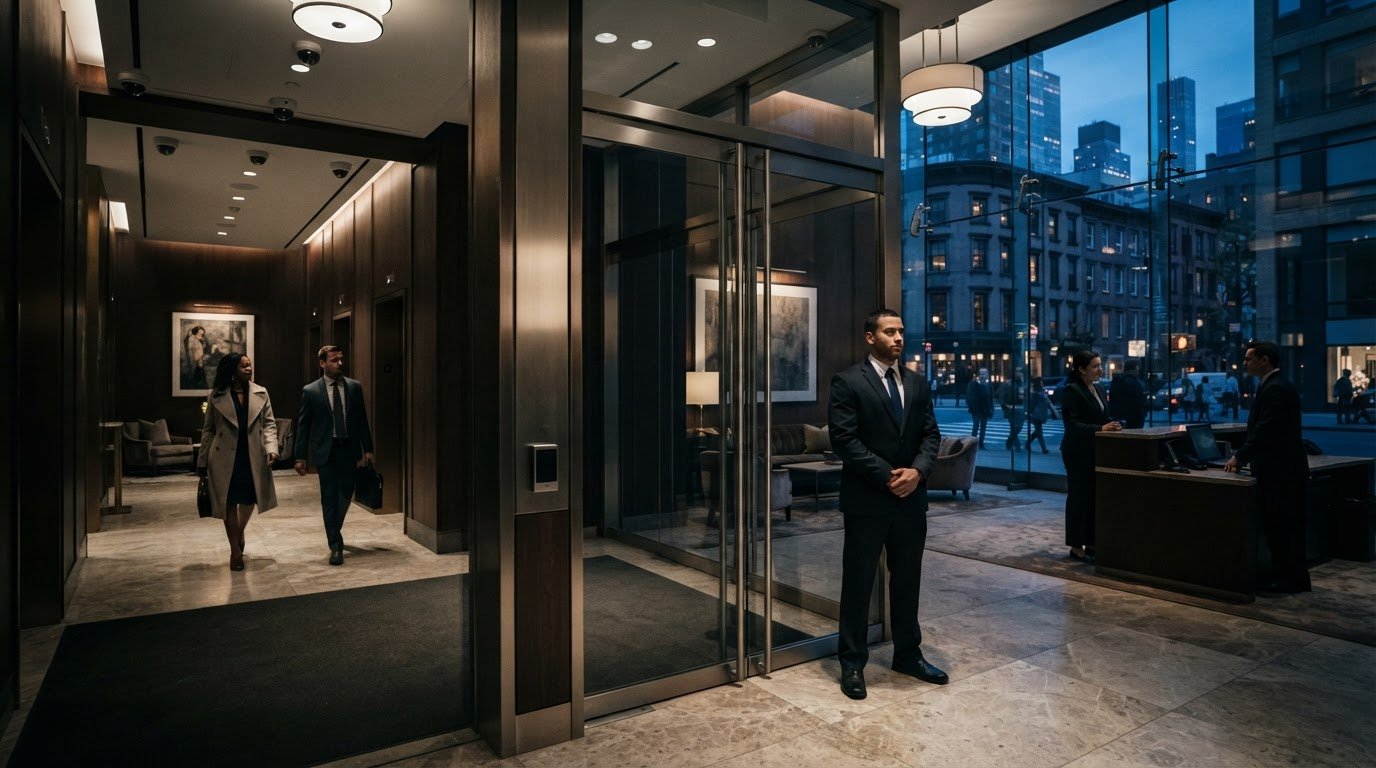
There is a reason that the most respected institutions in the world, from luxury hotels to corporate headquarters, place enormous weight on the presentation and bearing of their security personnel. A professionally uniformed officer who carries themselves with composure and moral authority communicates something that no weapon ever could: that this environment is governed by people of discipline and discernment. That signal alone reshapes behavior before a word is spoken.
The psychology of the uniform runs deeper than appearance. When an officer's dress is immaculate, their posture deliberate, and their manner courteous yet unambiguous, they project an institutional seriousness that most individuals instinctively respect. This is deterrence at its most sophisticated, and it's the operational foundation upon which every credible unarmed security company builds its service model. The Bureau of Labor Statistics security guard outlook recognizes that modern security officers are increasingly expected to exercise judgment, communication skill, and situational awareness as their primary professional instruments, reflecting an industry-wide shift toward professionalism over physicality.
Personnel selection is where this advantage is either built or squandered. The qualities that matter most, namely integrity, composure under pressure, and an instinct for de-escalation, cannot be issued with a uniform. They must be identified during the hiring process and refined through rigorous, ongoing training. Moral uprightness in an officer isn't a soft credential; it's the foundation of every professional interaction they will have on your property.
De-Escalation and Conflict Resolution
De-escalation is the art of neutralizing threats through precise, calibrated communication before they require a physical response. In practice, this means an officer trained in verbal techniques that redirect aggression, lower emotional temperature, and restore order without confrontation. In high-density environments like New York City, where stress levels are elevated and interpersonal friction is a daily reality, this capability isn't optional. It's essential. Techniques such as active listening, controlled tone mirroring, and strategic empathy allow a skilled officer to function as a stabilizing force in moments that lesser-trained personnel would inadvertently escalate. The result is an environment that returns to equilibrium quickly and discreetly, protecting both the people present and the reputation of the property.
Precision in Reporting and Observation
Effective protection doesn't end when a situation resolves. Meticulous incident documentation, supported by digital reporting tools and structured observation protocols, creates a record that informs future security decisions and provides property managers with the clarity they need to make confident operational choices. Detailed logs reveal behavioral patterns, identify recurring vulnerabilities, and serve as indispensable documentation should a legal or insurance matter arise. This level of precision is what separates a truly professional security presence from one that simply occupies a post.
For property managers in the New York metropolitan area who understand that the quality of their security reflects directly on the quality of their asset, exploring what a professional security partner looks like is a worthwhile first step toward making a fully informed decision.
Evaluating Unarmed Security Agencies in the NYC and NJ Area
Choosing the right unarmed security company in the New York metropolitan area requires a more rigorous evaluation than most property managers initially anticipate. The regulatory environment alone distinguishes this region from the rest of the country. New York State mandates that security guards complete a prescribed training curriculum and register with the state before they can legally work a post. New Jersey maintains its own licensing framework with distinct requirements for officer registration and company licensure. Any agency operating across both states must demonstrate active, current compliance with each jurisdiction's standards, not as a formality, but as a baseline measure of institutional seriousness. Verifying an agency's standing with respect to state labor and licensing compliance is a practical first step that separates credible providers from those cutting corners on operational legitimacy.
Beyond licensing, the question of local management presence matters considerably. A provider whose supervisory leadership is physically accessible in the Tri-State area can respond to a staffing gap, a client concern, or an evolving site condition in hours rather than days. National firms with regional outposts often lack that immediacy. When a situation develops at a luxury residential building in Hoboken or a corporate campus in Midtown, the value of a management team that knows the terrain, the culture, and the client is difficult to overstate.
Vetting an agency's hiring process is equally consequential. The qualities that define an exceptional officer, integrity, composure, and sound judgment, must be identified before training begins. Look for providers who conduct thorough background investigations, structured interviews, and ongoing performance evaluations rather than simply filling posts with available personnel. The caliber of the hiring standard is the clearest predictor of the caliber of the officer standing at your door.
Tri-State Regional Expertise
The security demands of a Manhattan high-rise differ substantially from those of a sprawling estate in Nassau County or a multi-building corporate campus in Bergen County, New Jersey. Manhattan and Brooklyn properties contend with high pedestrian density, complex access control environments, and the particular social dynamics of vertical living. Long Island estates require perimeter awareness and mobile coverage across significant acreage. A provider with genuine Tri-State experience understands these distinctions operationally, not just geographically, and deploys its officers accordingly.
Customization and Flexibility in Service
A rigid, standardized service model fails in environments as varied as those found across the NYC and NJ corridor. The most dependable providers design their engagements around the specific rhythms of each property, whether that means concierge-integrated security for a luxury development or vehicle patrol coverage for an expansive commercial site. Reviewing peace of mind security services that adapt to client needs offers a useful benchmark for what thoughtful, client-centered service actually looks like in practice. Contract terms deserve equal scrutiny; a provider confident in its own performance will offer terms that reflect accountability rather than lock-in.

Industry-Specific Applications: From Lobbies to Mobile Patrols
Security is not a uniform solution. The operational demands of a luxury residential tower in Manhattan bear little resemblance to those of a sprawling commercial campus in Westchester County, and deploying the same approach across both environments is a failure of professional judgment. What distinguishes a truly capable unarmed security company is its ability to translate core principles of presence and discipline into service models that are precisely calibrated to each setting.
Concierge Security: The Hospitality-Safety Hybrid
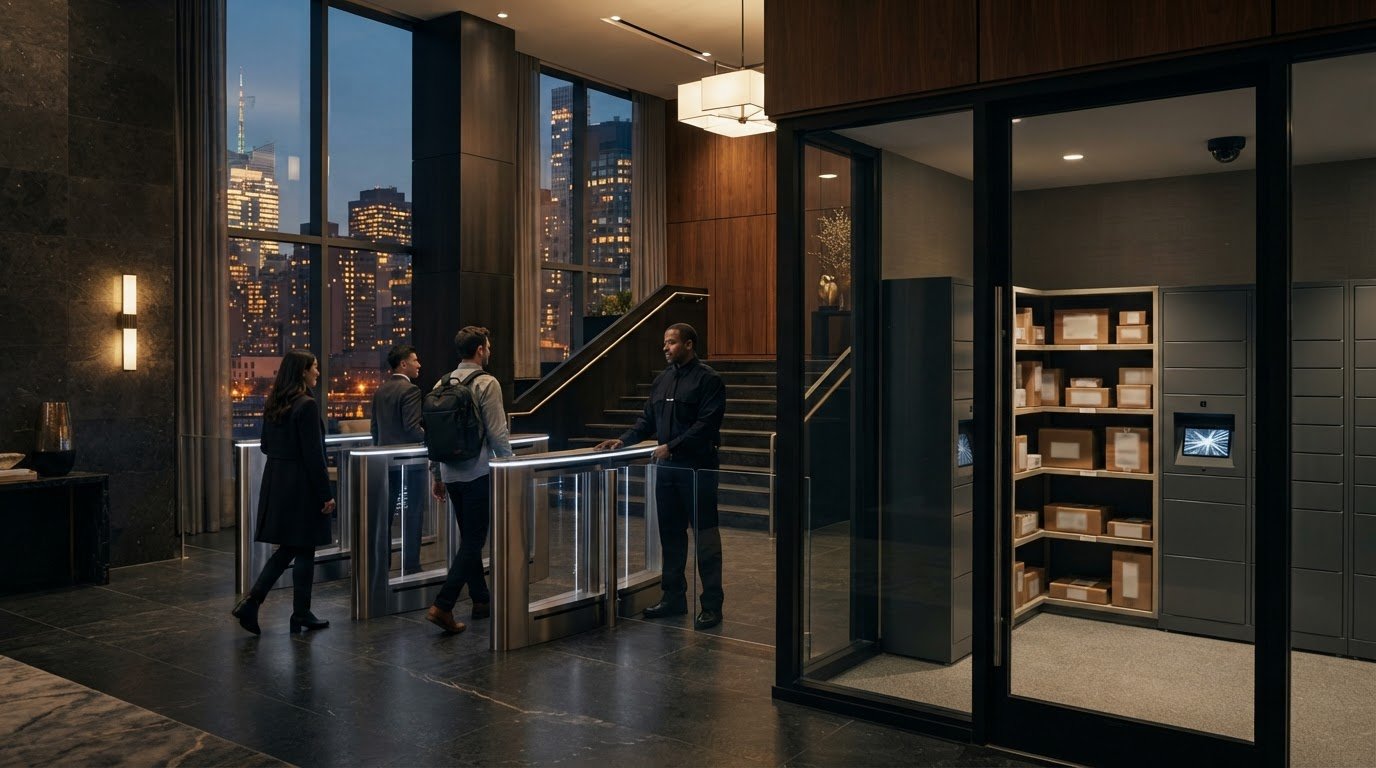
The concierge security officer represents the most sophisticated evolution in residential property protection. In luxury developments across the Tri-State area, the front desk is simultaneously the first point of welcome and the first line of defense. An officer stationed there carries a dual mandate: to receive residents and guests with the composure of a seasoned hospitality professional, and to screen, verify, and control access with the precision of a trained security specialist.
The practical responsibilities are considerable. Access control requires constant vigilance, ensuring that only authorized individuals pass through entry points. Package management, visitor logging, and contractor coordination demand organizational discipline and an eye for behavioral irregularities. When these duties are executed with warmth and discretion, the result is measurable: residents feel both welcomed and genuinely protected, which directly supports retention in competitive luxury markets. The officer who achieves that balance isn't simply filling a post. They're contributing to the long-term value of the asset itself.
Mobile Patrols for Commercial Assets
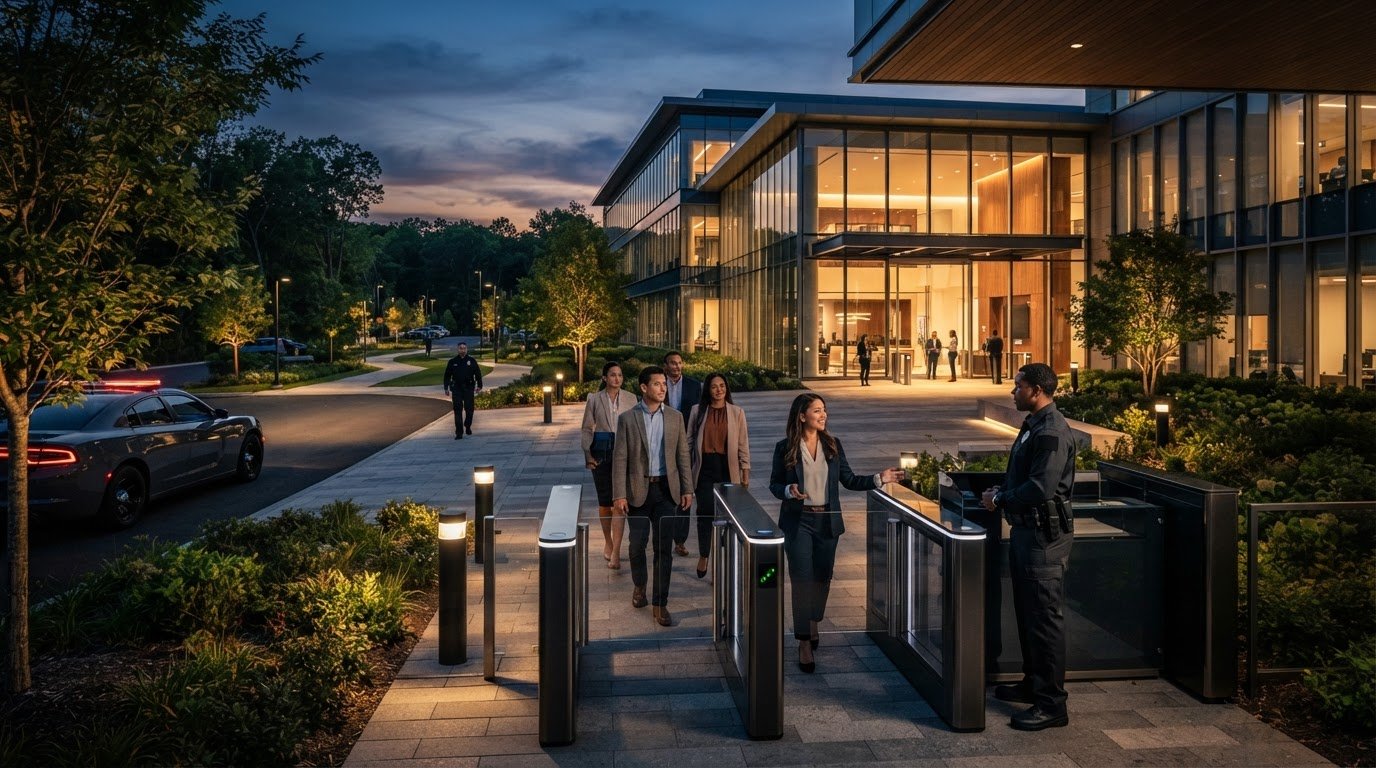
Expansive properties present a fundamentally different challenge. Parking structures, facility perimeters, and multi-building campuses in areas like Westchester and Orange County require coverage that a stationary post simply cannot provide. Vehicle patrol security services address this through visible, scheduled movement across the full footprint of a property.
The deterrent effect of a marked patrol vehicle making regular, documented rounds is well established among property managers who've dealt with overnight vandalism or unauthorized access. Scheduled patrols disrupt the predictability that opportunistic threats depend on. GPS-verified patrol routes add an additional layer of accountability, providing clients with transparent confirmation that every designated checkpoint was reached, at every designated interval. That level of documented oversight transforms a patrol from a general reassurance into a verifiable operational record.
From corporate headquarters seeking a welcoming yet secure environment for executives, to retail and hospitality venues where the guest experience is itself a protected asset, the application of disciplined, professionally trained officers is what separates genuine protection from the appearance of it. Contact Regal Security to discuss a service model built around your property's specific needs.
Partnering with Regal Security: A Legacy of Integrity
Every principle examined in this guide, the disciplined presence, the hospitality-security balance, the meticulous documentation, finds its fullest expression in the way Regal Security approaches its work. This isn't a company that views protection as a commodity to be delivered at the lowest possible cost. It's an organization built on the conviction that genuine security flows from genuine character, and that the officers representing your property are, in every meaningful sense, representing you.
Regal's commitment to the New York and New Jersey communities runs deeper than geography. It reflects an understanding of the specific rhythms, regulatory demands, and cultural expectations of the Tri-State area that only comes from sustained, accountable presence in these markets. Property managers and corporate directors who have worked with regional providers that lack this local grounding understand the difference immediately. Responsiveness, familiarity with site conditions, and management accessibility aren't amenities here. They're operational necessities.
The caliber of Regal's unarmed security officers reflects a hiring and development philosophy that treats character as the non-negotiable foundation. Integrity, composure, and sound judgment are identified before training begins, not cultivated as an afterthought. What results is a corps of officers who don't merely occupy posts; they elevate the environments they protect.
The Regal Training Standard
Professional development at Regal is continuous and deliberate. Officers receive ongoing instruction in de-escalation technique, observational precision, and the hospitality-forward conduct that luxury residential and corporate clients require. Every officer is trained to reflect the brand values of the client they serve, whether that means the quiet discretion expected in a high-end residential lobby or the attentive professionalism demanded on a corporate campus. This alignment between officer conduct and client identity is what distinguishes a true security partner from a staffing vendor.
Getting Started with a Security Assessment
A sound protection plan begins with an honest evaluation of your property's specific vulnerabilities. Regal's assessment process examines access points, traffic patterns, existing infrastructure, and the particular risk profile of your environment through an experienced, objective lens. From that foundation, a tailored security staffing services plan is developed that aligns with your operational requirements and budget without compromising on the standard of protection your asset deserves.
Selecting the right unarmed security company is, ultimately, a decision about who you trust to stand at the threshold of everything you've built. Regal Security brings the discipline, the local accountability, and the professional integrity that decision demands. Request a consultation with our executive team and take the first step toward a protection plan built precisely around your needs.
Your Property Deserves a Security Partner Built for 2026
Choosing the right unarmed security company isn't simply a procurement decision; it's a commitment to the people, assets, and reputation you've worked to build. The principles explored throughout this guide point consistently toward the same conclusion: disciplined presence, meticulous personnel vetting, and a genuine hospitality-security balance are what separate protection that truly works from protection that merely appears to.
For property managers and corporate directors across New York and New Jersey, those standards aren't aspirational. They're available now, through a provider with specialized expertise in luxury residential markets, a quiet-strength approach to corporate safety, and the local accountability that national firms simply can't replicate.
The threshold of your property deserves someone standing at it who reflects your standards completely. Secure your property with Regal Security's elite unarmed officers today and take the first confident step toward a protection plan that's built precisely around what you've built.
Frequently Asked Questions
What is the difference between an unarmed security officer and a standard guard?
The distinction lies primarily in training emphasis and professional orientation. A standard guard may simply occupy a post, while a professional unarmed security officer is trained in de-escalation, behavioral observation, precise documentation, and often concierge-level conduct. The absence of a weapon isn't a limitation; it's a deliberate operational choice that prioritizes disciplined communication and situational awareness as the primary instruments of protection.
Elite unarmed officers are selected for qualities that can't be issued with a uniform: composure under pressure, sound judgment, and genuine integrity. These attributes define their effectiveness far more than any equipment they carry.
Can an unarmed security company effectively deter crime in NYC?
Yes, and the mechanism is well understood among experienced property managers. A professionally presented, attentive officer communicates institutional order to everyone who enters a space. That visible, composed presence disrupts the conditions that opportunistic threats depend on, specifically the perception that a property is unmonitored or poorly managed. In New York City's high-density environments, this deterrent effect is particularly consequential.
An unarmed security company that invests in officer presentation, observational training, and coordinated communication with existing access control infrastructure delivers a deterrence posture that reactive, force-dependent approaches rarely match.
What industries benefit most from unarmed security services in New Jersey?
Luxury residential developments, corporate campuses, retail centers, and hospitality venues across New Jersey consistently benefit from professional unarmed staffing. Multi-building commercial properties in Bergen, Essex, and Middlesex counties, where perimeter coverage and access management are ongoing priorities, are particularly well served. Healthcare facilities and educational institutions also rely heavily on unarmed officers, where a non-threatening presence supports rather than disrupts the environment.
The common thread across these settings is the need for security that integrates seamlessly with daily operations rather than imposing a militarized atmosphere on the people it's meant to protect.
This commitment to professional, non-intrusive protection is shared by elite agencies across the country; for example, Security Guard Pros provides similar high-standard licensed security services for residential and commercial properties in Southern California.
How are unarmed security officers trained for emergency situations?
Reputable providers train officers in structured emergency response protocols that prioritize clear communication, coordinated escalation to law enforcement, and orderly evacuation assistance. Officers learn to recognize early warning indicators, manage crowd dynamics calmly, and serve as the critical link between an unfolding situation and the appropriate emergency services. This preparation means the officer's role in a crisis is to stabilize and coordinate, not to intervene physically beyond their mandate.
Ongoing training refreshes these protocols regularly, ensuring officers remain sharp on procedures for fire emergencies, medical incidents, and security breaches specific to the property types they serve.
Does hiring an unarmed security company reduce my insurance premiums?
It can, though the outcome depends on your specific insurer and policy terms. The reduced liability exposure associated with unarmed staffing, compared to armed personnel, is a factor some commercial property insurers weigh favorably when assessing risk profiles. Fewer incidents involving use of force, combined with documented patrol logs and incident reports, can support a case for lower premiums over time. You should consult directly with your insurance broker to understand how your chosen security model affects your specific coverage.
What should I look for when vetting a security agency in the Tri-State area?
Start with verified licensing compliance in both New York and New Jersey, since each state maintains distinct requirements for officer registration and company licensure. From there, evaluate the agency's hiring standards: do they conduct thorough background investigations and structured interviews, or simply fill posts? Local management accessibility matters considerably; a supervisory team that's physically present in the region can respond to operational concerns far more effectively than a distant national office.
Contract terms also reveal a provider's confidence in its own performance. An agency that builds in accountability measures rather than long-term lock-in clauses is signaling that it expects to earn continued business through results.
Can unarmed officers handle access control for high-rise buildings?
Absolutely. Access control is one of the core operational competencies of a well-trained unarmed officer. In a high-rise setting, this means verifying credentials, managing visitor logs, coordinating with intercom and key fob systems, and screening contractors and delivery personnel with consistent, documented precision. The concierge security model, which integrates hospitality conduct with rigorous access management, is specifically designed for this environment.
Officers trained for luxury residential high-rises understand that every interaction at the front desk carries both a safety dimension and a resident experience dimension. Executing both with equal care is what distinguishes a true concierge security professional from a basic post-sitter.
How do vehicle patrols complement on-site unarmed security?
Stationary officers provide depth and consistency at fixed access points, while vehicle patrols extend coverage across the full footprint of a property. For expansive sites like commercial campuses, parking structures, or multi-building developments, a mobile patrol introduces visible, unpredictable movement that disrupts the patterns opportunistic threats rely on. GPS-verified routes provide clients with documented confirmation that every checkpoint was reached at every designated interval.
The two capabilities work in concert: on-site officers manage access and maintain presence at critical points, while patrol vehicles monitor perimeters, parking areas, and secondary entry points that a stationary post simply can't cover. Together, they create a layered protection posture that's considerably more comprehensive than either approach alone.