The Definitive Security Plan for Commercial Buildings: A 2026 Professional Checklist
With the enforcement of NYC Local Law 61 and the recent compliance deadlines for roll-down gates, the financial and operational stakes for property management have shifted. You might wonder if it's possible to implement a rigorous security plan for commercial building operations that maintains a sense of elite hospitality while effectively deterring modern urban threats. It's a challenge that requires more than just a presence; it demands a precise, dignified approach to facility stability.
You're likely managing the complex balance of tenant privacy against the necessity of high-level protection in the NYC and NJ areas. It's a demanding role where regulatory compliance and liability reduction are just as critical as the daily comfort of your occupants. This guide offers a comprehensive, step-by-step framework to help you assess risks and implement a gold-standard protection strategy. We'll explore the transition toward proactive safety, the impact of new 2026 standards like NFPA 731, and how a professional concierge presence provides the quiet strength needed to secure your facility for the long term.
Table of Contents
Phase 1: Conducting a Comprehensive Vulnerability Assessment
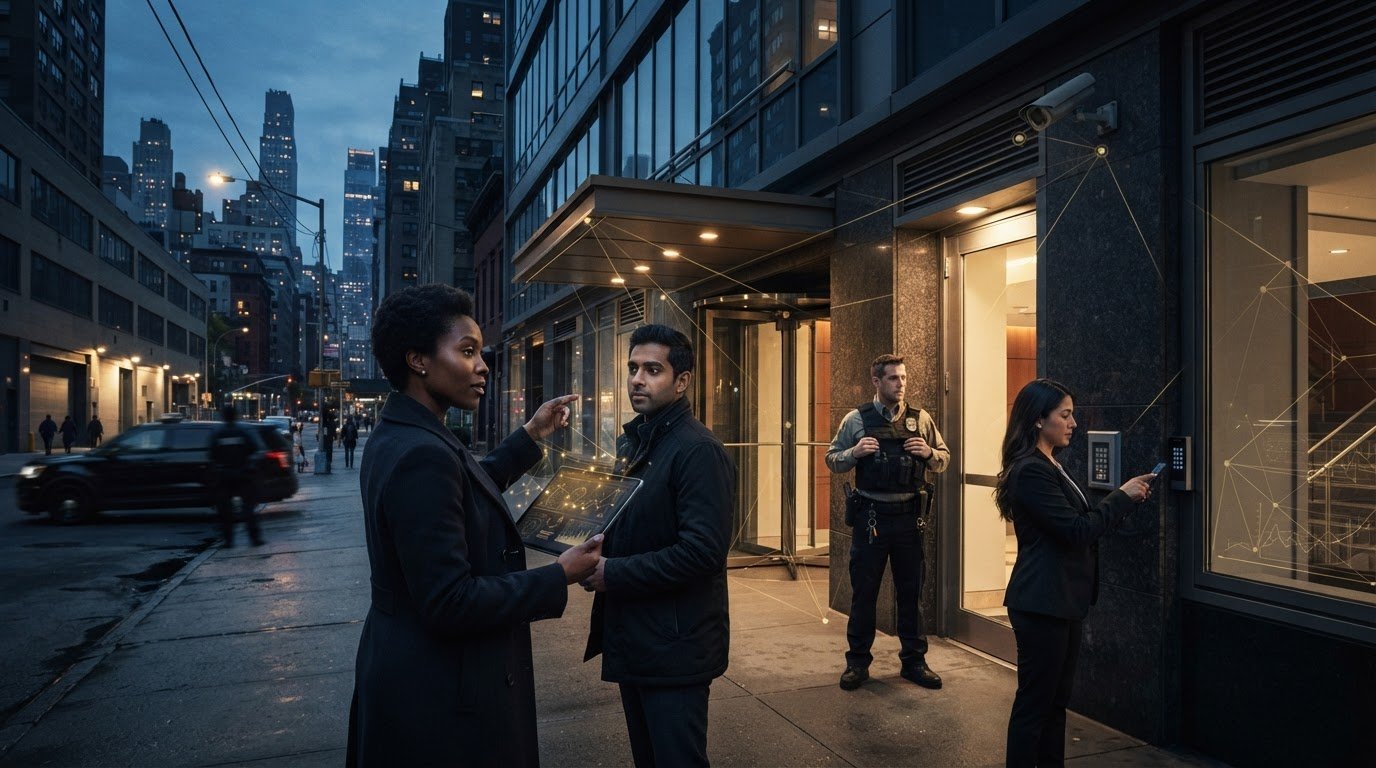
A successful security plan for commercial building stability relies on a foundation of meticulous observation. This initial phase isn't a mere walkthrough; it's a disciplined audit designed to identify the subtle gaps between current safety measures and the evolving threats of the NYC and NJ urban environments. By adopting a methodical approach, property managers can transform their facility from a reactive space into a fortified, stable environment that prioritizes tenant peace of mind.
The process begins with a rigorous analysis of high-traffic entry points, including main lobbies, service entrances, and underground parking access. Identifying blind spots in these areas is crucial, as even the most advanced systems can fail if a physical layout permits unmonitored movement. Applying foundational physical security principles allows for an objective audit of existing hardware, ensuring that every lock, turnstile, and barrier functions as a reliable deterrent rather than a symbolic one.
Property managers must also evaluate the specific profiles of their tenants. A building housing high-profile executives or firms managing sensitive data requires a different level of scrutiny than a standard retail space. Analyzing historical incident data within the specific neighborhood, whether in Manhattan's Financial District or the growing commercial hubs of Jersey City, provides the necessary context to anticipate localized risks before they manifest.
External and Perimeter Risk Factors
In the dense urban fabric of Manhattan and Brooklyn, the perimeter is often the first and most critical line of defense. Property managers should implement a checklist for lighting adequacy, specifically targeting parking structures and alleyways where shadows can obscure unauthorized activity. Assessing the integrity of fencing and loading dock gates is vital to prevent tailgating during busy delivery windows. Shared urban spaces require a delicate balance; you must secure sidewalk-adjacent alcoves and common areas without creating a hostile environment for the public or your tenants.
Internal Operational Vulnerabilities
Internal security is often compromised by routine operational patterns. Mailroom and delivery protocols must be strictly enforced to prevent unauthorized individuals from gaining access to the building's core. Elevators and restricted-access floors should be audited to ensure that credentials are required for every floor beyond the lobby. Finally, analyzing the after-hours movement of cleaning and maintenance crews helps identify potential windows of vulnerability. Establishing clear protocols for these third-party vendors ensures that the building remains secure even when occupancy is at its lowest.
Phase 2: Establishing Multi-Layered Access Control Protocols
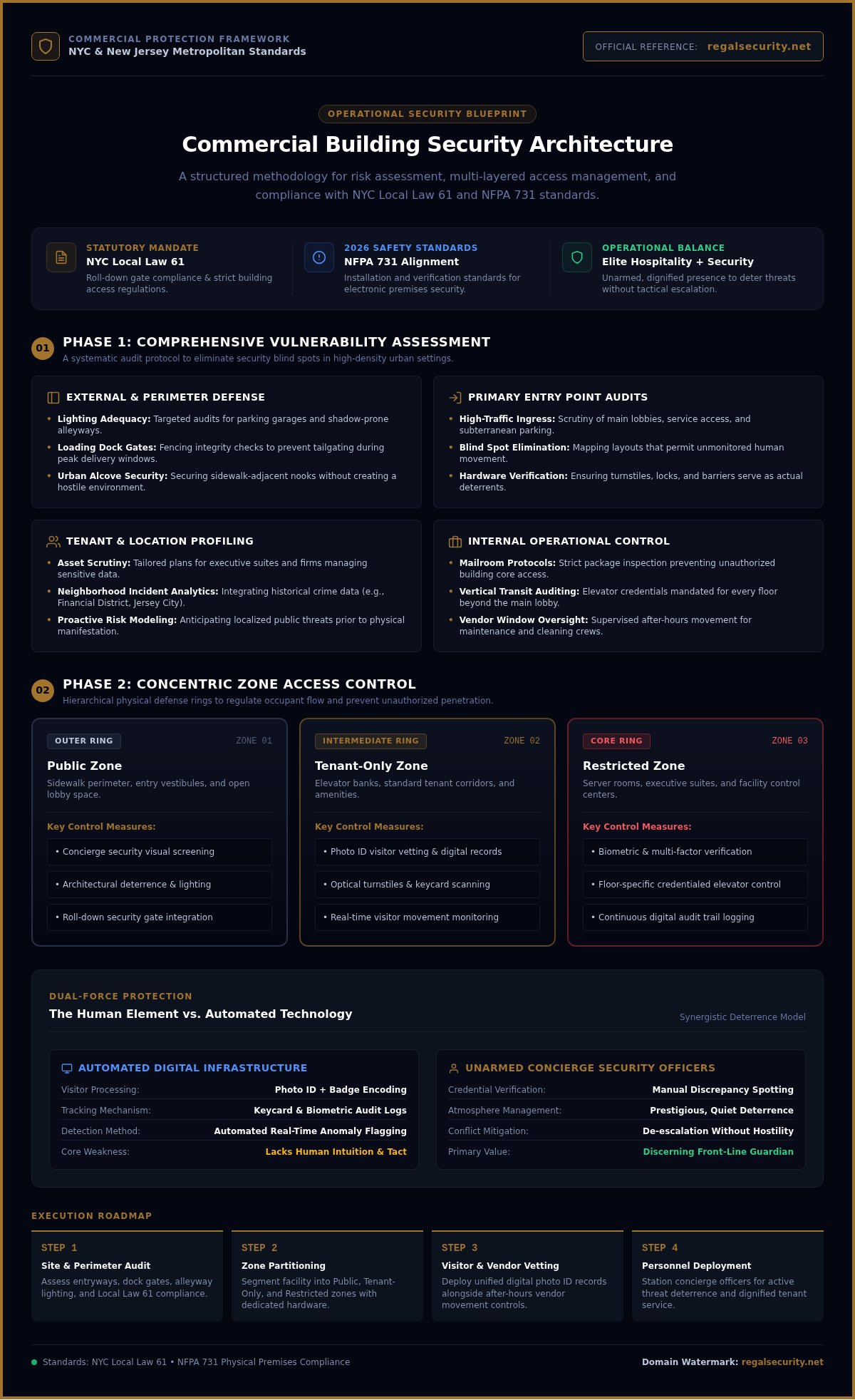
Building upon the vulnerabilities identified in your initial assessment, the next stage of a security plan for commercial building excellence involves the deployment of concentric layers of protection. These layers don't merely act as physical hurdles; they create a psychological environment of order and vigilance. By categorizing your facility into distinct zones-Public, Tenant-Only, and Restricted-you establish a logical flow that minimizes the risk of unauthorized movement without impeding the daily operations of your tenants.
Modern access control requires a unified visitor management system that prioritizes precision over speed. Every guest entering the facility must be vetted through photo ID verification, ensuring that a digital record exists for every individual on-site. This data, when paired with keycard or biometric auditing, allows property managers to track movement patterns and identify potential anomalies in real time. Following federal guidelines for Conducting a Comprehensive Vulnerability Assessment, these protocols serve as the primary mechanism for mitigating internal and external risks in high-density urban environments.
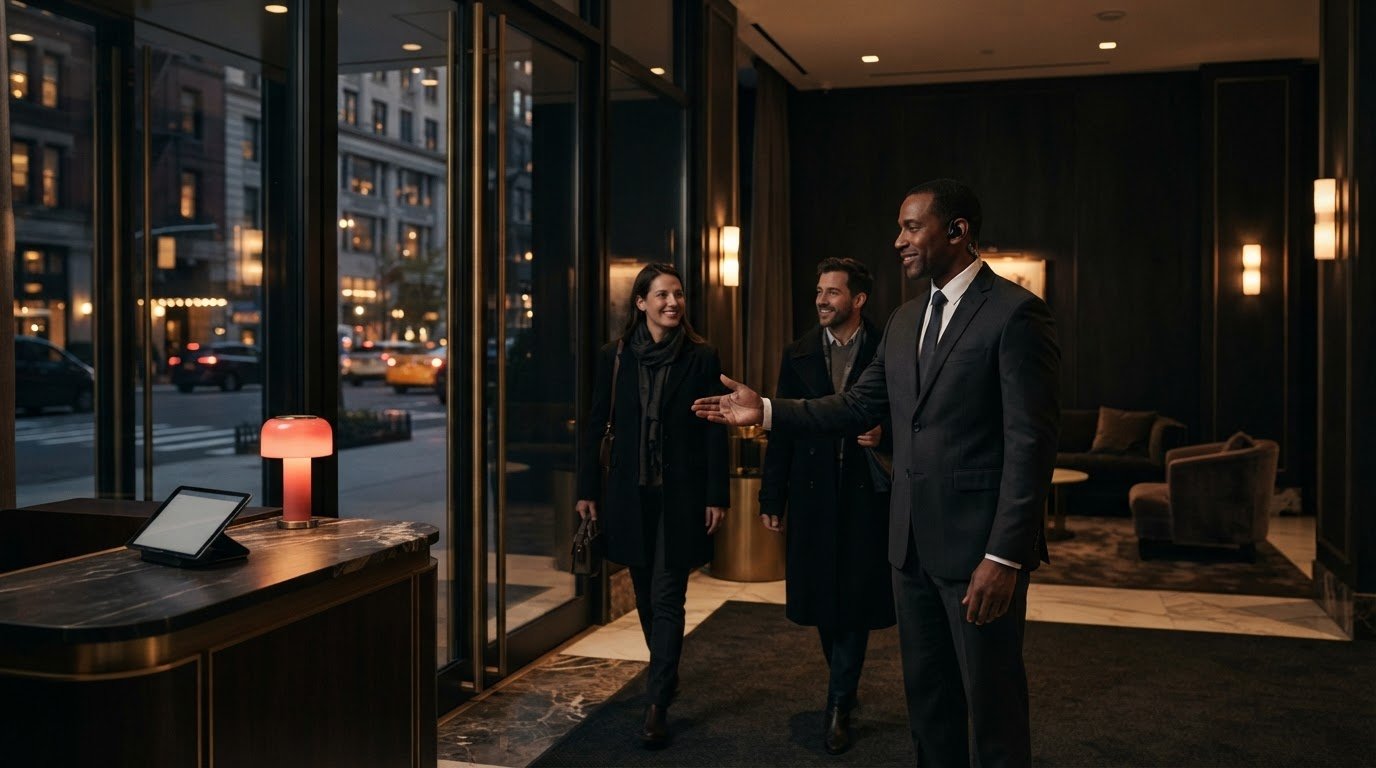
Technology is a powerful tool, but it lacks the discernment of a trained professional. Integrating a dignified lobby presence ensures that credentials aren't just scanned but validated with care. A professional who understands the balance of duty and service can spot inconsistencies that a digital reader might miss, providing a stabilizing force at the building’s most critical juncture.
Managing Public and High-Traffic Entrances
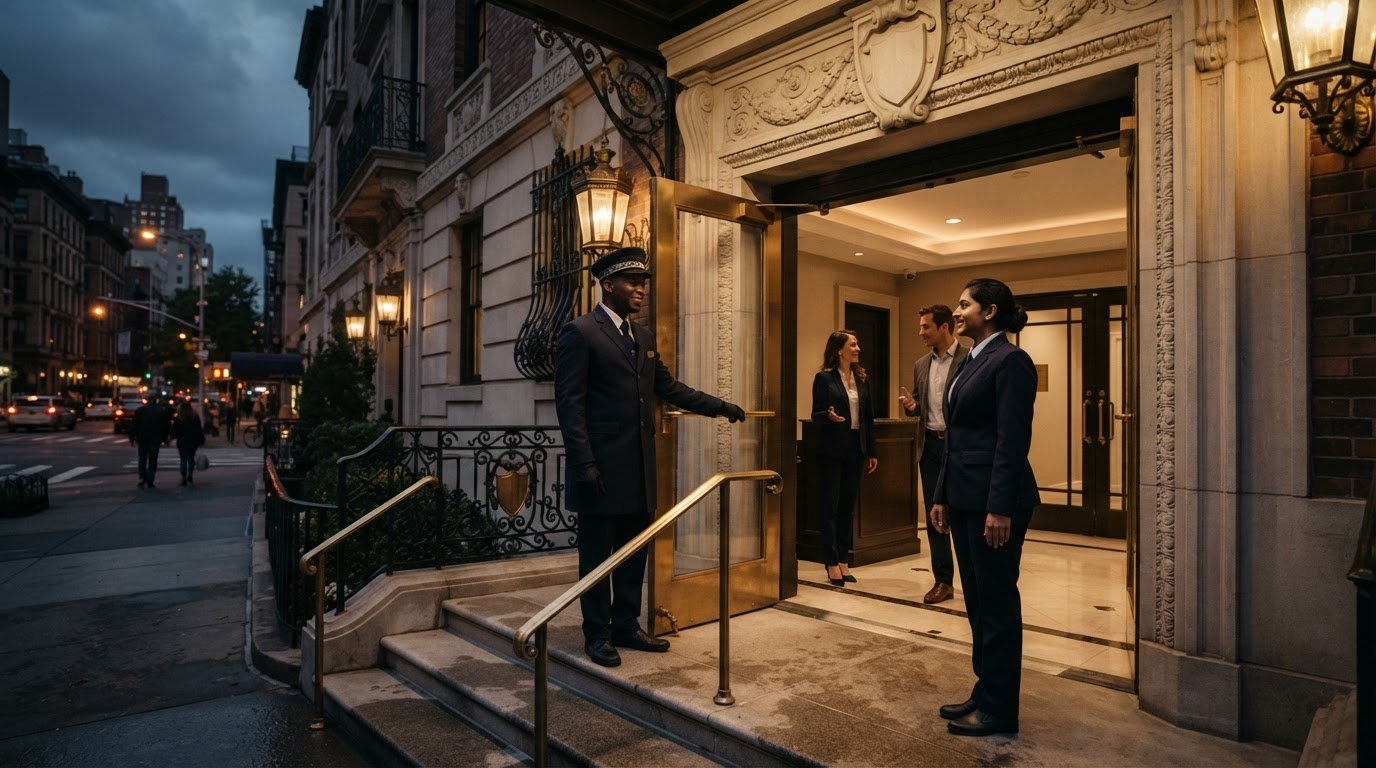
The main lobby is the front line of your facility's defense. The concierge security officer plays a dual role here, acting as both a prestigious guardian and a hospitality provider who vets every entrant. Property managers should maintain a strict checklist for courier and vendor access points, ensuring that delivery personnel are directed to specific zones. Standardizing badge-in procedures for all employees and long-term contractors eliminates the "familiarity gap" where unauthorized individuals might slip through during peak hours.
Securing Restricted Areas and Critical Infrastructure
Critical infrastructure, such as server rooms and electrical vaults, requires oversight that goes beyond the standard badge. You should implement two-factor authentication for these sensitive zones, especially for corporate suites housing proprietary data. Regularly auditing access logs is essential to identify anomalous behavior, such as attempts to access restricted floors after hours. If you're looking to enhance these internal safeguards, you can learn more about how professional unarmed presence reinforces these technical controls with quiet strength and integrity.
Phase 3: The Human Element: Integrating Professional Personnel
While physical barriers and access control hardware establish the structural boundaries of a property, the human element determines its operational culture. A sophisticated security plan for commercial building longevity recognizes that true protection relies on deterrence rather than conflict. Selecting personnel based on a model of quiet strength and a dignified presence ensures that your facility remains safe without adopting an aggressive, defensive posture that could alienate tenants.
Deploying unarmed security officers serves as the gold standard for corporate and high-rise environments. These professionals are trained to de-escalate potential conflicts and maintain order through clear communication and visible authority. Balancing visible patrols with discreet lobby management allows property managers to present a reassuring front to the public while maintaining strict oversight of internal spaces. To ensure seamless execution, establishing a transparent chain of command between building management and the security team is essential, allowing for rapid adjustments when conditions change.
Concierge Security vs. Standard Guarding
Modern corporate offices require a hybrid professional who bridges the gap between a security force and a hospitality provider. This concierge security role demands specialized training tailored for high-rise residential and corporate lobby posts, focusing on both access verification and elite customer service. A dignified presence reduces tenant anxiety significantly compared to tactical uniforms, which can project an alarmist environment. By blending authority with professionalism, these officers enhance the property's prestige while maintaining a secure perimeter.
Strategic Patrol and Mobile Coverage
For large-scale commercial facilities, static posts must be supplemented by dynamic movement. Scheduling vehicle patrol security services for perimeter checks provides an effective deterrent across expansive parking structures and exterior loading zones. Implementing randomized patrol routes prevents pattern recognition by external threats, ensuring that surveillance remains unpredictable. Accountability is maintained through real-time field oversight systems, which log patrol intervals and ensure that every sector receives meticulous attention throughout the day.
Phase 4: Emergency Response and Crisis Management Checklist
A robust security plan for commercial building operations must transcend theoretical concepts and become an actionable, site-specific Emergency Operations Plan (EOP). When a crisis occurs, the difference between chaos and composure lies in the precision of your preparation. Property managers should designate clear assembly points and evacuation routes tailored to specific scenarios, whether the threat is environmental or man-made. This level of foresight transforms a building from a vulnerable space into a resilient environment that prioritizes tenant safety above all else.
Maintaining readiness requires more than just a written document. Conducting quarterly drills for fire, medical emergencies, and shelter-in-place events ensures that both staff and tenants understand their roles under pressure. Compliance isn't just a best practice; it's a regulatory necessity. Failure to maintain a compliant Emergency Action Plan can lead to significant consequences. OSHA penalties for serious violations can reach up to $16,550 as of 2026, making regular audits essential for both safety and liability reduction. An updated communication tree serves as the final pillar, facilitating immediate contact between tenants, management, and emergency services during critical windows.
Incident Response Protocols
In the event of a medical emergency or an unauthorized intrusion, the first few minutes are decisive. Personnel must follow a step-by-step checklist that prioritizes de-escalation when handling aggressive individuals, ensuring the situation doesn't escalate into violence. Coordination protocols with local NYC and NJ law enforcement and EMS must be established in advance to ensure a seamless handoff when professional responders arrive on-site. By integrating these protocols into your security plan for commercial building management, you ensure a professional response that protects both people and property.
Continuity of Operations (COOP)
Continuity of Operations (COOP) ensures that your facility remains a stabilizing force even during power outages or system failures. Property managers should have a checklist for securing physical assets and sensitive data when digital access controls are offline. Adopting a peace of mind security services mindset allows your team to maintain a calm, authoritative presence that reassures tenants during times of uncertainty. After any incident, a formal reporting and refinement procedure is necessary to identify areas for improvement and strengthen your long-term strategy. To ensure your facility is prepared for any scenario, partner with our professional security team to develop a resilient emergency framework.
Phase 5: Implementation and Compliance in NYC and New Jersey
Execution represents the final, vital stage of a security plan for commercial building longevity. Without a commitment to rigorous compliance, even the most sophisticated strategy remains a liability. Property managers must verify that all personnel hold current NYS or NJ security licenses, ensuring that every officer on-site meets the moral and professional standards required for high-tier service. This vigilance extends to local fire codes and building safety regulations, which are frequently updated to reflect new urban risks. Reviewing insurance requirements for third-party security staffing services is equally critical, as it protects the property from the financial fallout of unforeseen incidents. Scheduling annual audits allows the plan to evolve, ensuring your facility isn't just protected today, but remains a stable force for years to come.
Local Regulatory Compliance
Navigating the Tri-State area's regulatory environment requires precision. In New York, unarmed guards must complete a specific 8-hour pre-assignment course, followed by a 16-hour on-the-job training within 90 days and an 8-hour annual in-service course to maintain their standing. New Jersey property managers must ensure compliance with the Security Officer Registration Act (SORA), which mandates a 24-hour initial training and an 8-hour renewal every two years. Recent mandates like NYC Local Law 75, which required 70% visibility for roll-down gates by July 1, 2026, highlight the need for constant oversight. Maintaining meticulous documentation for incident logs ensures audit-readiness when regulators or insurance providers request proof of compliance.
Choosing the Right Security Partner
Selecting a security partner is a decision rooted in trust and integrity. You need an agency that offers more than just a presence; you require a localized partner with deep expertise in the unique challenges of Manhattan, Brooklyn, and Jersey City. Vetting criteria should prioritize precision, a reliable concierge-level presence, and a commitment to the quiet strength model. A partner who understands the nuances of NYC Local Law 61, including the wage rates published by the DCWP in September 2026, will help you manage operational costs while maintaining the highest caliber of personnel. Contact Regal Security to develop your customized commercial plan and secure your facility with the gold standard of professional protection.
Securing the Future of Your Facility
Transitioning from a reactive posture to a proactive one is the hallmark of a resilient property. By integrating meticulous vulnerability assessments with the human element of quiet strength, you create an environment where safety and hospitality coexist. A robust security plan for commercial building stability isn't just a regulatory requirement; it's a commitment to the long-term success of your tenants and the reputation of your facility in the Tri-State area. Precision in planning today prevents the liabilities of tomorrow.
Achieving this gold standard requires a partner who understands the nuances of NYC and NJ urban risks. Whether you need a dignified concierge-trained presence in a Manhattan lobby or integrated mobile patrol and executive protection options for a large-scale facility, the right personnel make all the difference. Meticulous care and professional integrity are the pillars of a secure future. Secure your commercial property with Regal Security’s professional unarmed officers to ensure a reliable on-site presence that reflects your high standards. Your dedication to facility excellence today builds the foundation for a safer, more prosperous tomorrow.
Frequently Asked Questions
What is the most important part of a commercial security plan?
The foundation of a successful security plan for commercial building operations is the comprehensive vulnerability assessment. Identifying high-traffic entry points and specific blind spots allows property managers to address risks with precision. Without this initial audit, even the most advanced access control protocols lack the necessary context to be effective. It's about establishing a baseline of facility stability that prioritizes tenant safety while maintaining the professional dignity of the corporate environment.
How often should a commercial building security plan be updated?
A professional security plan should be reviewed at least annually to adapt to the evolving urban landscape of NYC and NJ. However, significant regulatory updates, such as the 2026 enforcement of NYC Local Law 61, require more immediate refinements. Property managers must ensure their strategies remain compliant with new prevailing wage mandates and fire safety codes. Regular audits guarantee that your facility’s protection remains a stabilizing force rather than a reactive one.
Are unarmed security officers effective for commercial buildings in NYC?
Unarmed security officers are exceptionally effective as they serve as a primary deterrent through quiet strength and professional authority. In corporate settings like Manhattan or Brooklyn, a dignified presence often prevents conflict more effectively than aggressive tactics. These officers are trained in de-escalation and situational awareness, providing high-level protection without creating an alarmist atmosphere. They represent the gold standard for maintaining facility stability while respecting the privacy and comfort of every tenant.
What is the difference between a security guard and a concierge security officer?
A standard security guard typically focuses on static observation and enforcement, whereas a concierge security officer provides a hybrid of protection and hospitality. This professional role is designed for high-rise corporate and residential environments where a prestigious guardian is required. These officers manage access credentials with meticulous care and a service-oriented mindset. By blending security duties with a dignified lobby presence, they enhance the tenant experience while maintaining a secure, controlled environment.
Do I need vehicle patrols if I have on-site lobby security?
Vehicle patrols are essential for large-scale commercial facilities or properties with expansive perimeters and parking structures. While lobby security manages the internal flow, mobile patrols provide a visible deterrent for exterior loading docks and shared urban spaces. This multi-layered approach ensures that no sector is left unmonitored. In busy areas like Queens or the Bronx, randomized vehicle patrols prevent pattern recognition by potential threats, offering a reliable on-site presence that static posts alone cannot achieve.
What are the legal requirements for security personnel in New Jersey?
In New Jersey, security personnel must be registered under the Security Officer Registration Act, commonly known as SORA. This legal requirement involves completing a 24-hour initial training course led by a certified instructor and passing a thorough background check. To maintain compliance, officers must also complete an 8-hour renewal course every two years. Ensuring your team meets these standards is critical for liability reduction and maintaining the moral uprightness expected of a professional security partner.
How can a security plan reduce my building's insurance premiums?
Implementing a rigorous security plan for commercial building management demonstrates a commitment to risk mitigation that insurers value. By documenting your adherence to NFPA 731 standards and OSHA emergency protocols, you provide a defensible position against liability claims. Many providers offer reduced premiums to buildings that maintain professional on-site presence and verified access control logs. This methodical approach to safety not only protects your assets but also reinforces the long-term financial stability of the property.
What should I do if a tenant complains about security being too intrusive?
If security feels intrusive, it's often a sign that the balance between protection and hospitality has shifted. Property managers should consider transitioning to a concierge-based model that emphasizes a dignified, service-oriented presence. Training personnel to interact with tenants using quiet strength ensures that safety measures feel like a premium amenity rather than a burden. Open communication about the purpose of specific protocols can also reassure tenants that their privacy and safety are being handled with meticulous care.