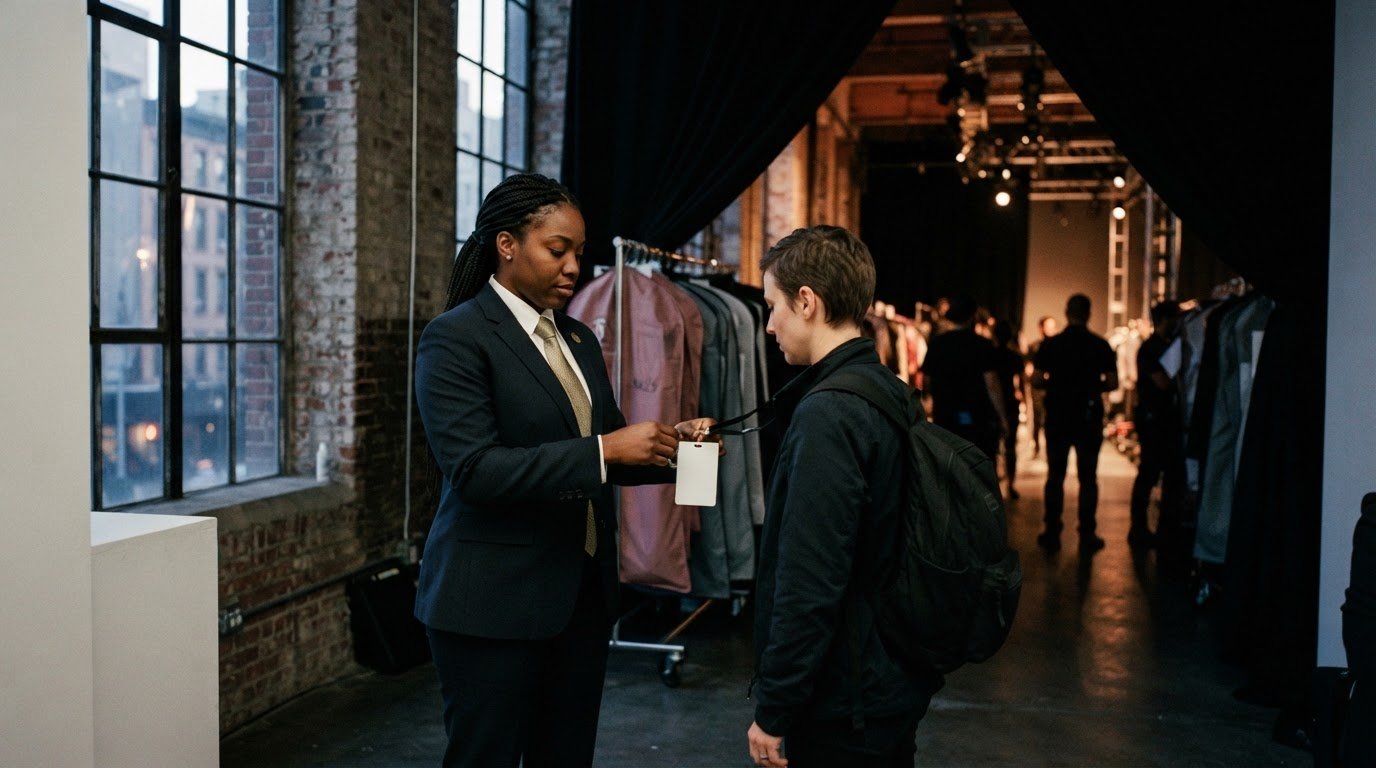
Gallery Opening Security Services in Brooklyn for Art Events
A successful gallery opening depends on more than what hangs on the walls. Gallery opening security services in Brooklyn can help keep arrivals orderly, support smooth movement through the space, and provide a calm response if an incident disrupts the event.
It’s understandable to want guests to feel welcome while artwork and the venue remain protected. The right security plan balances attentive staff presence with the character of the gallery, taking account of entrances, visitor movement, and the needs of the event. This article explains how event guards, crowd management, and emergency response can support Brooklyn art spaces and cultural institutions, and how security personnel can contribute to a composed, well-managed opening.
Table of Contents
Security guards for special events and art shows
Gallery opening security services in Brooklyn should reflect the venue, artwork, guest flow, and event format. A clear plan assigns security officers to defined posts and prepares them to guide visitors and respond to disruptions.
Event Security Planning and Needs Assessments
Begin with the gallery layout, entry and exit points, expected visitor movement, and any restricted areas. This review can identify bottlenecks near doorways, valuable works that need closer observation, and places where an officer can give directions without interrupting conversation. Low rails or changes in floor level can help guide traffic while preserving the viewing experience.
Arrange security after the event date, venue layout, and expected attendance are established. The planning required depends on the event’s scale, staffing needs, and venue setup.
Exhibition and Event Security
A special exhibition may call for closer observation near particular works, while an opening also requires awareness of guest movement. Security officers can observe entrances and exits, report suspicious or disruptive behavior, and help manage crowds during an incident. A post near a busy doorway, for example, can help keep visitors moving without directing them too close to displayed art.
Gallery features matter, too. A mounted work may have eye hooks attached to wall hooks and a plate securing its lower edge. Identifying areas that need extra care helps officers maintain observation without touching or obstructing the artwork.
Private Event Guarding
A private reception may bring guests into areas that remain closed during regular gallery hours. The security plan should define approved spaces, entry procedures, and how staff will respond to requests to enter restricted rooms. An officer near the transition between reception and exhibition areas can give directions and calmly reinforce access boundaries.
Security costs vary with factors such as event duration, venue layout, attendance, number of posts, and the level of coverage required. Request a quote based on the event’s specific needs.
Armed and Unarmed Event Coverage
Armed and unarmed coverage create different environments. For an art opening focused on visitor guidance and visible observation, unarmed officers can support entry management and respond to disturbances. Armed coverage is not a default requirement for every gallery event; the choice should reflect the event’s risks, setting, and desired guest experience.
Technology can complement staff observation, but it does not replace clear assignments. Before doors open, the event team should establish who receives incident reports, who communicates with venue staff, and how guards direct guests away from a crowded area.
Museum security guards can watch entrances and exits, report suspicious or rowdy visitors, and manage crowds during a crisis. Spreading motion detection throughout an exhibit room can reduce sensor dead spots and deter people who remain after a group leaves.
Gallery and museum guard services
At a gallery or museum, guard services combine visible staff presence with attention to visitor activity and collection spaces. A post plan should show who monitors each public area, how concerns reach a supervisor, and how the team coordinates with existing cameras and sensors.
Uniformed Security Guards
Uniformed security officers show visitors where they can seek assistance and make the staff presence clear. Their duties may include welcoming guests, observing entrances and exits, and reporting suspicious or disruptive behavior. Near a museum entrance, for example, an officer can answer routine questions while remaining alert to unusual activity.
Museum teams may pair uniformed professionals with a plainclothes supervisor. This arrangement separates visible visitor support from discreet oversight, while allowing the supervisor to coordinate responses across different rooms. Galleries can define posts according to sightlines, artwork placement, visitor routes, and spaces that require restricted access.
Armed and Unarmed Coverage
Armed and unarmed coverage create different environments and should reflect the venue’s needs. An unarmed presence can suit a gallery focused on visitor guidance, observation, and a measured response to disturbances. Armed personnel are not a universal requirement for an art space, and their presence can change the character of an event.
The decision should account for the venue’s operating plan, expected activities, and how officers will interact with guests. Clear instructions help staff understand who handles routine concerns and when to notify a supervisor. The gallery can also coordinate security assignments with its existing emergency procedures.
Licensing and Role Documentation
Licensing deserves a distinct review during provider selection. Match each guard’s role to the documentation and requirements that apply to the assignment, and establish who supervises the post. Keep assignment details clear, including the areas covered, reporting lines, and duties expected during public hours.
Written role definitions also reduce confusion between security staff and museum employees. A security officer may report a visitor concern, while a curator or registrar handles questions about an artwork. Distinguishing those responsibilities supports clear communication without asking officers to make collection decisions.
Rapid Guard Deployment
Deployment planning depends on staffing, venue access, post locations, and the briefing needed before coverage begins. A gallery opening with separate exhibition rooms may need more coordination than a single-room reception. Sharing the floor plan, entry arrangements, event schedule, and priority areas helps organize assignments efficiently.
Technology supports, but does not replace, attentive guards. Cameras can help monitor selected areas, while on-site staff interpret activity and communicate concerns. For a gallery seeking a composed, guest-facing presence, unarmed security coverage can be considered within the venue’s guard plan.
Security for galleries and cultural institutions
A gallery’s protection plan should account for visitors, artwork, and environmental hazards. Security professionals can coordinate active observation with the venue’s sensors, alarms, and established staff procedures. For example, a guard near an exhibition room can notice visitor behavior while environmental systems monitor temperature or fire conditions. The responsibilities differ, but together they help staff recognize concerns and communicate them promptly.
Environmental sensors can detect fire, temperature changes, and other hazards, while theft-deterrent sensors support protection of displayed works. Fire alarms, sprinklers, and temperature controls also help address risks to exhibit spaces and collections. These systems serve different purposes, so a gallery should understand which signals alert staff and how those alerts fit its response plan. A sensor’s presence does not replace staff awareness of changing conditions.
Artwork monitoring can be shaped around the physical characteristics of a display. Vibration sensors placed behind paintings can detect even light taps, while motion detection spread throughout an exhibit room can reduce blind spots. Wider coverage can also help discourage someone from remaining in a room after a visitor group leaves. A guard’s position and regular observation can complement these devices without requiring contact with the artwork.
Entrances and exits deserve particular attention because they connect gallery rooms with public or less restricted areas. When a venue has budget constraints, cameras can be focused on these access points. Motion-detection devices may also alert security or sound a beep when someone crosses a threshold, discouraging visitors from approaching artwork too closely. Staff should understand which areas each device covers and who receives an alert.
School visits and cultural programs can change how rooms are used, especially when groups move together between exhibits. A gallery can plan observation around the route, transitions between rooms, and displays visitors may approach closely. Low rails or elevated floors can help guide movement without intruding on the artistic experience. Security officers can observe visitor flow and report crowding or unusual activity.
Technology should fit the institution rather than dictate its presentation. Glazing can protect artwork from human interaction and minor environmental hazards, but galleries seldom use it because artists and scholars often prefer minimal modifications to art. Instead, a venue can combine careful placement, sensors, cameras, and attentive personnel. For each exhibition, staff can review display changes, access points, alarm signals, and communication responsibilities before opening to visitors.
Motion detection is most useful when distributed across the exhibit room instead of concentrated in a few spots. This can reduce sensor dead spots and deter someone from remaining after a visitor group leaves. Coverage across the room can address activity beyond the area immediately around an individual display.
When planning camera coverage, a gallery may prioritize entrances and exits, where visitors move between rooms and public areas. Room-wide motion detection and cameras trained on access points serve different purposes: observing activity within exhibit spaces and monitoring movement through entrances and exits.
Brooklyn security service coverage
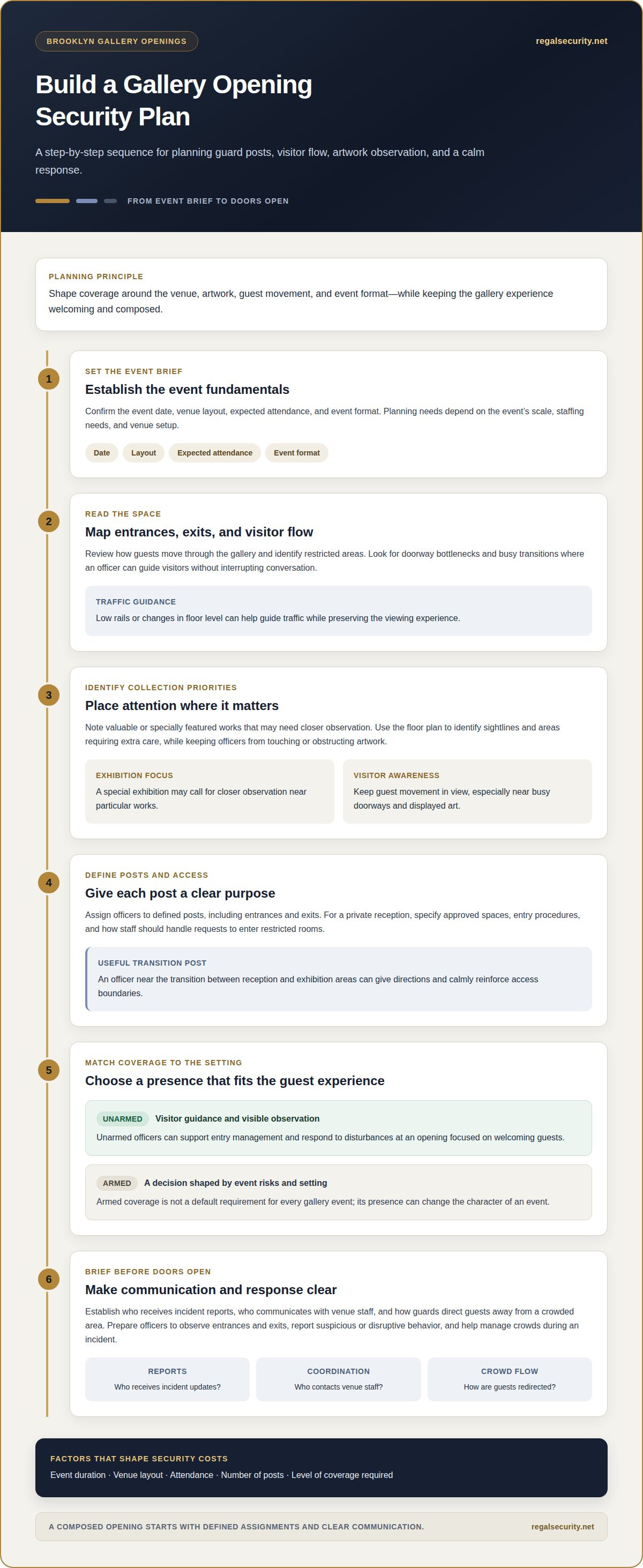
For a Brooklyn gallery event, begin planning with the exact venue address and the areas that need attention. A street entrance, shared lobby, exhibition room, and staff-only area each create different responsibilities. Mapping them in advance helps define security posts, staff communication, and visitor routes. Plan around the venue itself, not a generic borough-wide template.
Next, divide the event into phases such as guest arrival, the opening reception, and closing. Each phase can change where staff attention is most useful. A gallery may need a visible presence at arrival, then coverage near a busy transition between rooms. A simple schedule links each post to a task and helps prevent gaps as activity shifts.
Brooklyn venues vary in layout and access, so document how guests reach the gallery. Note the public entrance, any shared building access, and the route from reception to exhibition spaces. If guests use more than one entrance, assign clear observation responsibilities to each. This gives security staff a practical picture of visitor movement without assuming every venue operates alike.
Incident communication needs a defined path. Before opening, identify the venue contact, the person receiving reports, and how security officers communicate concerns. If a crowd gathers near an artwork, for example, staff should know who can adjust guest flow and who records the incident. A consistent reporting route supports measured decisions and keeps gallery personnel informed.
Coverage should account for the details that make an event distinct, such as a private reception, a new exhibition, or a late change in room use. If the gallery adds an adjacent space, revise the post plan and communication assignments before guests enter. Security is most useful when each officer understands the specific area, task, and reporting relationship for the event.
For Brooklyn organizers, a workable plan translates the venue map into clear responsibilities. Mark entrances, restricted spaces, staff positions, and routes between exhibits. Then align those details with the event schedule and incident process. This gives the gallery a concrete basis for coordinating coverage, even when its layout and guest flow differ from those of another Brooklyn institution.
Security services for Brooklyn gallery openings
A Brooklyn gallery opening needs coverage that fits its guest experience, artwork, and venue operations. Useful support can include visible entry oversight, guest guidance, observation near vulnerable displays, and a defined response process. Assigning each role before doors open helps staff understand who handles arrivals, reports concerns, and communicates with gallery management.
During guest arrival, security officers can observe the entrance and help keep the entry area orderly. If check-in takes place in a narrow lobby, staff can direct visitors toward the designated waiting area. The event host remains responsible for invitations, while officers focus on access awareness and visitor movement. Clear role boundaries prevent mixed instructions.
Inside the exhibition, coverage should reflect how visitors encounter the works. An officer can observe a display beside a busy passage, while another post covers the transition between public and staff-only areas. If guests pause for conversation near a doorway, staff can guide movement without interrupting the viewing experience.
Event teams need an agreed method for raising concerns. Before opening, identify the gallery contact and establish how officers report an incident. If a visitor becomes disruptive, personnel can alert the designated contact and follow the venue’s response procedure. Clear communication keeps gallery staff informed about what is happening and where assistance is needed.
The closing phase needs its own assignments. As guests leave, staff can observe exits, note whether visitors remain in restricted areas, and coordinate with the event lead before rooms are cleared. A closing checklist can identify who confirms public areas are empty and who reports unresolved concerns. This keeps the transition from reception to post-event operations orderly.
For a Brooklyn opening, choose services according to the event’s actual needs, not a generic staffing formula. A small reception with one public entrance differs from an exhibition launch using several rooms and separate access points. Consider the venue plan, guest movement, artwork placement, and staff communication needs together. Those details determine which posts and responsibilities will provide useful coverage.
Plan security coverage for your gallery opening around the venue’s layout, event schedule, and guest flow.
Regal Security: Concierge Services
Regal Security offers Concierge Services for gallery openings that need a guest-facing presence alongside attentive security. Concierge staff can support visitor reception and provide directions, while Unarmed Security Officers provide on-site observation and event coverage. The appropriate roles depend on the gallery’s layout, guest flow, and the responsibilities assigned to event staff.
For an opening with a prominent guest or a need for travel-related protection, Executive Protection may be relevant. Vehicle Patrol is available for security needs involving vehicles. These services address different situations, so the event plan should identify the specific support required rather than assume every opening needs the same arrangement.
To discuss security for your Brooklyn gallery opening, contact Regal Security.
Plan Your Gallery’s Next Opening with Confidence
As you prepare your next event, turn the venue’s specific needs into a clear security plan. Consider how guest arrival, gallery access, and the event schedule shape the support required. Gallery opening security services in Brooklyn are most useful when coverage reflects the space and the experience you want visitors to have.
Regal Security offers Unarmed Security Officers and Concierge Services for on-site event needs, as well as Vehicle Patrol. The next step is to discuss how your gallery operates and what kind of support would suit its opening. Contact Regal Security to start that conversation and prepare for a well-managed event.
Frequently Asked Questions
Which Brooklyn security companies provide gallery opening and art event security?
Regal Security provides security support for Brooklyn gallery openings through Unarmed Security Officers and Concierge Services. Concierge staff support a welcoming arrival, while unarmed officers provide an on-site security presence. The right assignment depends on the venue’s needs and the responsibilities set for the event. For a gallery seeking guest-facing assistance alongside security, these services are relevant options.
What licenses and insurance must Brooklyn event security guards have?
For a Brooklyn event, ensure each officer’s credentials align with assigned duties, and review insurance documentation against the venue’s contract requirements. The appropriate documents depend on the role and the agreement governing the event. Keep the review practical by recording assigned personnel, their responsibilities, and the insurance documentation held for the booking, rather than assuming one checklist fits every venue.
How many security guards are recommended for a gallery opening based on attendance and venue size?
There is no single guard count that suits every Brooklyn opening. Staffing depends on attendance, layout, entrances, and the areas needing observation. Map each access point and public room, then identify duties that cannot be covered from the same position. A separate entrance and exhibition room, for example, may need distinct coverage if neither can be observed effectively from the other.
Should gallery opening security be armed or unarmed?
For an opening focused on welcoming guests and observing activity, unarmed coverage can be a fitting approach. It supports a composed atmosphere while allowing personnel to assist visitors and report concerns. The choice should reflect the event’s risk assessment and venue expectations. Regal Security provides Unarmed Security Officers for galleries seeking an on-site presence without armed personnel.
What security measures protect artwork from theft or damage at an opening?
Pair attentive observation with reliable collection records and carefully managed display areas. A registrar’s catalog can record identifying details, including inventory numbers written on a canvas, while magnified photographs and canvas thread-count records can support authenticity documentation. During an opening, staff can keep walkways clear and direct guests away from close contact with vulnerable works. These practices support awareness without treating visitors as a threat.
What crowd control, guest screening, and emergency planning are needed for a Brooklyn gallery event?
Start with a clear arrival process, a defined guest list, and a staff contact responsible for access questions. Direct guests along the intended route, and identify who communicates with security personnel if crowding or disruptive behavior occurs. Before doors open, review how guests will be guided away from affected areas during an incident. Shared responsibilities help hosts and security staff avoid improvised instructions.