The Strategic Value of Professional Unarmed Security Officers in 2026
Updated: Jul 31
In an environment where visibility is often mistaken for viability, the most effective protection for a premier property is found in the precision of presence rather than the display of force. Professional unarmed security officers have transitioned from being a secondary option to a strategic necessity for organizations that prioritize sophistication over intimidation. You're likely familiar with the difficult tension of maintaining a secure perimeter while ensuring that every resident or guest feels respected and welcomed. In the competitive landscape of New York and New Jersey, the search for personnel who embody this balance with consistent excellence can feel like an endless pursuit.
This discussion clarifies how modern unarmed professionals provide a layer of sophisticated deterrence and de-escalation that protects both your physical assets and your brand's reputation. By choosing a path of quiet strength, you'll discover how to reduce liability concerns and insurance premiums without compromising the safety of your environment. We'll examine the specific attributes that define a high-caliber guardian; we'll also explore how their meticulous approach transforms a standard security post into a premier concierge experience that serves your long-term interests.
Table of Contents
Defining the Modern Unarmed Security Officer: Beyond the Uniform
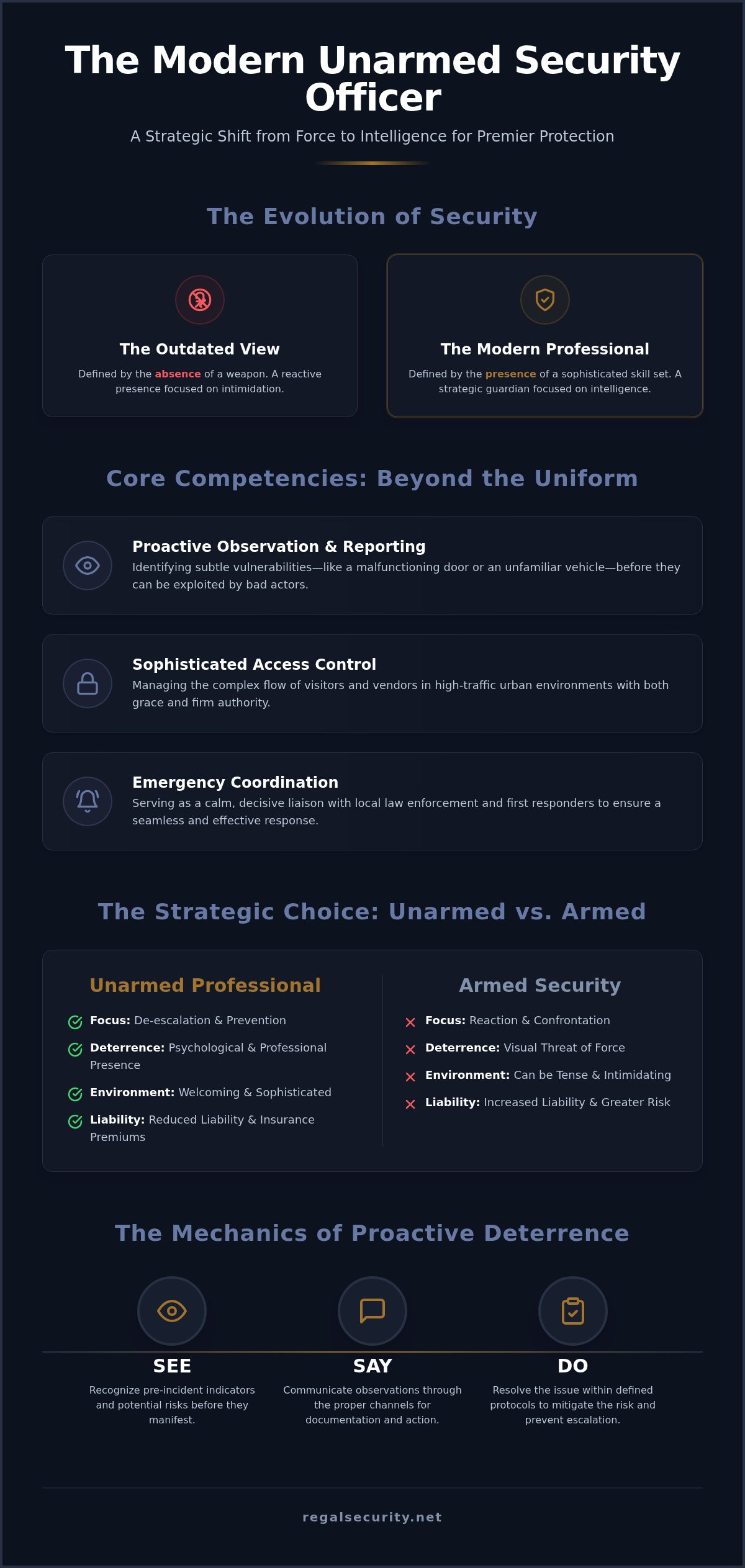
The historical view of the Security Guard Profession often relies on a narrow, regulatory definition that focuses on what an individual lacks: a firearm. However, as we move through 2026, the industry has undergone a fundamental transformation. Modern unarmed security officers are no longer defined by the absence of a weapon, but by the presence of a sophisticated skill set rooted in intelligence and psychological deterrence. This shift represents a move toward a strategic guardian model, where the primary objective is to maintain order through meticulous observation and dignified communication.
While state regulations might classify these roles based on equipment, the strategic value of a professional officer lies in their ability to act as a stabilizing force. It's about integrity and precision. Instead of reacting to a crisis with force, these professionals utilize high-level detection to prevent the crisis from materializing. This intelligence-led approach ensures that a property remains secure without creating an atmosphere of tension or hostility. It's a commitment to high standards that makes residents and employees feel both protected and respected.
The Core Responsibilities of Professional Officers
Effective officers perform duties that extend far beyond simply standing watch. They serve as the primary intelligence gatherers for a property's management team, ensuring that every action is planned and executed with care. Their roles typically include:
Proactive Observation and Reporting: Identifying subtle vulnerabilities, such as a malfunctioning door strike or an unfamiliar vehicle, before they are exploited.
Access Control: Managing the complex flow of visitors and vendors in high-traffic urban environments like Manhattan with grace and authority.
Emergency Coordination: Acting as a calm, decisive liaison with local law enforcement during critical incidents to ensure a seamless response.
Why 'Unarmed' Does Not Mean 'Unprotected'
An unarmed presence serves as a primary deterrent by creating a psychological boundary of visibility and professional oversight. This quiet strength is projected through a sharp, professional uniform and a composed demeanor that suggests elite capability. When unarmed security officers demonstrate total situational awareness, they signal to potential bad actors that the environment is actively managed. It's a proactive stance that prevents incidents through the sheer force of professional assurance rather than physical confrontation. By the time a physical response is required, a standard security protocol has usually already failed; the modern officer ensures that it never reaches that point.
The Mechanics of Deterrence: How Unarmed Security Works
The effectiveness of professional unarmed security officers relies on the psychological principle that order discourages disorder. This concept, often referred to as the "Broken Windows" theory, suggests that visible signs of meticulous care and active monitoring prevent minor infractions from escalating into serious crimes. When a property appears well-guarded and every detail is managed with precision, it sends a clear signal to potential intruders that their actions will be noticed and addressed. This proactive deterrence is the foundation of a secure environment, creating a barrier of professional oversight that is felt long before it's seen.
The "See, Say, Do" framework provides a logical structure for this preventative work. Officers are trained to see potential risks before they manifest, say something by communicating through the proper channels, and do what is necessary to resolve the issue within their defined protocols. This systematic approach is enhanced by modern technology. GPS tracking and real-time reporting applications ensure that patrol routes aren't only completed but are also documented with absolute transparency. By maintaining unpredictable timing and varied routes, officers eliminate the patterns that bad actors often look for when planning an unauthorized entry.
Situational Awareness and Risk Mitigation
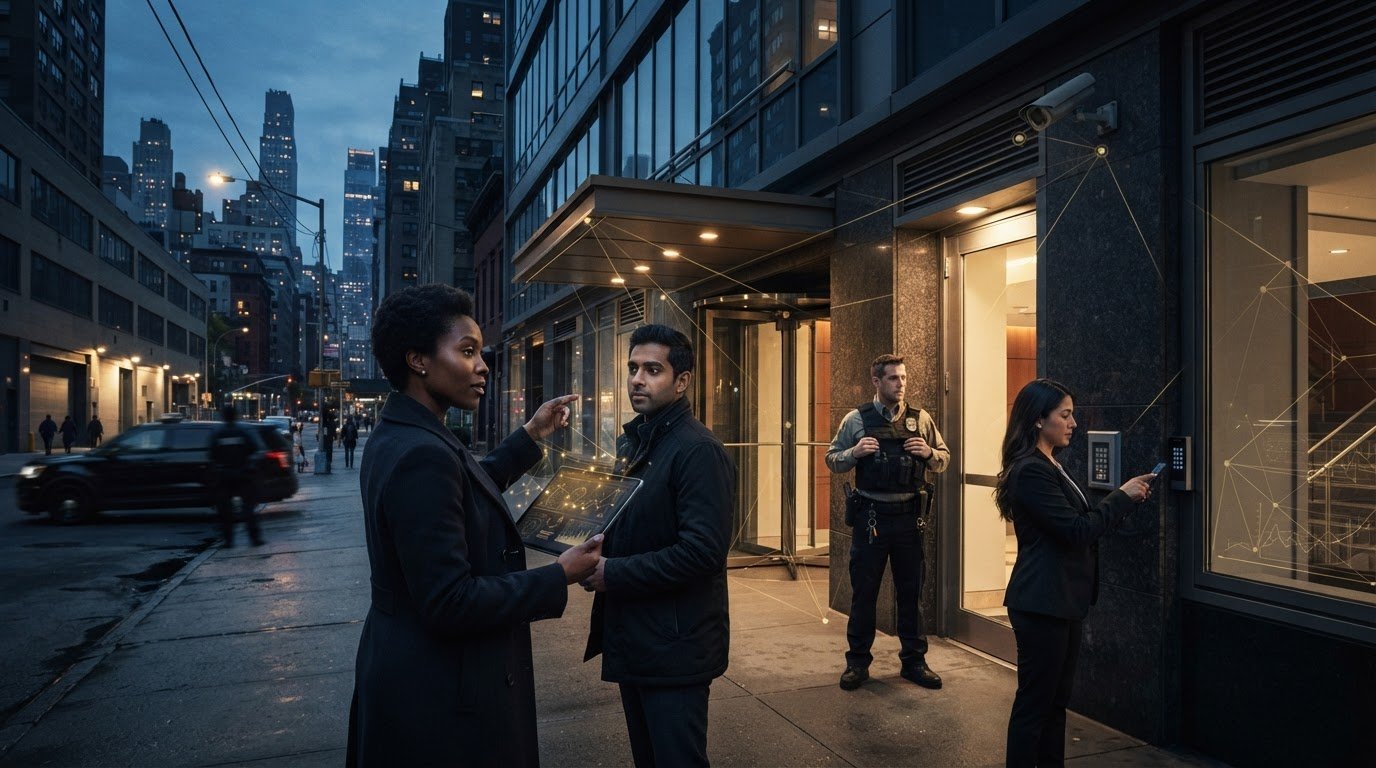
A high-caliber officer possesses the ability to recognize pre-incident indicators that others might overlook. In high-traffic corporate lobbies or luxury retail spaces, this might include identifying specific loitering patterns or observing a visitor's defensive body language. These subtle cues are the early warning signs of a potential breach. Utilizing professional peace of mind security services allows property managers to shift the burden of vigilance to experts, significantly reducing operational anxiety. When an unauthorized entry occurs, established Standard Operating Procedures (SOPs) ensure the individual is handled discreetly, preserving the property's dignified atmosphere while maintaining safety.
De-escalation as a Primary Security Tool
In the modern liability landscape, the ability to resolve a conflict through professional assurance is a vital asset. Officers are trained in verbal communication techniques to diffuse tense situations without the need for physical contact. This focus on de-escalation protects the client from the legal and reputational risks associated with the use of force. Adhering to rigorous training and certification requirements ensures that every officer understands the legal boundaries of their role. In the Tri-State area, this includes compliance with SORA standards, which prioritize the safety of the public and the officer alike. For those seeking to enhance their current protocols, a professional vehicle patrol can extend this layer of protection across larger perimeters with the same level of quiet strength.
Unarmed vs. Armed Security: Making the Strategic Choice
Selecting the appropriate security tier requires a sober assessment of both the perceived threat and the desired environment. While armed details are necessary for high-threat scenarios, they often introduce a layer of friction that can diminish the resident experience in a luxury high-rise or a corporate headquarters. The presence of a firearm can inadvertently signal a level of danger that doesn't exist; this often creates unnecessary anxiety among tenants and guests. For most prestigious properties in the Tri-State area, the objective is to project an aura of safety that is welcoming rather than exclusionary. It's a matter of alignment between your security posture and your brand identity.
A common concern for property owners involves whether a non-ballistic approach is sufficient for high-value assets. The reality is that sophisticated deterrence isn't found in a holster, but in the meticulous execution of access control and situational awareness. Professional unarmed security officers provide a level of vigilance that prevents unauthorized access through precision and protocol. By the time an armed response is required, the security perimeter has already been compromised. A proactive, unarmed strategy ensures that the compromise never occurs in the first place.
Liability and Insurance Considerations
From a fiscal perspective, the choice to deploy unarmed security officers often results in significant operational advantages. Insurance providers typically view armed personnel as a high-risk liability due to the potential for catastrophic legal consequences following a "use of force" incident. By utilizing professional unarmed guardians, businesses can often negotiate lower premiums while maintaining a robust defensive posture. This approach allows you to match the threat level to the appropriate officer type, ensuring that your risk management strategy is both effective and cost-efficient. It's a calculated move that prioritizes long-term stability over reactive measures.
Brand Alignment and Hospitality
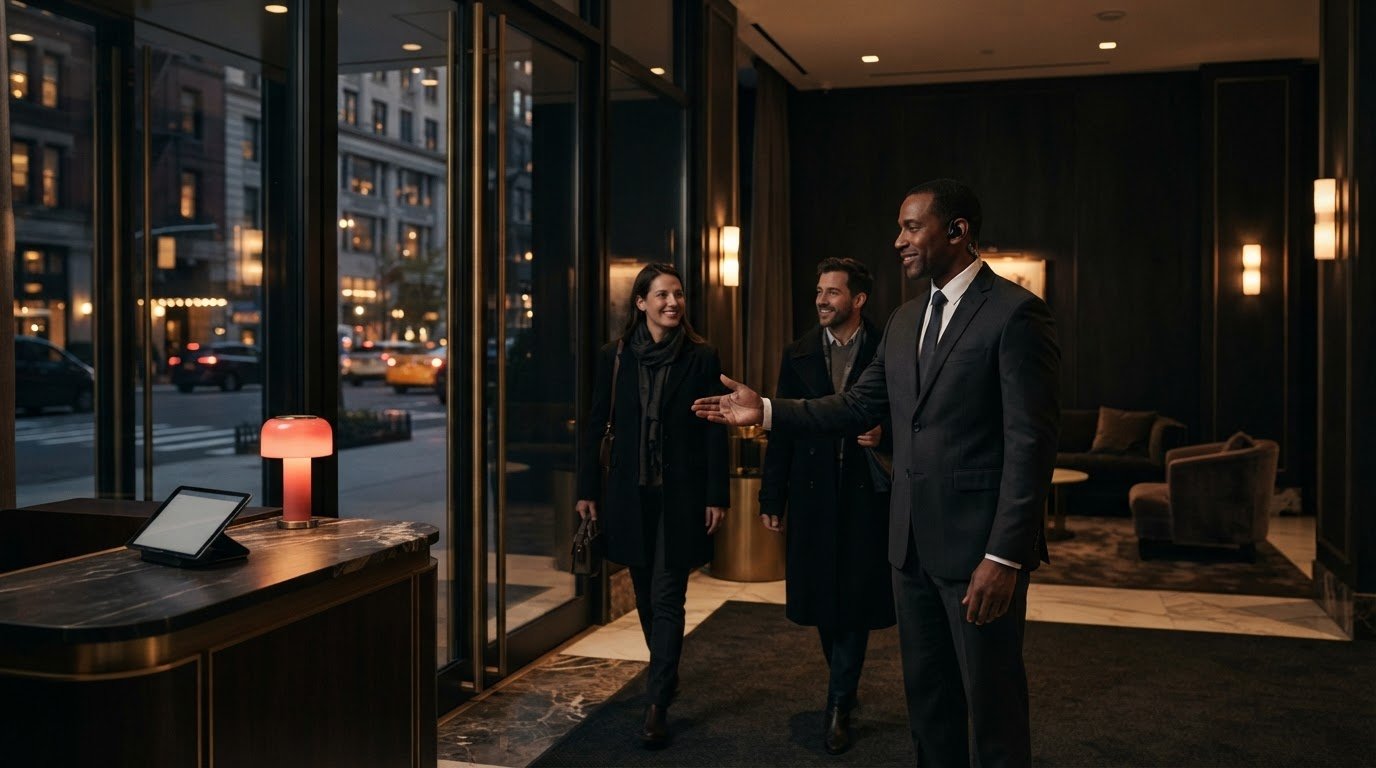
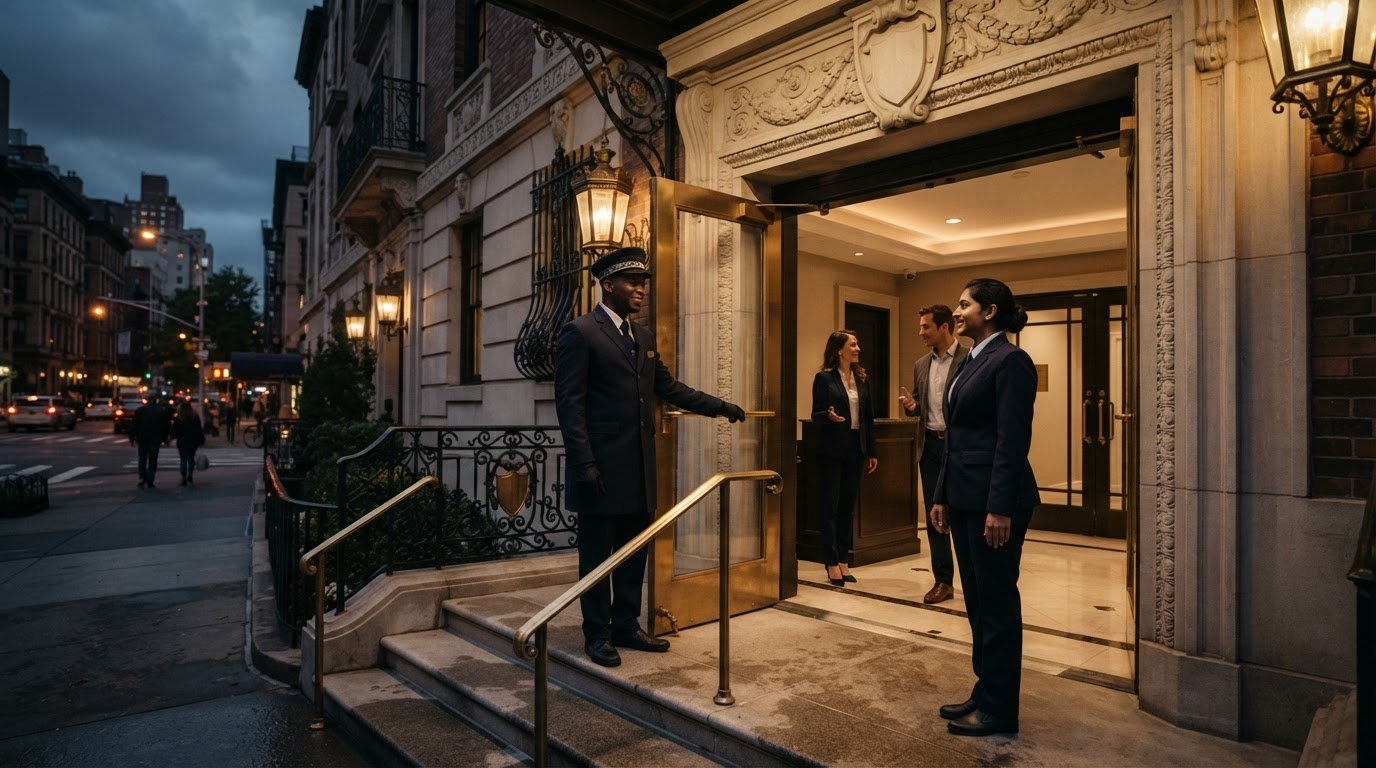
In the competitive markets of Manhattan and Brooklyn, the security officer is often the first and last point of contact for every visitor. This role has evolved into a hybrid of protection and hospitality, where a "gold-standard" service level is expected. A concierge-style security presence reinforces the prestige of a luxury development by offering a dignified and helpful face to the public. These officers manage strict access control with a level of professional assurance that makes residents feel both respected and secure. This seamless integration of safety and service is why elite residential complexes prefer a dignified, unarmed presence to maintain a welcoming yet impenetrable environment.
Sector-Specific Applications for Unarmed Security
The implementation of a security strategy must be as unique as the property it protects. In the Tri-State area, the requirements for a corporate headquarters in Westchester or Orange County differ fundamentally from those of a luxury residential complex in Long Island or Queens. Unarmed security officers provide the flexibility needed to adapt to these diverse environments, ensuring that protection never comes at the expense of a property's specific culture. By tailoring protocols to the local landscape, these professionals act as a seamless extension of a client's operational team.
In retail environments, the challenge lies in protecting high-value assets while maintaining a positive and inviting customer experience. Officers in these settings are trained to identify suspicious behavior discreetly, preventing loss without creating an atmosphere of suspicion that might alienate legitimate patrons. This balance of vigilance and service is essential for maintaining the reputation of premier brands. Whether managing a bustling storefront or a quiet gated community, the focus remains on integrity and the meticulous execution of duty.
Corporate and Residential Concierge Security
In the high-rise environments of Manhattan and Brooklyn, the role of security has evolved into a hybrid of protection and hospitality. Integrating concierge security officer duties with traditional guarding allows properties to maintain a gold-standard service level. These professionals manage visitor logs, package deliveries, and tenant requests with absolute precision. By serving as a stabilizing force at the front desk, they ensure that the first point of contact for every guest is one of professional assurance and quiet strength. This approach is particularly effective in luxury developments where residents expect both safety and a high degree of personal attention.
Mobile Patrols and Asset Protection
For sprawling industrial sites or large corporate parks in New Jersey, stationary personnel are often most effective when supported by mobile units. Professional vehicle patrol security services complement on-site unarmed security officers by extending the perimeter of protection. These patrols are essential for securing parking structures and monitoring fence lines that are too extensive for foot patrols alone. Utilizing a combination of scheduled and random routes creates a visible deterrence that discourages unauthorized activity. This layered defensive posture ensures that every corner of a large-scale property remains under constant, professional oversight.
If you are seeking to elevate the safety and sophistication of your property, you can request a professional security assessment from our team to determine the ideal configuration for your specific needs.
The Regal Standard: Integrity, Precision, and Professionalism
Regal Security operates on a foundational philosophy of quiet strength. This approach prioritizes professional assurance and a dignified presence over the aggressive tactics often found elsewhere in the industry. We understand that our presence on your property is a reflection of your own standards. Unlike national conglomerates that often struggle with the specific nuances of local neighborhoods, our deep roots in the New York and New Jersey area allow us to provide a level of responsiveness that is both immediate and precise. We don't just fill posts; we build long-term partnerships rooted in a shared sense of duty and moral uprightness.
Every placement we make is the result of a meticulous vetting process designed to identify individuals who embody our core values. We believe that true protection is found in the details. By maintaining a high register of conduct and appearance, our unarmed security officers act as stabilizing forces in any environment. This commitment to excellence ensures that your property remains a place of peace and stability, allowing you to focus on your primary objectives without the distraction of safety concerns. It's a gold-standard level of care that respects both the client and the community they serve.
Our Commitment to Quality Staffing
Our security staffing services utilize a methodical approach to match the right personality to your specific organizational culture. We recognize that a corporate lobby requires a different temperament than a luxury residential complex. Once placed, our unarmed security officers undergo continuous training in de-escalation techniques, first aid, and emergency protocols. This ensures they remain calm under pressure and prepared for any scenario. We view dignified service not merely as a job requirement, but as a moral and professional duty to those we protect.
Securing Your Property Today
The journey toward a more secure environment begins with a customized risk assessment of your facility. This process allows us to identify unique vulnerabilities and establish a comprehensive plan tailored to your needs. When you're ready to transition to a higher caliber of protection, our team manages the implementation with care to ensure a seamless experience for your tenants and guests. We invite you to contact Regal Security for a professional consultation. Discover how our dedicated guardians can provide the stability and peace of mind your property deserves.
Defining the Future of Your Security Presence
Choosing a security strategy is a declaration of your organization's values and its commitment to those it serves. It's a decision that impacts your brand's reputation as much as its safety. We have explored how the modern guardian relies on intelligence and de-escalation rather than reactive force to maintain a stable environment. By prioritizing unarmed security officers who are trained in both protection and hospitality, you ensure that your property remains a welcoming space without compromising on safety or increasing liability. This proactive approach transforms a standard security post into a premier service experience.
Our expertise in the NYC and NJ luxury residential and corporate sectors allows us to provide a reliable 24/7 on-site presence and mobile patrols that are specifically tailored to the Tri-State landscape. This transition toward a more sophisticated model of protection offers a sustainable path to long-term peace of mind and operational excellence. We invite you to Secure your property with Regal Security's professional unarmed officers and experience a partnership rooted in integrity and precision. We look forward to helping you establish a secure environment where every resident and guest feels both protected and respected.
Frequently Asked Questions
What are the primary duties of an unarmed security officer?
The primary duties of professional unarmed security officers involve proactive observation, meticulous reporting, and strict access control. They serve as the first line of detection, identifying potential vulnerabilities before they are exploited by unauthorized individuals. Beyond physical monitoring, these professionals manage visitor interactions and maintain the property's dignified atmosphere. This combination of vigilance and hospitality ensures that safety is maintained without compromising the resident or guest experience.
Is unarmed security effective for deterring crime in NYC?
Unarmed security is highly effective for deterrence in New York City when executed with precision and professional assurance. The visible presence of a well-trained officer signals that a property is actively managed and monitored, which discourages unauthorized activity. By maintaining unpredictable patrol patterns and demonstrating total situational awareness, these officers create a psychological barrier that prevents incidents. This strategic visibility is often more effective for long-term stability than reactive force.
What is the difference between a security guard and a security officer?
While the terms are often used interchangeably, a security officer typically represents a higher tier of training and professional responsibility than a traditional guard. An officer is viewed as a strategic partner who utilizes intelligence and de-escalation rather than just passive observation. This distinction emphasizes the individual's role as a prestigious guardian who is deeply integrated into the property's operational success and brand alignment. It's a shift from a regulatory requirement to a value-added service.
Do unarmed security officers have the power of arrest in New York or New Jersey?
In New York and New Jersey, security personnel generally possess the same power of arrest as a private citizen. They can legally detain an individual who has committed a felony or a breach of peace in their presence until law enforcement arrives. However, the professional standard focuses on de-escalation and incident prevention to avoid the necessity of physical detention. The officer's primary role is to secure the scene and act as a precise witness for responding authorities.
How much training do unarmed security officers receive?
Training requirements are governed by state mandates, such as the Security Officer Registration Act (SORA) in New Jersey and specific licensing hours in New York. Professional unarmed security officers receive initial certification followed by annual in-service training to maintain high standards of conduct. This education covers legal powers, emergency protocols, and communication techniques. High-caliber agencies often provide additional training in hospitality and sector-specific protocols to ensure personnel meet a gold-standard level of care.
Can unarmed security officers handle medical emergencies?
Professional officers are frequently trained to act as first responders during medical emergencies on the property. This typically includes certification in CPR, First Aid, and the use of Automated External Defibrillators (AED). Their role is to provide immediate, stabilizing assistance while coordinating with emergency medical services to ensure a seamless transition of care. This capability is a vital component of the peace of mind they provide to residents and corporate staff during critical moments.
Why should I choose unarmed security over armed guards for my corporate office?
Choosing unarmed security for a corporate office reduces organizational liability and fosters a more welcoming professional environment. Armed guards can inadvertently increase anxiety among employees and guests, signaling a level of threat that may not exist. Unarmed professionals provide sophisticated protection through access control and situational awareness while maintaining a brand-aligned, hospitality-focused presence. This balance is essential for prestigious corporate headquarters that prioritize both safety and a dignified atmosphere.
How do unarmed officers communicate with law enforcement during an incident?
Officers communicate with law enforcement through established reporting protocols and real-time coordination during an incident. They act as a calm and authoritative liaison, providing responding police with precise details and documented evidence from on-site monitoring systems. This professional coordination ensures that law enforcement can act quickly and effectively based on accurate information. By serving as a reliable witness, the officer facilitates a more efficient resolution to any security breach.